 how-to
Is Boxing Good for Weight Loss? A 2026 Guide
Table of Contents
- How Boxing Burns Calories and Fat
- Boxing Workout for Beginners: How to Start Safely
- Boxing Training Schedule for Weight Loss
- High Intensity Interval Training Boxing: Maximum Fat Burn
- Why Nutrition and Recovery Matter More Than You Think
- Boxing vs. Traditional Cardio: Which Wins for Weight Loss?
- Frequently Asked Questions
Last Updated: September 25, 2026
How Boxing Burns Calories and Fat
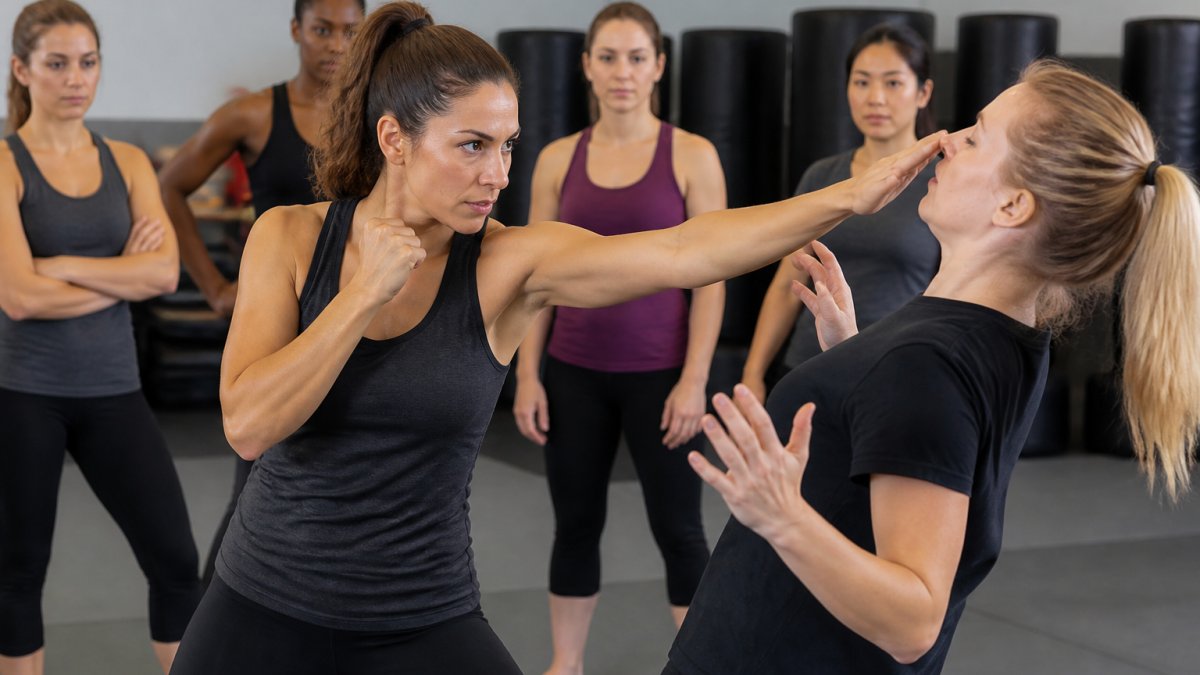
Is boxing good for weight loss? Yes, and the reason comes down to how many calories the sport torches in a short window. Boxing is a full-body workout that combines punching, footwork, and core engagement, so your heart rate climbs fast and stays high. At Battenberg's, we've seen many beginners discover that a single focused session can be a highly effective way to burn calories.
The math is simple. A hard boxing session pushes your body into anaerobic exercise, where you burn through stored energy quickly. That demand is what drives fat loss over time.
Calories Burned in a Boxing Session
Calorie burn depends on your weight, effort, and session length. A heavier person burns more per minute than a lighter one doing the same work. The widely used MET (metabolic equivalent of task) framework from the Compendium of Physical Activities assigns boxing a range of roughly 5.5 to 12.8 METs depending on intensity, bag work and pad work sit near the top of that range, while light shadowboxing sits near the bottom.
A rough rule: calories per minute ≈ (MET × 3.5 × body weight in kg) ÷ 200. For a 180 lb (about 82 kg) adult, that works out to roughly:
| Session Type | Approx. METs | Calories per 30 min | Calories per 60 min |
|---|---|---|---|
| Light shadowboxing | ~5.5 | ~230 | ~460 |
| Moderate heavy bag rounds | ~7.8 | ~330 | ~660 |
| Hard pad work with a coach | ~9.5 | ~400 | ~800 |
| Sparring drills | ~12.8 | ~540 | ~1,080 |
A lighter 130 lb (about 59 kg) adult doing the same hard pad work burns closer to 290 calories per 30 minutes. These are estimates, not guarantees, heart rate, rest intervals, and how much you actually move between punches swing the real number.
That last point is the one most articles skip. A boxing class with long water breaks and slow instruction can burn fewer calories than a brisk 45-minute walk. The burn lives in the work intervals, not the gym membership.
EPOC and the Afterburn Effect
EPOC, or excess post-exercise oxygen consumption, is the extra calories your body burns after a workout while it returns to its resting state. Hard boxing sessions trigger a bigger afterburn than steady cardio because they create more metabolic disruption, heart rate spikes, lactate accumulates, and the body spends energy replenishing oxygen stores and repairing muscle.
Here's the honest part competitors tend to gloss over: EPOC is real, but it is not a magic multiplier. Research on interval training generally puts the afterburn at roughly 6 to 15 percent of the calories burned during the session itself, tapering off over several hours (Checking your browser). So a session that burns 600 calories might add somewhere in the range of 40 to 90 extra calories afterward.
Why Boxing Burns More Than a Jog of the Same Length
A 30-minute jog at a conversational pace sits around 7 METs for most adults. A 30-minute boxing session with bag and pad work sits higher, and, more importantly, it recruits the shoulders, lats, core, hips, and legs through repeated rotational force. That muscle engagement is what separates boxing from a treadmill session of equal duration. More muscle fibers working means more oxygen demand, which means more calories per minute at the same perceived effort.
Boxing Workout for Beginners: How to Start Safely
Starting a boxing workout for beginners is easier than most people expect. You don't need to be fit first. You build fitness by showing up and learning the basics one round at a time.

Essential Equipment vs. Shadowboxing
You can start with almost nothing. Shadowboxing needs zero equipment and teaches footwork, timing, and core engagement. Add gear as you go:
- Hand wraps to protect your wrists and knuckles
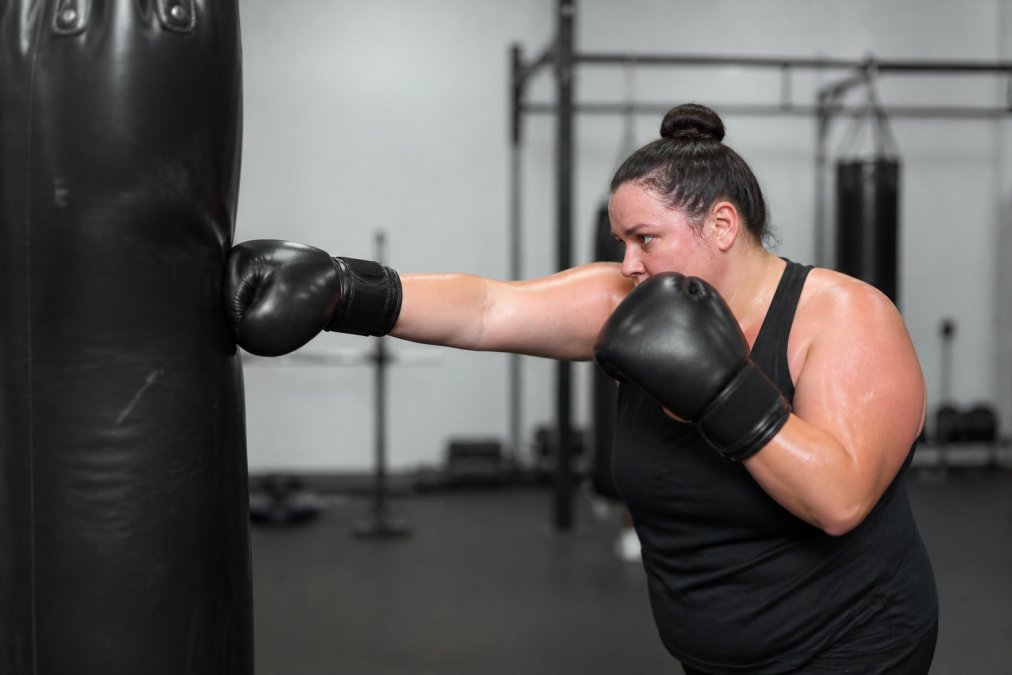
- Boxing gloves for bag and pad work
- A heavy bag for power and resistance
- Jump rope for footwork and cardio
Boxing Training Schedule for Weight Loss
A boxing training schedule for weight loss works best with three to four sessions a week. That gives you enough training intensity to burn calories while leaving room for recovery, and recovery is where most beginner plans fall apart.
Here's a simple weekly plan for beginners:
- Monday: 30 minutes of shadowboxing and footwork drills
- Tuesday: Rest or a light walk
- Wednesday: 30 minutes of heavy bag rounds
- Thursday: Rest
- Friday: 30 minutes of pad work or class
- Saturday: 45 minutes mixing bag work and agility drills
- Sunday: Active recovery, such as stretching or a slow walk
The Realistic 3-6 Month Roadmap
Weeks 1-2, Skill and soreness. Weight may drop 2-4 lb, but most of that is water and glycogen, not fat. You'll be sore in the shoulders, lats, and calves. Don't read anything into the scale yet.
The Plateau Effect: Why the Scale Stalls
Around weeks 6-10, most people hit a wall. The scale freezes even though training is unchanged. This is metabolic adaptation, as you lose weight, your body needs fewer calories to run, and your non-exercise movement (fidgeting, walking, posture) quietly drops. A deficit that worked at 200 lb is no longer a deficit at 185 lb.
- Recalculate your intake. A 10-15 percent reduction in daily calories usually restarts loss.
- Add one interval round to two sessions per week, not all of them.
- Increase protein to roughly 0.7-1 gram per pound of body weight to protect muscle while in a deficit.
- Add steps. A 20-minute daily walk outside the gym often does more than an extra boxing session.
Recovery and Overtraining: The Part Nobody Talks About
Boxing is high-intensity and high-impact. It taxes the central nervous system (CNS) through repeated explosive movement, and it loads the shoulders, wrists, and knees. Three to four sessions a week is the sweet spot for most beginners. Five or more without a base of fitness tends to produce:
- Persistent fatigue that sleep doesn't fix
- Declining punch speed and accuracy
- Irritability, poor sleep, and stalled fat loss
- Nagging wrist, shoulder, or knee pain
Practical recovery rules that work:
- At least one full rest day per week. No exceptions.
- Sleep 7-9 hours. This is the single biggest recovery lever.
- Hydrate and eat protein within a couple of hours of training.
- Deload every 4-6 weeks, drop to two easy sessions for one week.
- Listen to your wrists. Wraps and proper form prevent the most common beginner injury.
High Intensity Interval Training Boxing: Maximum Fat Burn
High intensity interval training boxing packs more fat burn into less time. You alternate hard bursts with short rests, which spikes your heart rate and keeps it elevated.
Why Nutrition and Recovery Matter More Than You Think
You cannot out-train a bad diet. A hard boxing session burns calories, but a single sugary drink can erase that work in minutes.
Avoiding Overtraining and the Plateau Effect
The plateau effect hits when your body adapts to the same routine. Your weight stalls even though you're still training hard.
Boxing vs. Traditional Cardio: Which Wins for Weight Loss?
Boxing beats traditional cardio for most people, and the reason is engagement plus intensity. A treadmill run and a boxing round can burn similar calories, but boxing recruits more muscle groups and holds attention longer.
Frequently Asked Questions
Can boxing help lose belly fat?
Boxing can help reduce belly fat when combined with a caloric deficit. A single session burns 400 to 600 calories for a 155-pound person, and the high-intensity intervals raise your metabolic rate for hours afterward. Spot reduction is not possible, but boxing's full-body workout engages your core constantly. Consistent training 3 to 4 times per week, paired with proper nutrition, will reduce overall body fat including around the midsection.
How often should you box to see weight loss results?
A boxing training schedule for weight loss typically includes 3 to 4 sessions per week, each lasting 45 to 60 minutes. Beginners should start with 2 to 3 sessions weekly to allow active recovery. Adding one or two days of resistance training supports lean muscle mass and raises your basal metabolic rate. Most people notice measurable changes in body composition within 4 to 6 weeks when training consistently and maintaining a caloric deficit.
Does boxing build muscle while burning fat?
Yes. Boxing combines compound movements like punches, squats, and footwork that engage multiple muscle groups simultaneously. This builds lean muscle mass in your shoulders, arms, core, and legs while burning calories. The resistance from throwing punches and holding a defensive stance acts as a form of resistance training. More muscle means a higher resting metabolic rate, which supports long-term weight management and improved body composition.
What are the disadvantages of boxing for beginners?
Beginners face a learning curve with footwork and proper punching technique, which can lead to frustration or minor injuries if rushed. High-impact sessions may be tough on joints, so starting with shadowboxing and low-impact drills helps. Overtraining is a real risk if you jump into daily sessions without active recovery. Working with a qualified coach at a structured program helps you progress safely and avoid the fitness plateau that stops many beginners.
Weight loss stalls for almost everyone at some point, and the fix is rarely more willpower. It's better coaching, a plan that fits your body, and a room full of people who expect you to return. Battenberg's offers expert-led boxing, self-defense, and fitness training for every age and fitness level, with programs built on real technique and steady support. Get started with Battenberg's and train with coaches dedicated to your progress.