 How-to
How to Build Focus and Discipline Through Martial Arts
Last Updated: November 15, 2026
Quick Summary
Martial arts discipline is the trained habit of following instructions, repeating a skill until it is correct, and staying calm under pressure. Focus improves as a side effect of how a class is built: short drills, immediate correction, and a clear standard for every rep. That habit transfers to homework, meetings, and chores at home.
- The correction matters more than the repetition, because drilling a sloppy kick a hundred times builds a sloppy habit.
- Expect slow, uneven progress from kids, not a transformation in six weeks.
- Classes for children with ADHD work best when short-format, highly structured, and heavy on movement.
- Choose the instructor first and the style second when picking a dojo.
- Two classes per week is a common starting point for beginners, with 10-15 minutes of home practice.
Table of Contents
- Why Martial Arts Discipline Transfers to School and Work
- Kids Martial Arts Self-Discipline: What Parents Should Expect
- Martial Arts for Children with ADHD: Adaptations That Work
- Taekwondo for Kids: Rules, Respect, and Routine
- Comparing Styles for Focus: Karate, Taekwondo, Boxing, and More
- How to Choose a Dojo and Instructor That Build Discipline
- A Beginner Weekly Routine and Ways to Track Progress
- Start Your First Class at Battenberg's
- Frequently Asked Questions
Why Martial Arts Discipline Transfers to School and Work
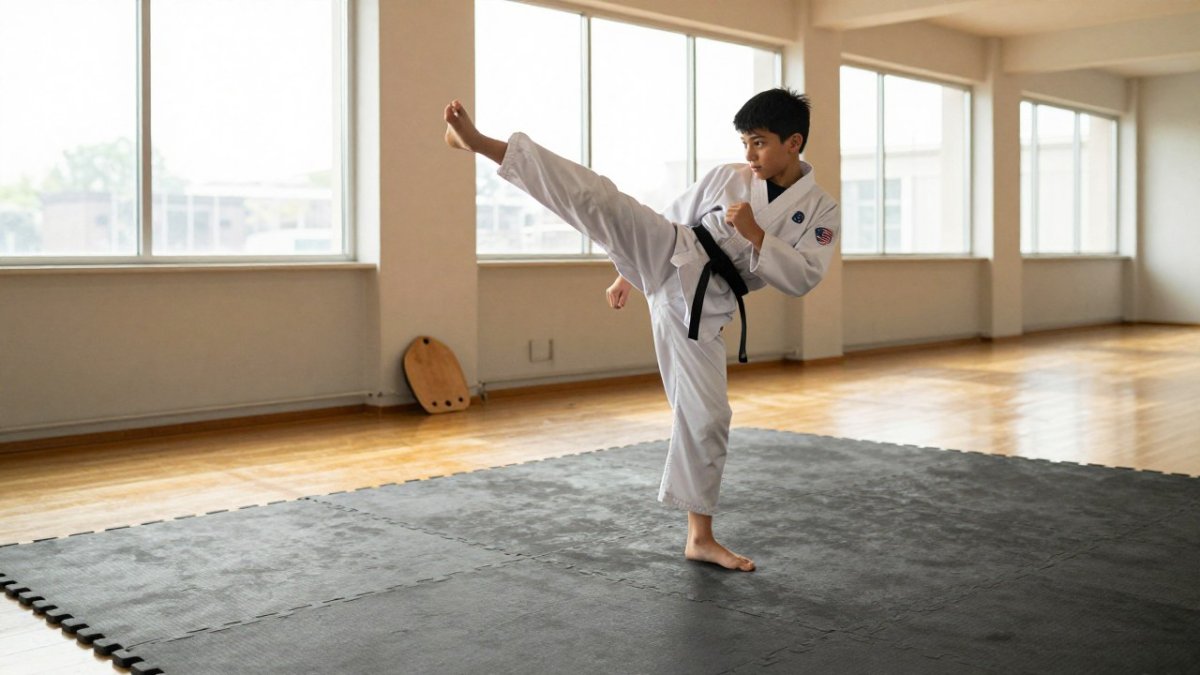
The best answer to "can martial arts build focus?" is yes, but not for the reason most people assume. Focus improves as a side effect of how a class is built: short drills, immediate correction, and a clear standard for every rep.
Martial arts discipline is the trained habit of following instructions, repeating a skill until it is correct, and staying calm under pressure. That habit is what transfers to homework, meetings, and chores at home.
The Repetition and Feedback Loop That Trains Attention
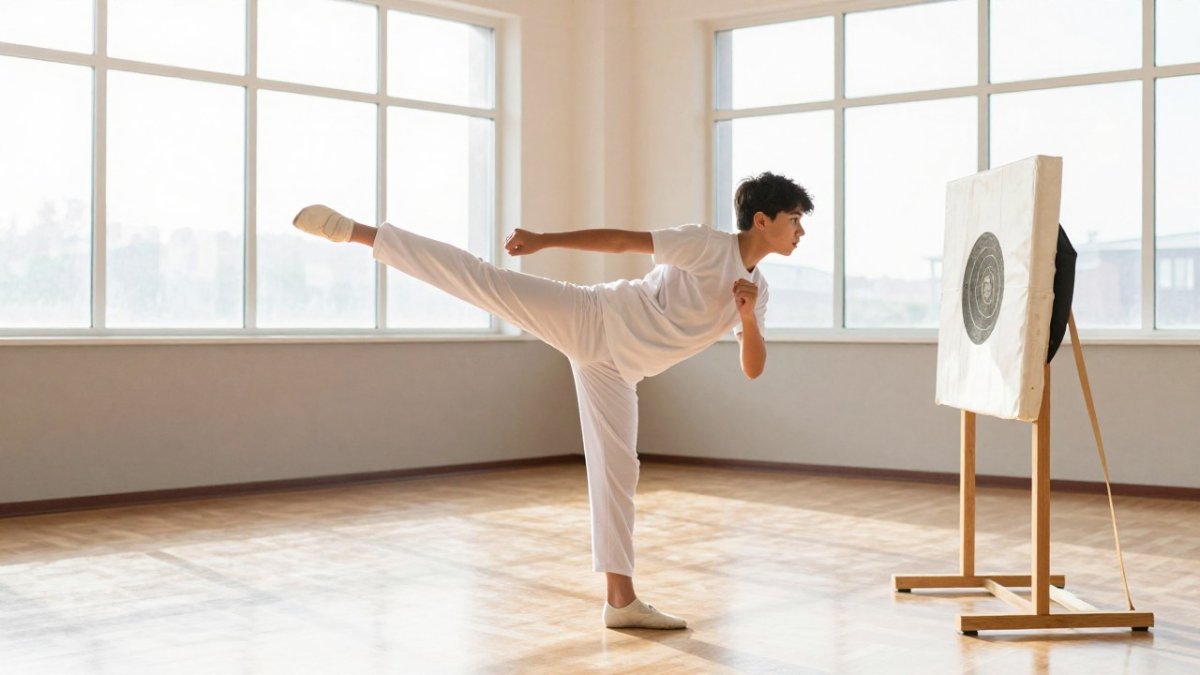
Attention improves when three things happen at once: a clear goal, fast feedback, and a challenge just above your current skill. A martial arts class delivers all three in every drill. You throw a kick, the instructor corrects your hip rotation, and you throw it again. That loop is short, sometimes seconds long.
Compare that to a school worksheet or a work project, where feedback can take days. The training loop compresses the cycle, so students practice paying attention dozens of times per class rather than once.
What most guides miss is that the correction matters more than the repetition. Drilling a sloppy kick a hundred times builds a sloppy habit. Good instruction interrupts the pattern early.
What the Evidence Says and What It Does Not
Honest answer: the research base here is thinner than marketing pages suggest. Studies on martial arts and attention exist, but sample sizes are often small and results vary by style, age, and program quality. Treat claims of dramatic cognitive gains with caution.
What we can say with confidence is behavioral. The belt system is a visible goal-setting structure, and visible progress keeps motivation alive.
Parents who want a deeper look at how this works for younger children can read our guide on martial arts for focus in kids.
Kids Martial Arts Self-Discipline: What Parents Should Expect
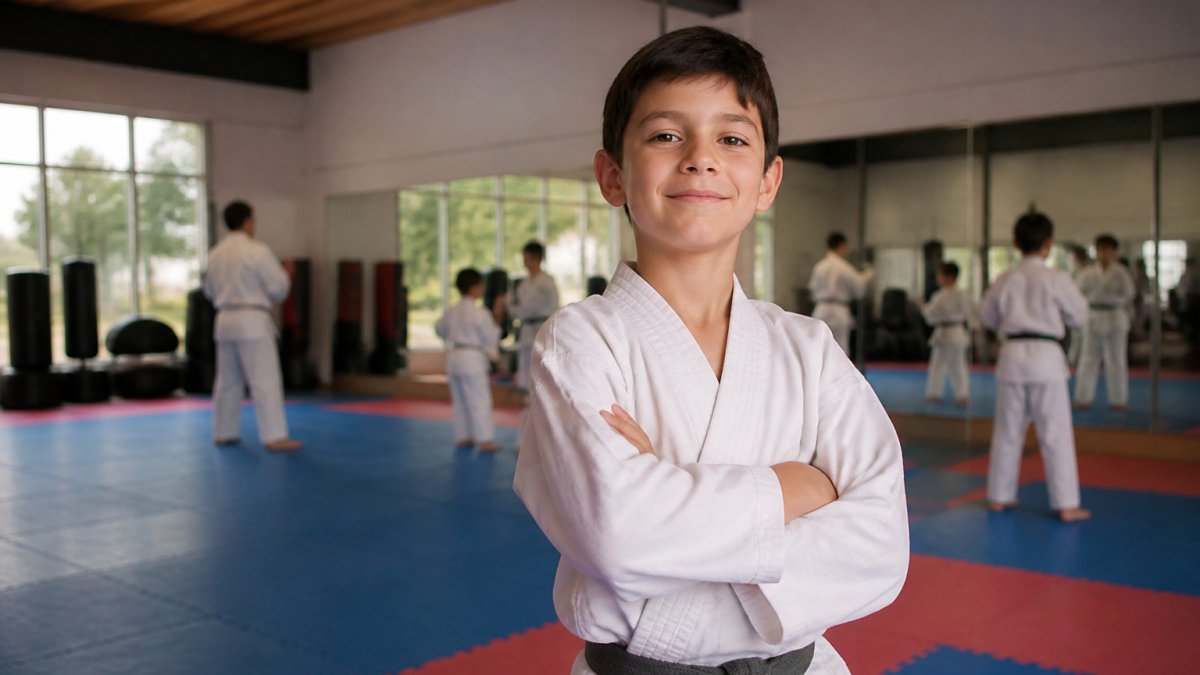
Expect slow, uneven progress, not a transformation in six weeks. Kids martial arts self-discipline builds in layers: first they learn to stand still and bow, then to follow a sequence of moves, then to correct themselves without being told. As these habits take root through steady practice, martial arts classes for kids can give children room to keep building focus one small correction at a time.
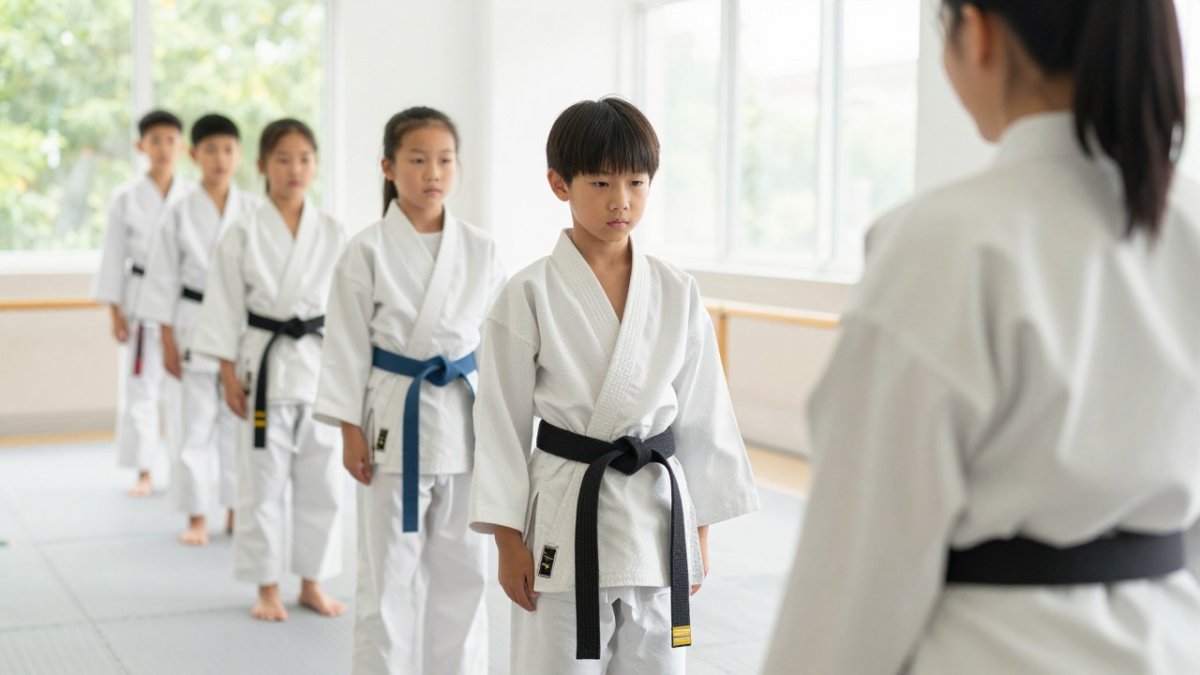
A common mistake is judging the program by the first month. The early weeks are mostly structure and safety, and some children resist it.
For the broader picture on focus, fitness, and confidence, our overview of the benefits of martial arts for kids sets realistic expectations by age.
Martial Arts for Children with ADHD: Adaptations That Work
Martial arts for children with ADHD works best when the class is short-format, highly structured, and heavy on movement. Long lectures and standing in line are the enemy.
Adaptations that help:
- Position the student near the instructor, not at the back
- Give one instruction at a time, then repeat it
- Use a physical cue, such as tapping the belt, to signal a transition
- Pair a restless student with a calm partner during drills
- Build in a reset: a bow, a breath, a fresh start
We are not diagnosing anything here, and no class replaces medical advice. What we can say is that structure and clear rules tend to suit kids who struggle with sitting still, because the rules are physical and immediate rather than abstract.
Taekwondo for Kids: Rules, Respect, and Routine
Taekwondo for kids leans hard on formality, and that is the point.
Comparing Styles for Focus: Karate, Taekwondo, Boxing, and More
No single style wins on focus. The right choice depends on the student's age, temperament, sensory tolerance, and what keeps them coming back. Instead of ranking styles, use the comparison below to match a style's class structure and teaching approach to the learner.
| Style | Typical Class Structure | Focus Demand | Discipline Style | Contact Level | Best Fit |
|---|---|---|---|---|---|
| Karate | Line drills, forms (kata), partner work | High, form-based and precise | Formal, rank-driven | Moderate; controlled partner contact | Kids and adults who want structure and visible rank progress |
| Taekwondo | Fast kicking drills, forms, sparring | High, speed and reaction | Very formal, bowing and titles | Moderate to high in sparring | Kids who need routine and a strong respect culture |
| Boxing | Coach-led rounds, bag work, partner drills | High, reactive and continuous | Effort-based, coach-directed | High; head contact in sparring | Teens and adults who want intensity and stress relief |
| Brazilian Jiu-Jitsu | Warm-up, technique instruction, live rolling | High, tactical problem-solving | Informal, partner-based | High; close-contact grappling | Kids and adults who like problem-solving and calm under pressure |
A Decision Guide, Not a Ranking
Work through these questions in order. The first one that matters most to you should drive the choice.
- Does the learner tolerate close contact? If not, start with Karate or Taekwondo before trying Brazilian Jiu-Jitsu or Boxing. Close-contact grappling and sparring are common reasons beginners quit in the first month.
- Does the learner need fast, visible progress to stay motivated? Taekwondo and Karate belt systems provide frequent stripe and belt milestones. Brazilian Jiu-Jitsu promotes more slowly, which suits patient learners but frustrates those who need frequent feedback.
- Is the goal calm under pressure or physical intensity? Boxing and Brazilian Jiu-Jitsu put a partner in front of you, so you cannot drift. Karate and Taekwondo build focus through repetition and precision, which suits learners who prefer a controlled pace.
- How much formality does the learner want? Taekwondo and traditional Karate lean on bowing, titles, and a fixed class sequence. Boxing and Brazilian Jiu-Jitsu are more informal and coach-led.
- What is the learner's age? For children under 7, look for programs with short drills and frequent water breaks regardless of style. For teens and adults, contact level and sparring rules should be the deciding factor.
Pros and Cons of Each Style
Karate builds patience through long forms and precise technique. The drawback is that early progress can feel slow for kids who want action.
Taekwondo is known for fast, visible progress and a strong respect culture.
Boxing delivers intense focus because you cannot drift while a partner is throwing.
Brazilian Jiu-Jitsu rewards problem-solving and calm under pressure. It is more informal, which suits some learners and frustrates those who want clear hierarchy.
If you are still weighing the category itself, our breakdown of martial arts vs combat sports explains what each one actually is.
How to Choose a Dojo and Instructor That Build Discipline
Choose the instructor first and the style second. A skilled instructor corrects early, keeps the pace moving, and holds a consistent standard. A weak one lets sloppy reps slide, and sloppy reps build sloppy habits.
Questions worth asking on a visit:
- How large are classes, and how many instructors are present?
- How does the school handle a student who is falling behind?
- What does a typical class look like minute by minute?
- How are belts earned, and is there a minimum attendance requirement?
- Can parents observe, and how often?
A Beginner Weekly Routine and Ways to Track Progress
Two classes per week is a common starting point for beginners. Three classes may speed progress, but two is enough to build the habit without burnout. The weekly plan below adds short home practice on non-class days so the habit holds between classes.
A Four-Week Beginner Plan
| Week | Class Days | Home Practice (10-15 min) | Focus Goal |
|---|---|---|---|
| 1 | 2 classes | Stance and bow sequence twice | Learn the class routine and instructor's cues |
| 2 | 2 classes | One basic combination, slow reps | Follow a three-step instruction without prompting |
| 3 | 2 classes | One form or drill sequence | Correct one mistake after feedback |
| 4 | 2-3 classes | Combine week 2 and 3 practice | Complete a full class without losing the sequence |
Keep home practice short. Ten focused minutes on a single technique beats thirty distracted minutes. Practice on a non-class day, ideally at the same time each week, so it becomes part of the routine rather than an extra chore.
Measurable Ways to Track Focus and Discipline
Benefit claims are easy to make and hard to verify. Track behaviors you can see and count, not feelings.
- Attendance consistency: mark each class on a calendar. A streak of four or more consecutive weeks is a stronger signal than any single good class.
- Task completion: note whether the student finished the assigned home practice that week. Completion rate over a month is a simple discipline indicator.
- Multi-step instruction: record how many steps of a three- or four-step instruction the student can follow before needing a repeat. This is one of the clearest focus measures a parent or coach can observe.
- Self-correction: note whether the student fixes a known mistake without being told. This shows the feedback loop is internalizing.
- Skill log: write one thing that improved each week. Over a month, the log becomes evidence of progress when motivation dips.
- Belt or stripe dates: record when each was earned. Rank milestones are the school's own progress measure and are easy to compare over time.
What Realistic Progress Looks Like
Expect slow, uneven improvement, not a transformation in six weeks. A common pattern is a burst of enthusiasm in weeks one and two, a dip around week three when the novelty fades, and steadier engagement once the first stripe or belt is earned. Plan for the dip rather than treating it as a failure.
Watch out: tracking too many indicators at once turns progress into paperwork. Pick two or three from the list above and review them monthly.
Our beginner martial arts classes guide walks through the first month step by step.
Start Your First Class at Battenberg's
The hardest part is walking in the door the first time. Everything after that is repetition.
At Battenberg's, our classes emphasize structure and discipline.
If you are ready to see how a class feels, our step-by-step guide to booking a trial class covers what to bring and what to expect.
Focus and discipline are not traits you are born with. They are habits built through repetition, correction, and a routine you show up for.
Frequently Asked Questions
What martial art is best for discipline?
Taekwondo and Karate are the most common choices for building discipline because their belt systems reward consistent practice, respect, and goal setting. Boxing builds discipline through structured drills and accountability. The best style is the one with a qualified instructor, a clear routine, and a culture that reinforces respect. Visit a class and watch how instructors correct behavior before deciding.
Can martial arts help children develop self-discipline?
Yes. Kids martial arts self-discipline grows through repetition, rules, and clear expectations. Students follow class routines, listen to instructions, and work toward belt goals. Progress depends on consistent attendance and a school that reinforces respect at every level. Parents can support this by keeping a steady schedule and praising effort rather than rank.
How long does it take for kids to see benefits from martial arts?
Progress in focus, routine, and self-control varies by child and builds with consistent practice over time. Belt promotions give visible milestones along the way. Results vary by age, attendance, and instructor quality. A weekly routine of two to three classes is a practical starting point for steady progress.
Which martial arts are best for beginners who want to build confidence?
Taekwondo, Karate, and boxing are strong beginner options because they teach fundamentals in structured steps. Look for a school with clear goals, patient instructors, and a supportive class culture. Confidence grows from controlled challenge and rapid feedback, not from pressure. Ask about trial classes so you can test the fit before committing.