 how-to
Is Martial Arts Good for Anxiety? A Practical Guide
Table of Contents
- How Martial Arts Addresses Anxiety and Stress
- Boxing for Anxiety: Why This Approach Works
- Martial Arts for Social Anxiety: Building Confidence in Community
- How Often Should You Practice Martial Arts for Stress Relief
- Mental Health Benefits Beyond Anxiety Relief
- Getting Started: What to Expect in Your First Class
- Mental Health Benefits Beyond Anxiety Relief
- When to Combine Martial Arts with Professional Mental Health Support
- Frequently Asked Questions
Last Updated: October 9, 2026
How Martial Arts Addresses Anxiety and Stress
Martial arts is often described as a natural antidote to anxiety, and the question of whether is martial arts good for anxiety has a reasonable case supporting it.
What the evidence generally supports. Regular moderate-to-vigorous physical activity is widely recognized as supportive of mental health, including anxiety management.
What is not supported. No martial arts program is a treatment or cure for an anxiety disorder.
Why it can still help in practice. A few things tend to happen with consistent training:
- Movement discharges arousal. Anxiety often shows up as physical activation: tight chest, restless legs, shallow breathing. Hard, purposeful movement gives that activation somewhere to go.
- Attention gets occupied. A combination drill or pad round leaves little bandwidth for rumination. That is a break, not a cure, but breaks matter.
- Breath becomes a skill. Exhaling on a strike, or timing breath to a form, is a rehearsed version of the paced breathing techniques therapists often teach.
- Small wins accumulate. Learning a technique, surviving a hard round, or earning a stripe gives concrete evidence that you can handle difficulty.
- Structure replaces avoidance. Showing up on a schedule interrupts the anxiety-driven habit of withdrawing.
A realistic expectation. Many people report feeling calmer, sleeping better, and handling stress more easily after several weeks of consistent training.
Boxing for Anxiety: Why This Approach Works
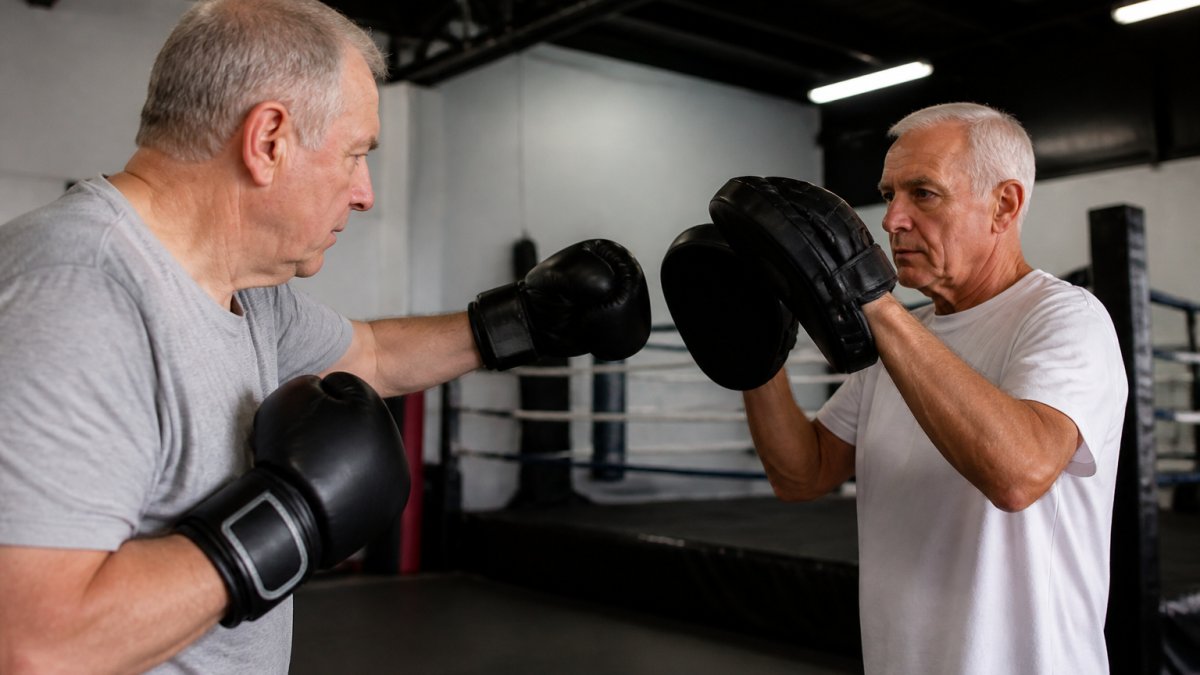
Boxing is particularly effective for anxiety relief because it channels stress into purposeful movement, releasing tension through controlled strikes.
The rhythm of boxing creates a natural meditation. Punch, breathe, move, repeat.
Boxing also builds real confidence. You learn a practical skill, get stronger, and see measurable progress, a direct counter to the helplessness anxiety creates.
The breathing techniques are especially powerful. You exhale with each strike, activating your parasympathetic nervous system. Over time this becomes automatic, and your body learns to calm itself more easily.
Martial Arts for Social Anxiety: Building Confidence in Community
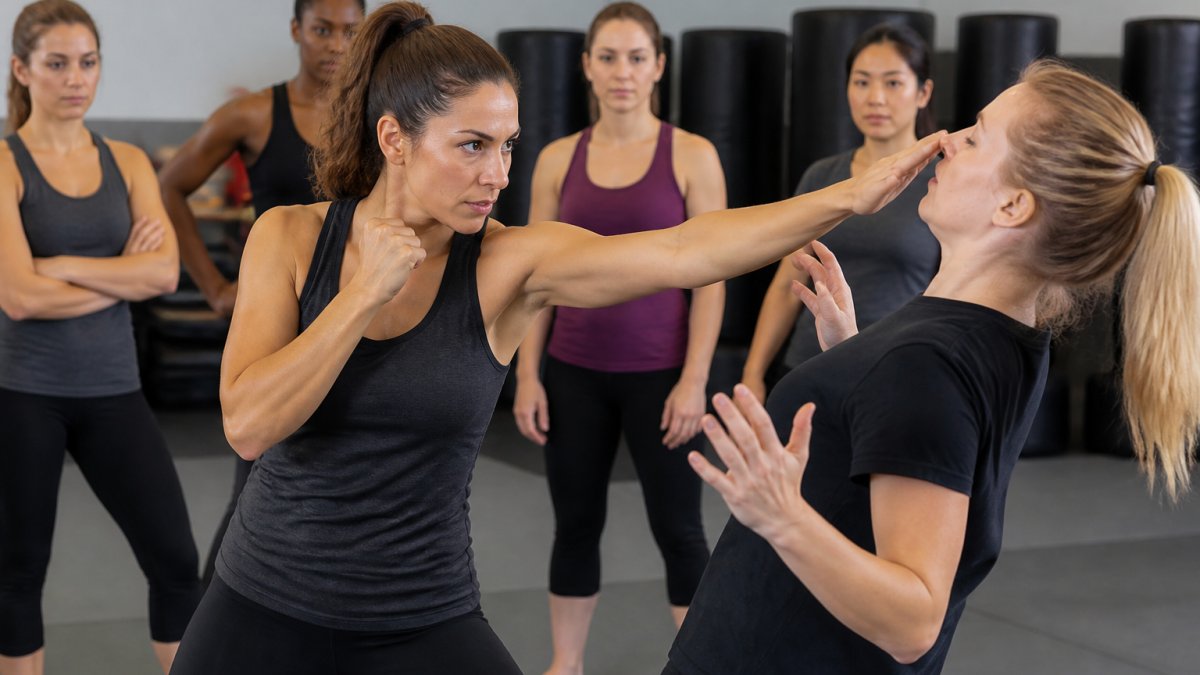
Social anxiety thrives in isolation. Martial arts classes put you in a supportive group setting where you face your fears gradually and safely.
Training with others normalizes your anxiety.
Over time you build real friendships with training partners, celebrating each other's progress and encouraging each other through tough moments.
The physical confidence you build translates to social confidence. When you know you can handle a challenging physical situation, you feel more capable overall, and your posture and voice strengthen with it.
How Often Should You Practice Martial Arts for Stress Relief
Consistency matters more than intensity. Training twice per week is a solid starting point for stress relief, enough stimulus to create change without overwhelming you.
Most people notice improvements within 2-3 weeks. Sleep improves first, then daytime anxiety eases.
Three times per week deepens the benefits, but twice weekly is sustainable long-term for most people.
Here's a practical guideline:
- For anxiety relief: 2-3 sessions per week, 45-60 minutes each
- For best results: Aim for consistency over intensity
- Rest days matter: Your nervous system needs recovery time between sessions
- Patience required: Give yourself at least 4 weeks before evaluating results
Missing a week or two doesn't erase progress, but it slows momentum. The goal is a habit that becomes part of your life, not a temporary fix.
Mental Health Benefits Beyond Anxiety Relief
Martial arts improves focus and concentration. The practice demands your full attention, you can't think about bills or work drama while executing a combination.
Self-esteem grows naturally. You set small goals and achieve them, earn new belt ranks, and master techniques that seemed impossible weeks earlier.
Discipline becomes a habit.
Emotional regulation improves significantly.
Many students report better sleep quality. Physical exertion tires the body, stress relief calms the mind, and the combination creates the conditions for deep, restorative sleep.
Get Started Today at NO RISK! →
Mindfulness develops naturally during training.
Getting Started: What to Expect in Your First Class
If you're wondering whether is martial arts good for anxiety and it's your main reason for trying, the first class is the highest-friction step. The goal is not the perfect style, but a format you can tolerate showing up to repeatedly.
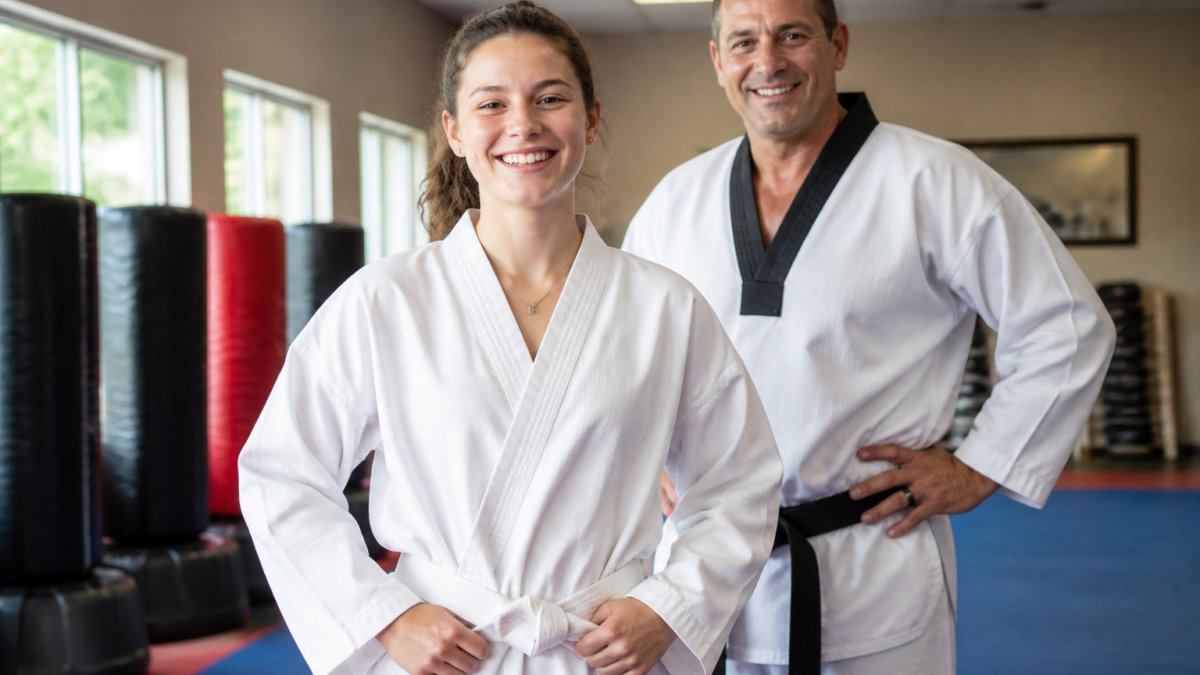
Match the style to your anxiety triggers
Different arts stress different things. If you know what sets off your anxiety, pick a format that works with you, not against you.
- Non-contact or light-contact options: Taekwondo (many schools offer no-sparring tracks), traditional karate, aikido, iaido, and most weapons-based arts. Good if being hit, hitting a person, or close physical contact is a trigger.
- Heavy-bag and pad-focused striking: Boxing, kickboxing, Muay Thai. Good if you want a hard physical outlet and are comfortable with a partner holding pads but not yet sparring.
- Grappling arts: Brazilian jiu-jitsu, judo, wrestling. Good if you want problem-solving under pressure, but be aware that close body contact and being pinned can be intense for some people with anxiety or trauma histories.
- Sparring-heavy programs: Competition-oriented boxing, Muay Thai, MMA, and some karate and taekwondo schools. These can be excellent long-term, but they are a poor first stop if your anxiety is currently high.
A useful rule: ask any school directly whether beginners are required to spar, and at what point. A school that says "not until you are ready, and never without your agreement" is a better fit than one that says "everyone spars by month three."
A low-pressure first month
You do not need to commit to a long-term plan. Try this instead:
- Week 1: One class. Arrive 10-15 minutes early, tell the instructor you are new and that anxiety is part of why you are there. Ask what to expect. Do not evaluate anything yet.
- Week 2: Two classes if the first went reasonably well. Focus on learning names and the warm-up sequence.
- Week 3: Two classes. Start noticing one technique you can do slightly better than last week.
- Week 4: Two to three classes. Decide whether this school and format are worth continuing.
Two sessions per week is a common sustainable starting point. Three is fine if recovery and schedule allow. More than that in month one tends to produce burnout, soreness, and a reason to quit.
What to bring and what to expect
- Wear: Athletic clothing you can move in. Most schools loan a uniform or allow street clothes for the first class.
- Bring: Water, a towel, and a small notebook if you want to track how you feel afterward.
- Expect: To feel awkward. Everyone does. Coordination improves within a few weeks.
- Time: Most classes run 45-60 minutes.
- Cost: Ask about a trial class or short introductory package before signing a contract. Month-to-month is preferable while you are still deciding.
Potential downsides to plan for
Martial arts is not risk-free, and pretending otherwise sets people up to quit.
- Injury risk: Sprains, bruises, and overuse injuries happen, especially in contact and grappling arts. Warm up properly, tap early, and do not train through sharp pain.
- Sensory overload: Loud gyms, mirrors, close quarters, and fast instruction can overwhelm some people. Sit out a round if you need to, a good instructor will not make it a problem.
- Performance pressure: Belt tests, sparring nights, and grading can spike anxiety. You are allowed to skip them.
- Cost and contracts: Some schools push long agreements. Read before signing.
- Bad-fit instructors: If an instructor shames beginners, mocks fear, or pressures you to spar, leave, do not push through.
How to measure progress without overpromising
Do not judge success by whether your anxiety is gone. Judge it by behaviors you control.
- Attendance: Did you show up the number of times you planned?
- Recovery: After an anxious moment, how long until you felt steady again?
- Perceived stress: A simple 1-10 rating before and after class, tracked over a month, tells you more than a vague feeling.
- Confidence markers: Did you speak up in class? Ask a question? Try a technique in front of others?
- Sleep and appetite: Small shifts here often show up before mood changes.
If after four to six weeks of consistent training you notice no change, or your anxiety getting worse, that is useful information. It may mean the format is wrong, the intensity is wrong, or martial arts is not the right tool for you right now. None of those outcomes is a failure.
Mental Health Benefits Beyond Anxiety Relief
Martial arts improves focus and concentration. The practice demands your full attention.
Self-esteem grows naturally through martial arts. You set small goals and achieve them. You earn new belt ranks.
Discipline becomes a habit. You show up even when you don't feel like it. You work through challenging drills.
Emotional regulation improves significantly. You learn to stay calm under pressure. You practice controlled responses instead of reactive ones.
Many students report better sleep quality. The physical exertion tires your body appropriately. The stress relief calms your mind.
When to Combine Martial Arts with Professional Mental Health Support
Martial arts is a powerful tool, but it's not a replacement for professional mental health care.
Consider adding professional support if:
- Your anxiety interferes with daily functioning (work, relationships, self-care)
- You have panic attacks or intrusive thoughts
- You're struggling with depression alongside anxiety
- You have experienced trauma
- Anxiety has lasted more than a few months despite your efforts
- You're having thoughts of self-harm
According to the American Psychological Association's guidance on anxiety treatment, the most effective approach often combines multiple strategies.
Many people find that martial arts makes therapy more effective. You're already learning to regulate your nervous system. You're building confidence.
Your instructor isn't a therapist.
Martial arts can genuinely help with anxiety. At Battenberg's, our expert-led classes in Taekwondo and boxing provide a safe, encouraging environment.
Frequently Asked Questions
Can martial arts really help reduce anxiety?
Yes. Martial arts training combines physical activity, breathing techniques, and mindfulness—all proven stress-reduction tools. The focused practice demands your attention on the present moment, which interrupts anxious thought patterns. Regular training also increases endorphin release and builds resilience through gradual skill progression. Results vary by individual and training consistency, but many practitioners report noticeable improvements in anxiety symptoms within weeks of starting.
How often should you practice martial arts for stress relief?
Most people see meaningful anxiety reduction with 2-3 training sessions per week. This frequency allows your nervous system to adapt to physical stress and develop better emotional regulation. Consistency matters more than intensity—showing up regularly builds the discipline and routine that itself reduces anxiety. Starting with once or twice weekly is fine if that fits your schedule; you can increase frequency as you progress and want deeper benefits.
What type of martial art is best for anxiety?
Boxing, karate, and Taekwondo all work well for anxiety because they combine cardio, controlled movement, and mental focus. Boxing emphasizes rhythm and breathing, which naturally calm the nervous system. Karate and Taekwondo build discipline and body awareness. The best choice is the one you'll actually attend consistently. Try a beginner class in styles that interest you—the supportive environment and instructor guidance matter as much as the style itself.
Should I tell my martial arts instructor that I have anxiety?
Yes. Instructors trained in anxiety-aware teaching can modify drills, offer encouragement tailored to your needs, and help you progress at your pace without pressure. They can also suggest breathing techniques and explain how specific movements help with emotional regulation. A good instructor creates a safe, non-judgmental space where anxiety is treated as a normal part of the human experience, not a weakness. This transparency helps you get more from your training.