 how-to
Does Rock Steady Boxing Help Parkinson's?
Table of Contents
- What Rock Steady Boxing Is and How It Works for Parkinson's
- Rock Steady Boxing Benefits for Parkinson's Disease
- Is Boxing Safe for People With Parkinson's
- What Happens in a Rock Steady Boxing Class
- How Often Should People With Parkinson's Exercise
- Getting Started Safely: What You Need to Know
- Frequently Asked Questions
Last Updated: October 8, 2026
What Rock Steady Boxing Is and How It Works for Parkinson's
Rock Steady Boxing is a non-contact boxing-style exercise program designed specifically for people with Parkinson's disease, and rock steady boxing parkinson's training combines the physical demands of boxing with adaptations for neurological symptoms. It combines the physical demands of boxing training with adaptations that make it safe and effective for those managing neurological symptoms. The program focuses on controlled punching movements, footwork drills, and conditioning exercises performed in a supportive group environment.
At Battenberg's, we understand that Parkinson's disease affects movement, balance, and coordination in ways that standard fitness programs don't address. Rock Steady Boxing targets these exact challenges through repetitive, dynamic movements that engage both the body and brain. The non-contact nature means you're never sparring or being hit, instead, you're working against heavy bags, speed bags, and focus mitts while an instructor guides you through controlled drills.
The program works by using the brain's neuroplasticity. Parkinson's damages the neural pathways that control smooth, automatic movement. Boxing drills force your brain to create new pathways by demanding fast reactions, precise footwork, and coordinated upper and lower body movements. Over time, these repetitive, intentional movements can help restore some of the motor control that Parkinson's has compromised.
Unlike traditional physical therapy, which often feels clinical, boxing training feels like you're accomplishing something. You're not just stretching or walking on a treadmill. You're throwing powerful punches, improving your speed, and building real strength. That sense of progress and control is part of why many participants stick with the program long-term.
Rock Steady Boxing Benefits for Parkinson's Disease
People with Parkinson's often experience progressive loss of mobility, balance problems, and reduced confidence in their daily movement. Rock Steady Boxing addresses these core challenges directly through targeted physical activity and exercise therapy.
Movement and coordination improve because boxing requires your brain to coordinate multiple body parts simultaneously. Each punch demands that your shoulders, core, hips, and legs work together. Your footwork must stay precise while your arms move. This kind of complex, coordinated movement is exactly what Parkinson's makes difficult, and exactly what boxing training strengthens.
Balance and fall prevention benefit from the weight shifts and stance adjustments built into boxing footwork. You're constantly shifting your weight from one leg to the other, adjusting your center of gravity, and recovering from dynamic movements.
Strength and flexibility develop through the repetitive nature of boxing drills. You're not just throwing one punch, you're throwing hundreds in a session. This high-repetition, moderate-intensity work builds muscular endurance and functional strength. The dynamic nature of the movements also maintains and improves range of motion in your shoulders, hips, and spine.
Confidence and independence often improve alongside physical gains. Many people with Parkinson's become cautious and withdrawn as their symptoms progress. Participating in a boxing class, seeing measurable improvements in speed and power, and training in a supportive community can restore a sense of agency and control over your body and your future.
Cognitive benefits emerge from the mental demands of boxing. You must track your footwork, remember combinations, react to your instructor's cues, and maintain focus throughout the session. This cognitive engagement may help slow cognitive decline, though realistic expectations matter here, boxing is not a cure, but a tool that may help manage symptoms.
Is Boxing Safe for People With Parkinson's
This is the right question to ask. Parkinson's brings real risks, falls, balance loss, tremors, and slower reaction times, so safety must come first in any exercise program.
Non-contact boxing is fundamentally safer than regular boxing because you're never being hit or sparring with an opponent. You control the pace, intensity, and duration of every movement. If you need to slow down, stop, or modify a drill, you can do so immediately without disrupting a partner or putting yourself at risk.
Fall risk requires honest assessment. If you have severe balance problems, advanced Parkinson's, or a history of falls, you need medical clearance before starting. A doctor familiar with your specific symptoms and mobility level should evaluate whether Rock Steady Boxing is appropriate for you right now. Some people benefit from starting with modified movements or working one-on-one with an instructor before joining a group class.
Tremors and muscle rigidity are manageable in boxing training because the movements are repetitive and predictable. You're not making sudden, unexpected movements. The routine nature of drills actually helps, your brain learns the pattern, and execution often improves over time.
Medication timing matters. Many people find that taking their Parkinson's medication before class helps them move more smoothly and get more out of the session. Work with your healthcare provider to find the timing that works best for you.
Proper instruction is non-negotiable. An instructor trained in working with Parkinson's populations understands your specific needs and can offer safe modifications. At Battenberg's, our specialized rock steady boxing parkinson's program is led by instructors who know how to scale movements for different ability levels and progression stages. They watch for form breakdown and can adjust intensity before injury risk increases.
What Happens in a Rock Steady Boxing Class
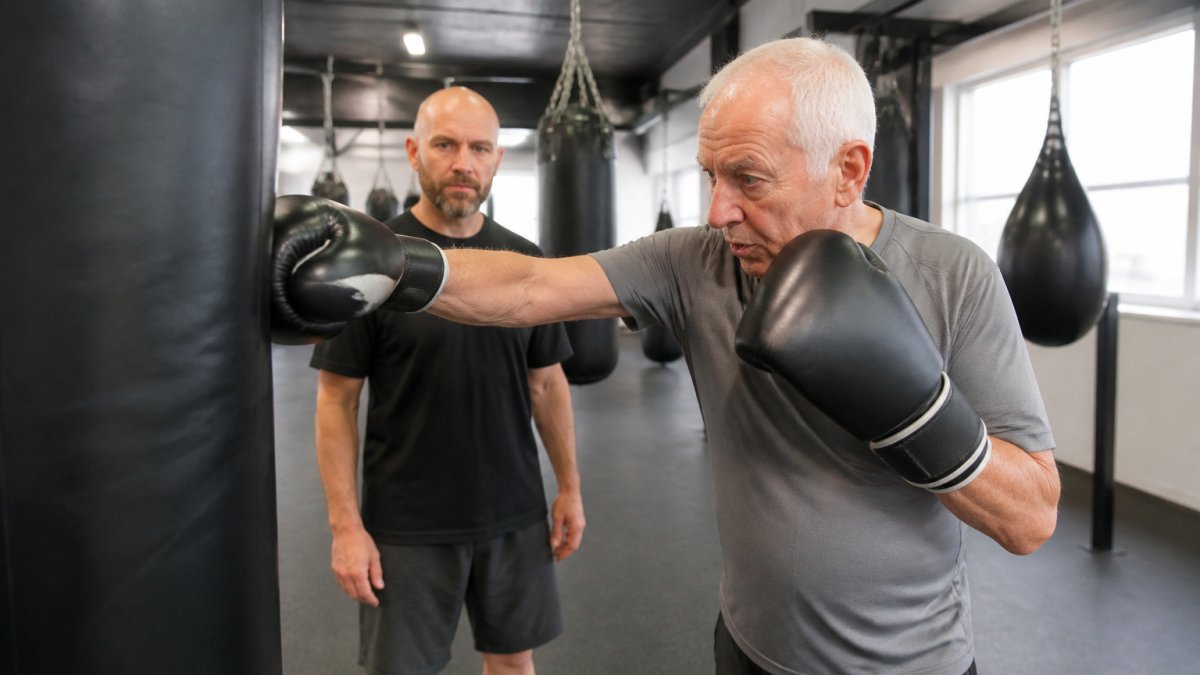
A typical Rock Steady Boxing class at Battenberg's runs 45-60 minutes and follows a consistent structure that keeps participants engaged while building skill and conditioning.
Warm-up (5-10 minutes) gets your heart rate up and prepares your muscles and joints for work. You might do light cardio, arm circles, leg swings, and mobility drills.
Footwork drills (10-15 minutes) teach you the foundation of boxing stance and movement. You'll practice shuffling, stepping forward and backward, and pivoting. These drills train balance, coordination, and the weight shifts that are so important for fall prevention.
Heavy bag work (15-20 minutes) is where you throw controlled punches at a bag. You'll work through combinations, sequences of punches strung together, at your own pace.
Speed bag or focus mitt work (5-10 minutes) adds complexity and reaction time demands. A speed bag requires precise, rhythmic hand movements. Focus mitts involve working with a partner or instructor who holds pads for you to strike.
Conditioning (5-10 minutes) might include core work, light resistance training, or functional movements that build strength for daily activities. These exercises reinforce the gains you've made throughout class.
Get Started Today at NO RISK! →
Cool-down and stretching (5-10 minutes) brings your heart rate down and improves flexibility. You'll stretch major muscle groups and end on a calm, controlled note.
Throughout the class, your instructor watches your form, offers modifications, and celebrates progress. The group environment creates accountability and community. You're not alone in managing Parkinson's, you're training alongside others who understand the challenges.
How Often Should People With Parkinson's Exercise
Consistency matters more than intensity when managing Parkinson's symptoms through exercise.
Two to three sessions per week is the target for most people beginning a Rock Steady Boxing program. This frequency allows you to build skill and strength while giving your body adequate recovery time between sessions. Many participants find that three sessions per week produces the most noticeable improvements in mobility, balance, and confidence.
Starting with one session per week is fine if you're new to exercise or have been sedentary for a while. Your body needs time to adapt. After 2-3 weeks of consistent one-session weeks, you can add a second session and see how your body responds.
Rest days are important. Your muscles repair and strengthen during recovery, not just during exercise. Exercising seven days a week without rest can lead to overuse injuries and fatigue. Most programs recommend at least one full rest day per week, with two rest days being ideal for people managing a neurological condition.
Consistency beats intensity. A moderate-intensity session twice a week will produce better results than an intense session once every two weeks. Your brain and body benefit from regular, predictable movement patterns. Parkinson's management is a long game, you're building habits and neural pathways that will support you for years.
Listen to your body and your symptoms. Some days your medication will be working well and you'll feel strong. Other days, symptoms might be more pronounced. It's okay to modify intensity on tough days. A lighter session is still valuable, you're still moving, still engaging your brain, still building community.
Getting Started Safely: What You Need to Know
Starting a new exercise program with Parkinson's requires thoughtful preparation. Here's how to approach it.
Get medical clearance first. Schedule an appointment with your neurologist or primary care doctor. Bring information about Rock Steady Boxing and ask whether it's appropriate for your current symptoms and ability level.
Find a qualified instructor. Not all boxing trainers understand Parkinson's-specific needs. Look for instructors trained in Rock Steady Boxing or other Parkinson's-focused fitness programs.
Start with a trial class or one-on-one session. Many programs offer a first class free or at reduced cost.
Bring a support person if helpful. A family member or friend can observe your first class, ask questions, and help you understand what to expect. Their presence can also provide emotional support as you start something new.
Wear comfortable clothing and proper shoes. You need freedom of movement and stable footwear that won't slip. Most people wear athletic clothes and cross-training shoes or boxing shoes. Avoid loose clothing that might get caught or impede movement.
Communicate your concerns to your instructor. Tell them about your specific symptoms, any movements that feel unstable or risky, and any previous injuries. A good instructor will listen and adjust accordingly. You're not being difficult, you're being smart.
Track how you feel. After your first few sessions, notice changes in balance, mobility, confidence, and mood. Are you sleeping better? Do stairs feel easier? Are you less anxious about falling? These subjective improvements matter and help you stay motivated.
Be patient with the learning curve. Boxing combinations take time to learn. You won't nail them in week one, and that's completely normal. The learning process itself is beneficial, your brain is working hard to master new motor patterns. That's exactly what you want.
Many people with Parkinson's feel like their bodies are working against them. Whether you're looking to slow symptom progression, improve your balance, or simply feel stronger and more capable, we're here to support your journey. Parkinson's Foundation resources on exercise and movement confirm that consistent, structured physical activity is one of the most effective tools available for managing symptoms.
Frequently Asked Questions
What kind of boxing is good for Parkinson's disease?
Rock Steady Boxing is a non-contact boxing program specifically designed for people with Parkinson's disease. Unlike traditional boxing, it focuses on boxing-style movements and footwork without sparring or contact. The program emphasizes controlled punching drills, footwork patterns, and movement exercises that target balance, coordination, and motor control, all areas affected by Parkinson's symptoms. Instructors modify movements based on each participant's ability level and disease stage.
Does Rock Steady Boxing improve balance for people with Parkinson's?
Rock Steady Boxing incorporates footwork drills, weight shifting, and coordinated movement patterns that engage the systems responsible for balance and coordination. Many participants report improvements in stability and confidence with daily activities. However, results vary by individual, disease stage, and consistency of participation. Balance improvement typically develops over weeks of regular training as the nervous system adapts to the repetitive, controlled movements.
How often should someone with Parkinson's exercise for the best results?
Current guidelines recommend that people with Parkinson's engage in physical activity at least 3-4 times per week for meaningful symptom management. Rock Steady Boxing classes are typically offered 2-3 times weekly, which fits within this framework. Consistency matters more than intensity, regular participation builds motor memory and coordination. Many participants also benefit from supplementary activities on non-class days, such as walking or home exercises recommended by their instructor.
Do I need a doctor's approval before starting Rock Steady Boxing?
It is wise to discuss any new exercise program with your neurologist or primary care physician before beginning Rock Steady Boxing, especially if you have balance issues, fall history, or other medical conditions. Your doctor can confirm that boxing-style exercise is appropriate for your current Parkinson's stage and any medications you take. Most instructors also ask about your health history during the initial consultation to ensure safe, personalized modifications.