 how-to
Self-Defense Classes for Women: A Beginner's Guide
Table of Contents
- Why Self-Defense Classes Matter for Women
- Self-Defense Classes for Beginners: What You Need to Know
- What to Expect at a Self-Defense Class
- How to Choose a Self-Defense Class That Fits Your Goals
- Boxing for Self-Defense: Building Practical Skills
- Beyond Physical Training: Situational Awareness and Confidence
- Getting Started: Your First Class and Beyond
- Frequently Asked Questions
Last Updated: October 5, 2026
Why Self-Defense Classes Matter for Women
Self-defense classes for women have become essential for personal safety and empowerment. Beyond the physical techniques, these classes build confidence, situational awareness, and the mental resilience needed to navigate challenging situations. At Battenberg's, we understand that true self-defense training goes deeper than learning how to throw a punch, it's about developing the awareness and decisiveness that can prevent threats before they escalate.
Women face unique safety concerns in their daily lives. Self-defense training addresses these concerns head-on by teaching practical skills and building the psychological preparation necessary for real-world scenarios. The physical conditioning that comes with training improves overall fitness while developing muscle memory for defensive techniques. Many women report that the confidence gained from self-defense classes extends far beyond the studio, affecting how they move through the world and respond to stress.
The empowerment aspect is equally important. When you understand your body's capabilities and know how to protect yourself, you stop seeing yourself as vulnerable. This shift in mindset, from reactive to proactive, is one of the most valuable outcomes of consistent training.
Self-Defense Classes for Beginners: What You Need to Know
Self-defense classes for beginners are designed to meet you where you are, regardless of fitness level or prior experience. The best beginner programs focus on foundational techniques, building confidence gradually, and creating a supportive environment where questions are encouraged and mistakes are part of the learning process.
Most beginner classes start with basic stance and footwork before progressing to simple defensive techniques. You'll learn how to generate power from your core and legs rather than relying on upper body strength alone. This is critical because it means effective self-defense isn't about being the strongest person in the room, it's about using proper mechanics and positioning.
A common mistake is thinking you need to be in great shape before starting. The opposite is true. Self-defense classes improve your fitness as you train. Beginners often feel intimidated by the idea of training alongside advanced students, but reputable programs structure classes so beginners work at their own pace. You'll build strength, flexibility, and cardiovascular endurance naturally through consistent practice.
The first few weeks focus on establishing basic competency and building muscle memory. Your body needs repetition to internalize movements. This is why consistency matters more than intensity when you're starting out. Three sessions per week is ideal for beginners, though even one or two sessions weekly will produce results over time.
What to Expect at a Self-Defense Class
Walking into your first self-defense class can feel intimidating, but knowing what to expect helps ease that anxiety. Most classes follow a predictable structure that balances instruction, practice, and conditioning.
Warm-Up and Physical Conditioning
Every class begins with a warm-up that prepares your body for the work ahead. You'll do dynamic stretching, light cardio, and mobility work to increase heart rate and loosen joints. This 10-15 minute phase is crucial, it reduces injury risk and mentally prepares you for focused training.
The conditioning component builds the physical fitness necessary for effective self-defense. You need cardiovascular endurance to maintain technique under stress. You need core strength to generate power in your strikes and maintain balance during grappling. You need leg strength to generate force and maintain proper stance during extended training sessions.
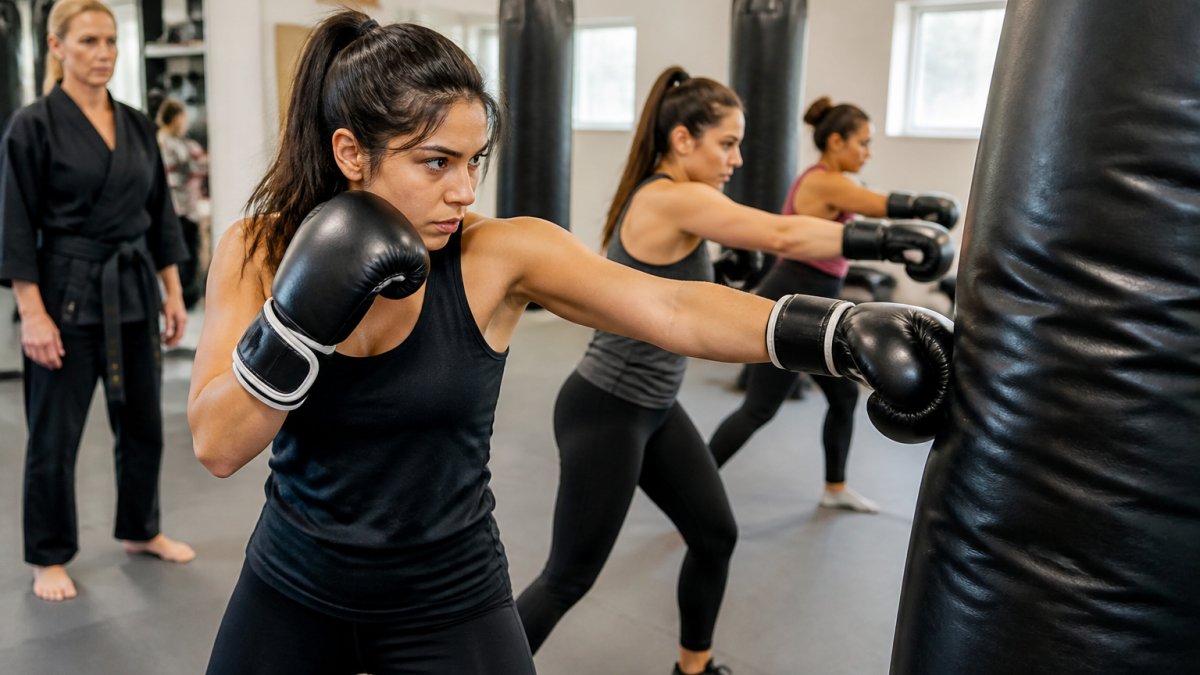
Many women are surprised by how quickly their fitness improves. This physical transformation builds confidence, you feel stronger, move more deliberately, and carry yourself differently.
Technique Training and Defense Tactics
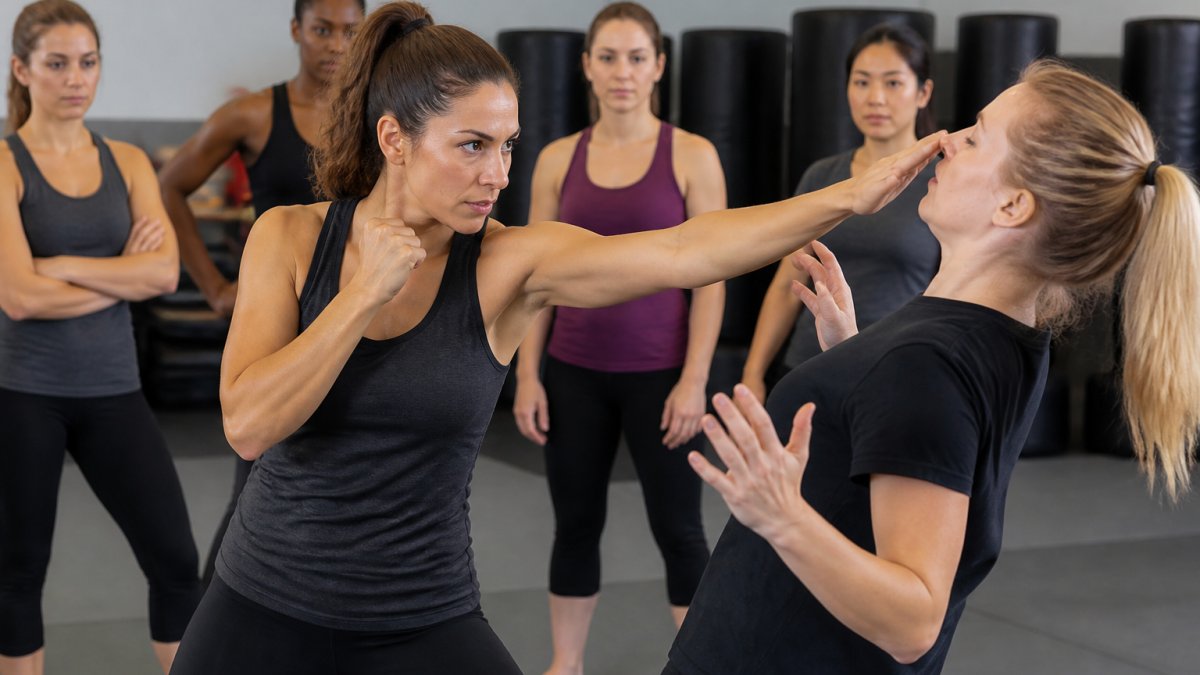
After warm-up, the instructor introduces the day's techniques. This might be a specific strike, a grappling escape, or a de-escalation strategy. The instructor demonstrates the technique slowly, breaking it into components. Then you practice with a partner or on equipment like focus pads or heavy bags.
Technique training emphasizes proper form over speed or power. You'll repeat movements hundreds of times, building neural pathways that allow your body to respond automatically under pressure. This repetition is what transforms intellectual knowledge into embodied skill.
Real-world scenarios are incorporated throughout training. You'll learn threat assessment, how to recognize pre-fight indicators and de-escalation techniques that prevent situations from becoming physical. Understanding body language and positioning is often more valuable than knowing how to execute a perfect punch.
Sparring and Real-World Scenarios
Controlled sparring or scenario training happens later in the class, once you've built foundational skills. This is where you test techniques under realistic conditions, when your heart rate is elevated, your breathing is heavy, and you're responding to an opponent's unpredictable movements.
Sparring doesn't mean full-contact fighting. Most beginner sparring is light to moderate contact, allowing you to practice without fear of serious injury. The goal is to develop the ability to remain calm under pressure and execute techniques when stressed. This bridges the gap between training and real-world application.
Scenario training might involve responding to common threats: someone grabbing your arm, an attacker approaching from behind, or someone invading your personal space. These realistic drills build the situational awareness and quick decision-making that actual self-defense requires.
How to Choose a Self-Defense Class That Fits Your Goals
Not all self-defense classes are created equal. Your choice should align with your specific goals, whether that's general fitness, practical self-defense skills, or sport-oriented training like boxing or mixed martial arts.
Start by clarifying what you want from training. Are you seeking empowerment and basic self-defense knowledge? Do you want to compete in combat sports? Are you looking for fitness with a self-defense component? Your answer shapes which program makes sense for you.
Class structure matters significantly. Some programs focus heavily on striking (boxing, kickboxing, Muay Thai). Others emphasize grappling and ground fighting (Brazilian Jiu-Jitsu, wrestling). Mixed martial arts programs blend multiple disciplines. For practical self-defense, a balanced approach that includes both striking and grappling is often most valuable.
Instructor Qualifications and Experience
The instructor's background directly impacts your training quality and safety. Look for instructors with legitimate credentials in their discipline, certifications from recognized organizations, years of consistent teaching experience, and ideally, competitive or professional experience in their field.
Beyond credentials, observe how the instructor interacts with students. Do they correct form individually? Do they create an environment where questions are welcomed? Do they modify techniques for different body types and fitness levels? An instructor's teaching ability matters as much as their technical expertise.
Experience matters, but it manifests in different ways. A newer instructor with strong fundamentals and genuine passion for teaching can be excellent. An experienced instructor who hasn't updated their knowledge in years might teach outdated methods. Look for instructors who continue learning and evolving their craft.
Get Started Today at NO RISK! →
Class Structure and Schedule
Consistency is essential for progress. Choose a program with class times that fit your schedule so you can attend regularly. Most beginners see noticeable improvement with consistent attendance.
Class size affects your experience. Very large classes mean less individual attention. Very small classes might lack the energy and variety that come from training with different partners.
Ask about class progression and structure. How do beginners advance to intermediate levels? Are there clear skill benchmarks? Do instructors offer private lessons for personalized coaching? Programs with clear progression paths help you stay motivated and focused.
Boxing for Self-Defense: Building Practical Skills
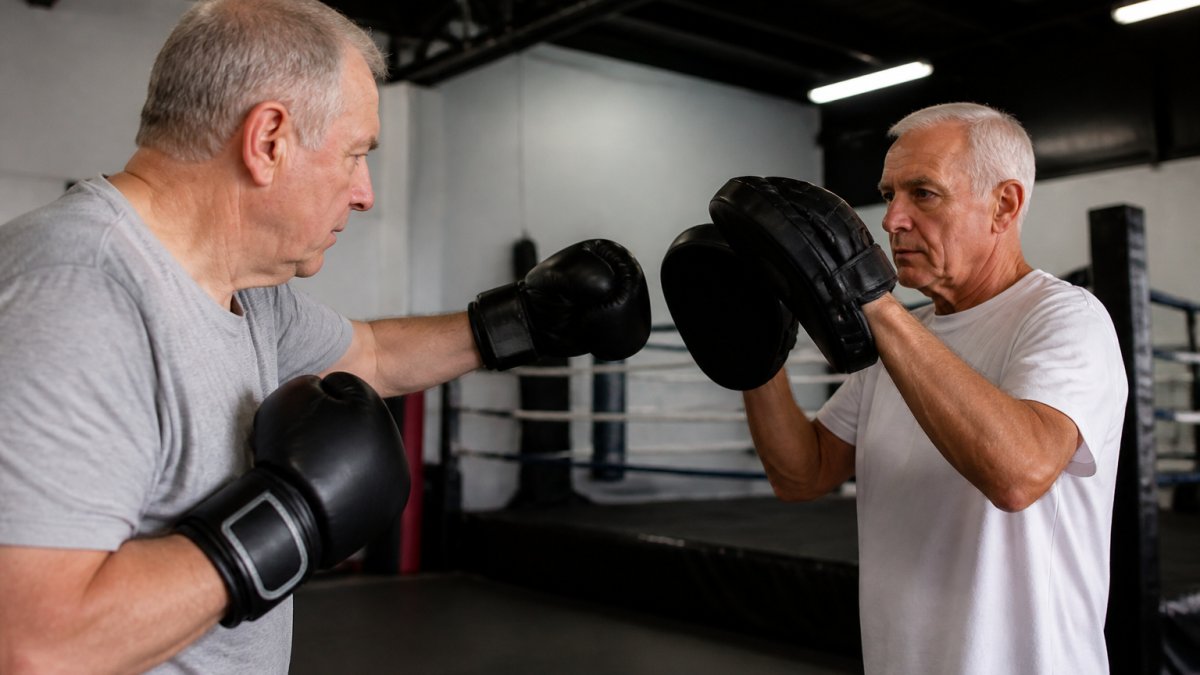
Boxing is one of the most practical martial arts for self-defense because it develops hand speed, footwork, and the ability to maintain composure under pressure. Unlike sport boxing, self-defense boxing emphasizes de-escalation, situational awareness, and escaping dangerous situations rather than winning rounds.
Boxing training builds the physical conditioning that enables effective self-defense. The footwork developed through boxing translates directly to maintaining distance, creating angles, and positioning yourself advantageously. Hand combinations become second nature through repetition, allowing you to respond instinctively rather than thinking through each movement.
The psychological benefits of boxing are substantial. You develop confidence in your ability to handle pressure. You learn to stay calm when your heart rate is elevated. You understand your physical capabilities and limitations. These mental skills often matter more than technical knowledge in actual self-defense situations.
Battenberg's offers boxing training that incorporates the proven methods of two-time heavyweight champion George Foreman. This approach emphasizes fundamental technique, footwork, and ring intelligence, skills that work equally well for fitness, self-defense, or competitive boxing. The program is designed for all levels, from complete beginners to advanced practitioners.
Beyond Physical Training: Situational Awareness and Confidence
The most overlooked aspect of self-defense is prevention through awareness. You avoid most dangerous situations by recognizing threats early and removing yourself from risky environments. This requires developing situational awareness, the ability to notice details about your surroundings and the people in them.
Situational awareness isn't paranoia. It's the habit of noticing exits, observing body language, recognizing when someone's behavior seems off, and trusting your instincts. Many self-defense incidents can be prevented entirely by noticing pre-fight indicators and de-escalating or leaving before physical confrontation occurs.
Confidence is the other critical component. Attackers typically target people who appear vulnerable or unaware. When you carry yourself with confidence, maintaining eye contact, moving deliberately, appearing alert, you become a less attractive target. Self-defense training builds this confidence through competence. As your skills improve, you naturally project more assurance.
The mental preparation learned in class extends far beyond physical techniques. You develop the ability to remain calm under stress, make quick decisions, and trust your training. These psychological skills are often more valuable than any single technique.
Getting Started: Your First Class and Beyond
Your first class should feel welcoming and structured. Arrive early so you can meet the instructor, discuss any injuries or limitations, and understand what to expect. Wear comfortable athletic clothing and bring water.
During your first class, focus on learning fundamental movements rather than trying to keep up with advanced students. Ask questions. Tell the instructor if something doesn't feel right.
After your first class, expect some muscle soreness. This is normal and typically subsides after a few sessions. Your body adapts quickly to new training demands.
Consistency matters more than intensity in the early weeks. Attending class three times per week is far more valuable than one intense session followed by a week off.
Set specific, measurable goals.
Post-class practice accelerates your progress dramatically. Spend fifteen to twenty minutes daily reviewing techniques you learned. Practice footwork, shadow box, or work combinations on a heavy bag if you have access.
At Battenberg's, we support your progression with structured programs that build systematically. Our instructors provide individual feedback, modify techniques for different body types, and create an environment where you can train confidently regardless of your starting point.
Self-defense training for women is an investment in your safety, confidence, and overall well-being.
Frequently Asked Questions
Can beginners really learn self-defense in a few classes?
Yes, beginners gain practical self-defense skills immediately, though mastery takes time. Most self-defense classes for beginners teach you how to recognize threats, de-escalate dangerous situations, and execute basic defense tactics within the first few sessions. Consistent training over weeks and months builds muscle memory and confidence so your responses become automatic under stress. The key is finding a program designed for beginners that emphasizes real-world application over competition.
What martial arts style is best for women's self-defense?
Boxing and mixed martial arts are highly effective for women's self-defense because they teach practical striking, footwork, and threat assessment in realistic scenarios. Taekwondo develops flexibility and powerful kicks. Brazilian jiu-jitsu excels at close-range grappling and escaping holds. The best choice depends on your fitness level, goals, and what resonates with you. A beginner-friendly program that combines hand-to-hand combat basics with situational awareness training gives you the broadest foundation.
Will I feel out of place if I'm not in great shape?
No. Self-defense classes for beginners are designed for all fitness levels. Instructors scale exercises to match your current conditioning and help you build strength gradually. Physical conditioning improves alongside your self-defense techniques, so you'll see progress in both areas. Many women feel more comfortable in a class specifically structured for beginners because everyone is learning the same fundamentals, regardless of their starting fitness level.
How do I know if a self-defense class is legitimate and safe?
Look for instructors with verifiable credentials, relevant martial arts experience, and a clear focus on safety and discipline. Legitimate programs teach de-escalation and threat assessment alongside combat techniques, not aggression. Ask about the instructor's background, watch a class before joining, and verify that the facility maintains proper safety standards. Programs led by experienced masters with a community reputation are more likely to provide quality instruction and a supportive environment for learning.