 Ultimate guide
How to Choose a Martial Arts School: A Parent and Adult Guide
Last Updated: November 14, 2026
Quick Summary
To choose a martial arts school, first define your goal: fitness, self-defense, discipline or competition. Then visit a live class, observe instruction, safety and atmosphere, and compare total costs in writing before signing anything.
- Write down your goal before visiting, since each school excels in different areas.
- Visit during a regular class and count how often the instructor gives individual feedback.
- Ask for the written rank requirements for the first two belts or levels.
- Check supervision, partner matching and protective equipment during any contact drills.
- Compare total cost over six months, including enrollment, equipment and testing fees.
Table of Contents
- Start With Your Goal: Fitness, Self-Defense, Discipline or Competition
- How to Tell If a Martial Arts School Is Good
- How to Choose a Martial Arts School for Beginners
- Questions to Ask Before Joining a Martial Arts School
- Martial Arts School Red Flags to Watch For
- Understanding Total Cost, Contracts and Trial Classes
- Booking Your Trial Class at Battenberg's
- Frequently Asked Questions
Start With Your Goal: Fitness, Self-Defense, Discipline or Competition
Choosing a martial arts school starts with one question: what do you want out of training?
Most people fall into one of four categories. Fitness-focused students want conditioning, flexibility and a structured routine. Self-defense students want practical techniques they can use under stress. Discipline-focused families, often parents of young children, want respect, focus and daily habits. Competition-minded students want sparring, rankings and tournament preparation.
Be honest about your starting point, too. An adult who has not exercised in years needs a school that scales intensity and welcomes beginners, not one that throws new students into advanced sparring. Your goal should also shape the art you choose.
How to Tell If a Martial Arts School Is Good
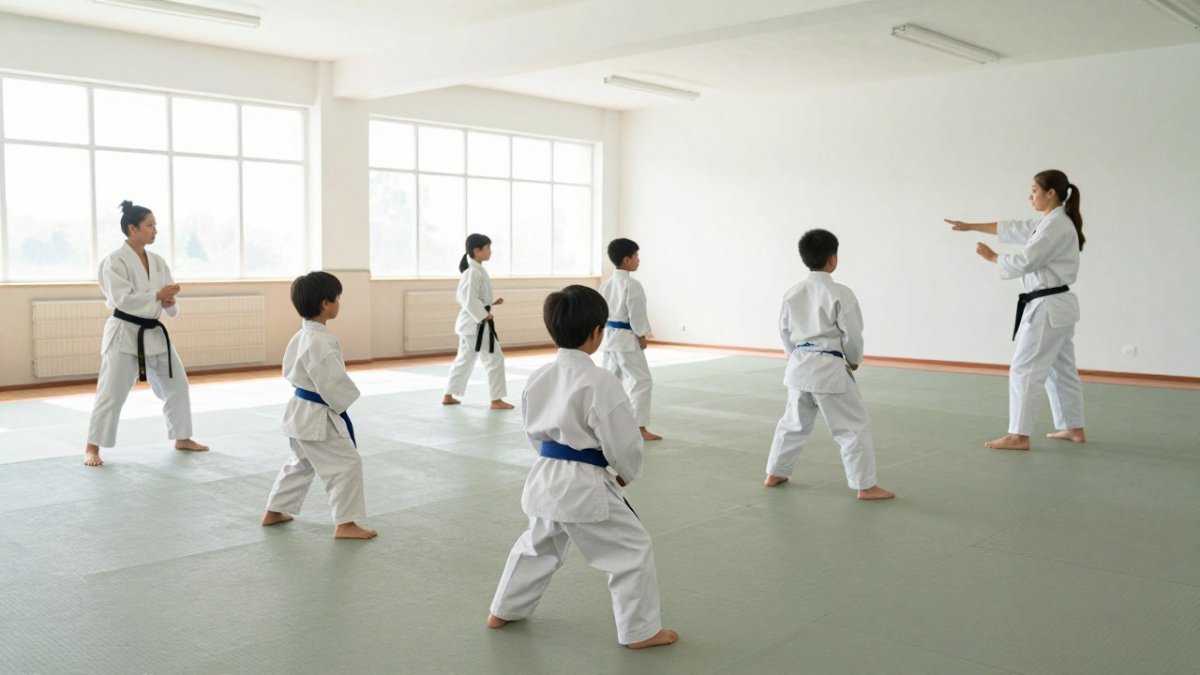
A good school is easier to recognize once you know what to observe. Visit during a regular class, not a special event, and watch how students are treated, how the instructor explains corrections, and whether beginners look supported rather than lost. Those details tell you more than any brochure. The problem is that most guides stop there, leaving you with a vague impression instead of a decision.
Instructor Experience, Qualifications and Teaching Style
Ask about the head instructor's training history, competition record and teaching background, and ask who else on the staff teaches children or adults. Credentials vary widely across martial arts, and rank alone does not guarantee good teaching.
A concrete check: count how many times the instructor gives individual feedback in a 10-minute window. In a well-run beginner class, most students should receive at least one correction or encouragement.
Class Structure, Curriculum Depth and Progression
A strong curriculum has a clear progression. Students should know what they need to learn to advance, and belt or rank requirements should be consistent and written down. Look for a warm-up, technique practice, partner drills and a cool-down in each session.
Ask to see the written rank requirements for the first two belts or levels. A school that can hand you a printed or posted syllabus is showing you its progression is planned, not improvised. If requirements live only in the instructor's head, promotion can become subjective.
Facilities, Cleanliness and Atmosphere
The training space should be clean, organized and safe. Check the mats for tears or loose seams, look at whether equipment is maintained, and notice whether students and staff seem relaxed and respectful. The atmosphere matters: a school where students encourage one another is a better environment for beginners than one dominated by intimidation.
Observable Safety Checks in a Live Class
Safety is the area where brochures and websites are least reliable, so evaluate it during a real class. Watch a sparring or partner-drill segment and look for these specific signals:
- Supervision ratio: Is at least one instructor actively watching each group doing contact work, or are staff distracted by paperwork or side conversations?
- Partner matching: Are beginners paired with experienced students who control their power, or left to spar with other beginners without guidance?
- Protective equipment: Are headgear, mouthguards, shin guards and gloves required for contact drills, and are they actually worn rather than sitting in a pile?
A common pattern is that schools with strong safety cultures explain their rules before class and enforce them visibly. If you cannot observe a contact class during your visit, ask to watch one before enrolling.
A Side-by-Side Comparison Scorecard
Impressions fade between visits, so score each school on the same criteria before you decide. Rate each item from 1 (poor) to 5 (excellent) and total the scores.
| Criterion | What to score | School A | School B | School C |
|---|---|---|---|---|
| Instruction | Feedback frequency, clarity, beginner patience | |||
| Safety | Supervision, equipment, contact control, injury response | |||
| Class fit | Beginner program, age grouping, class size | |||
| Curriculum | Written progression, rank requirements | |||
| Schedule | Convenience for your week, makeup classes | |||
| Total cost | Tuition plus fees over first six months | |||
| Atmosphere | How students treat newcomers |
Fill in the table during or immediately after each visit.
Watch out: Do not let a single charismatic instructor or a flashy demonstration override low safety or cost scores. The scorecard exists to keep one strong impression from masking weak areas.
How to Choose a Martial Arts School for Beginners
Beginners need a school that teaches fundamentals patiently and does not assume prior experience. Look for a beginner class or dedicated starter program, a reasonable class size and instructors who answer questions without rushing you. A good beginner school will explain expectations before you sign anything and will let you observe or take a trial class first.
Children, Teens and Adults: Matching the Program to the Student
Programs for children should emphasize age-appropriate instruction, short attention-friendly drills and clear rules about safety and respect. Parents of a child who has quit other sports should ask how the school keeps students engaged over time, such as through goal-setting, belt testing and recognition. Teens often respond well to a structured program with real challenges, while adults usually need flexible scheduling, low-pressure beginner classes and instruction that accounts for limited mobility or recovery time. Our beginner martial arts classes how-to guide explains what a first class typically involves.
Questions to Ask Before Joining a Martial Arts School
Bring a short list of questions to your visit or trial class. How long has the head instructor been teaching? What does a typical class look like for my age group?
Clear, direct answers are a good sign. Vague answers or pressure to decide immediately are not. But a list of questions only helps if you have a structured way to ask them and a plan for what to do after the trial.
A Step-by-Step Trial-Class Visit Plan
Most schools offer a free or low-cost trial class, and how you use that visit matters more than the visit itself. Follow this sequence:
- Before the visit: Call or email and ask three questions, what to wear, whether you can observe a full class before participating, and what the trial includes. A school that answers promptly and specifically is already showing you how it communicates.
- Arrive early: Watch the last 10 minutes of the class before yours. You will see how students leave, whether they seem happy, and how staff handle the transition.
- Observe first, participate second: If allowed, watch a full class before stepping on the mat. Use the safety checks and scorecard from the previous section.
- Ask your questions in person: Bring the list above plus the cost questions below. Write down the answers rather than relying on memory.
- Participate in the trial: Notice whether the instructor adjusts for your experience level and whether existing students acknowledge you.
- Follow up within 48 hours: Ask yourself the follow-up questions below while the visit is fresh.
Follow-Up Questions to Ask Yourself After the Trial
- Did I feel safe during contact or partner work?
- Did the instructor correct me at least once, and was the correction clear?
- Did any student speak to me or make me feel welcome?
If you answer no to safety or clarity questions, keep looking. If the only hesitation is cost, use the total-cost method below to compare fairly.
Transparent Total Cost: Compare More Than Monthly Tuition
Monthly tuition is only part of the cost, and schools structure fees differently, so a lower monthly rate can cost more over a year.
- Enrollment or registration fee: Often charged once, sometimes annually.
- Uniform and equipment: A uniform, belt, gloves, shin guards, mouthguard and bag can add up quickly; ask whether equipment is included or sold separately.
- Testing and promotion fees: Many schools charge per belt test, and the fee can rise at higher ranks.
Add these to the monthly tuition and compare the total for each school. A school with a slightly higher monthly rate but no testing fees and included equipment may be the cheaper choice over a year.
Watch out: Do not sign a contract at the trial visit, and do not accept a verbal total-cost estimate.
Martial Arts School Red Flags to Watch For
Some warning signs are worth taking seriously. Be wary of high-pressure sales tactics, such as "this offer expires today" or pressure to sign a long contract before a trial. Watch for instructors who dismiss safety concerns, students who appear injured and unattended, or classes where aggression is rewarded over control.
Watch out: Do not sign a multi-year contract at the first visit. A reputable school will let you try classes and review the terms in writing before you commit.
Understanding Total Cost, Contracts and Trial Classes
Monthly tuition is only part of the cost. Ask about registration or enrollment fees, uniform and equipment costs, testing fees for promotions, tournament fees and any charges for early cancellation.
Read contracts carefully before signing. Confirm the length of the commitment, how cancellation works, whether unused classes roll over and what happens if you move or are injured. Many good schools offer trial classes so you can judge the instruction firsthand.
Booking Your Trial Class at Battenberg's
At Battenberg's, we invite you to see how our programs work before committing. Our programs, led by Masters Jeff and Reneé Battenberg, include Taekwondo, boxing and our Pre-Karate Kub program for ages 4 to 6.
To book, choose the program that matches your goal, pick a time that fits your schedule and come with a few questions from the list above.
Frequently Asked Questions
How do I choose a martial arts school as a beginner?
Start with your goal, whether that is fitness, self-defense, discipline or competition, and then visit two or three schools. Watch a full class, notice whether students of different levels get individual attention, and ask about the beginner track and how long it takes to earn a first rank. A good beginner program explains what to expect in the first 30 to 90 days and does not pressure you to sign a long contract on the first visit. Pricing varies by school, format and class frequency, so request current rates in writing from each school you consider.
What should I look for when visiting a martial arts school?
Look at the instructors, the class structure and the training space. Instructors should explain techniques clearly, correct students respectfully and keep an eye on safety. Classes should have a warm-up, skill-building drills and a clear progression rather than chaotic free-for-alls. Check that mats, equipment and bathrooms are clean and that protective gear is available where contact drills are used. Also notice how the staff treats students and whether the atmosphere feels supportive.
What questions should I ask before joining a martial arts school?
Ask about instructor credentials and experience, how ranks are awarded, how many students are in a typical class and what the instructor-to-student ratio is for children's classes. Ask how the school handles sparring safety, what protective equipment is required, and how injuries are reported and managed. Get the full cost in writing, including registration, uniforms, testing fees and promotion costs, and ask whether there is a contract, how cancellation works and whether you can pause or quit without penalty. Ask for a trial class before you commit.
How do I know if a martial arts school is safe for children?
Look for age-specific classes taught by instructors who have experience with children and who keep group sizes manageable. Confirm that younger students train with appropriate, non-contact or light-contact drills and that sparring is reserved for older students with proper equipment. Ask how the school supervises children, whether parents can observe classes, and what the emergency and injury procedures are. A school that is confident about its safety practices will answer these questions directly.
What are the red flags when choosing a martial arts school?
Be cautious if a school pushes you to sign a long contract the same day, promises that you will earn a black belt within a set and unrealistic time, or refuses to let you observe a class. Other warning signs include instructors who cannot explain their rank or lineage, dirty facilities, a focus on fear or intimidation rather than discipline, and fees that are unclear or rise sharply after the first month. Weigh these red flags heavily before paying any money.
Should I try a martial arts class before enrolling?
Yes. A trial class lets you judge the instructor's teaching style, the pace of the class, the atmosphere and whether you feel comfortable training there. Go to a few classes, ideally including one at the times you would normally attend. Afterward, ask follow-up questions about the program and note how the school responds. A school that respects your decision to take time before committing is usually a better long-term fit.