 how-to
Is Rock Steady Boxing Effective for Parkinson's?
Table of Contents
- What Rock Steady Boxing Is and How Classes Work
- Rock Steady Boxing Research: What the Evidence Shows
- Rock Steady Boxing Benefits for Parkinson's Symptoms
- Rock Steady Boxing Class Frequency: How Often Should You Attend?
- Rock Steady Boxing Safety and Class Modifications
- Is Rock Steady Boxing Effective? The Bottom Line
- Getting Started: What to Expect in Your First Class
- Frequently Asked Questions
Last Updated: October 13, 2026
What Rock Steady Boxing Is and How Classes Work
Rock Steady Boxing is a non-contact boxing exercise program designed for people with Parkinson's disease. It uses boxing-based movements, punches, footwork, and defensive drills, without sparring or contact, focusing on controlled movements that challenge balance, coordination, and motor control.
At Battenberg's, Rock Steady Boxing fills that gap by combining boxing intensity with safety modifications.
Classes are group-based, creating built-in community and motivation. Participants work at their own pace with an instructor demonstrating proper technique. The non-contact format eliminates sparring injuries while keeping the workout challenging.
Classes follow a curriculum-based model, with instructors guiding a structured progression of techniques that builds confidence and competence over time, helping participants track progress and stay committed.
Rock Steady Boxing Research: What the Evidence Shows
Is rock steady boxing effective? The evidence is still growing. Several studies have examined the program's effects on people with Parkinson's, and results are encouraging, though not conclusive at the highest levels of scientific certainty.
Research has explored whether rock steady boxing effective approaches improve motor symptoms, balance, and quality of life. Studies tracking participants over weeks and months measure walking speed, balance tests, and self-reported daily function. Methods vary, but results consistently point the same direction: participants report and demonstrate improvements.
Researchers find that people who attend rock steady boxing classes regularly report better balance, coordination, and stronger legs and core. Some studies measure this through standardized tests like the Timed Up and Go test, which evaluates how quickly someone stands, walks, and sits down; others rely on participant feedback about daily activities (Using the Timed Up & Go Test in a Clinical Setting to Predict Falling in Parkinson's...).
Evidence is strongest for short-term effects visible over weeks and months of regular participation. Long-term studies are fewer because the program is relatively new. That doesn't mean benefits disappear over time; it means more research is needed on years of consistent training.
Rock Steady Boxing Benefits for Parkinson's Symptoms
Balance and Coordination
Balance problems are among the most disabling Parkinson's symptoms. People often experience forward-leaning posture and difficulty making quick adjustments to prevent falls. Rock Steady Boxing targets these issues through stance work, weight shifts, and reactive drills.
Boxing footwork requires constant small adjustments. Stepping forward, backward, and side-to-side in an athletic stance engages stabilizer muscles and practices rapid weight transfers, which over time can improve proprioception, your body's sense of where it is in space.
Coordination drills in rock steady boxing classes combine upper and lower body movements. Throwing a punch while stepping requires the brain to coordinate multiple body parts at once. For people with Parkinson's, whose coordination becomes fragmented, this practice can help maintain neural pathways and improve movement quality.
Strength, Mobility, and Physical Function
Punching builds strength in the shoulders, arms, core, and legs. The repetitive drills strengthen these areas while practicing functional movements, the same muscles and patterns used in everyday activities like reaching, pushing, and maintaining posture.
Rock Steady Boxing footwork strengthens the legs and improves hip mobility. Many people with Parkinson's develop hip and knee stiffness that restricts their walking stride; the side-to-side and forward-backward movements help maintain and improve range of motion.
Reported physical function improvements include walking longer distances, easier transitions from sitting to standing, and greater confidence moving through the environment. These gains directly impact independence and quality of life.
Motor Skills and Movement Quality
Parkinson's affects the brain's ability to initiate and control movement smoothly, making movements slower, smaller, and less coordinated. Rock Steady Boxing provides intensive, repetitive practice of complex motor skills, which research suggests can help maintain or partially restore motor function.
Punching requires precise timing and control. Throwing a punch with proper form means engaging the right muscles in the right sequence, deliberate practice that engages the cerebellum and other motor-learning brain regions, potentially compensating for Parkinson's-related changes in the basal ganglia.
Combination drills, punches performed in specific patterns, challenge working memory and motor planning: your brain must remember the sequence and execute it while maintaining balance and posture. This cognitive-motor integration may help preserve motor function in Parkinson's.
Mental Well-Being and Quality of Life
Beyond physical symptoms, people with Parkinson's often struggle with mood, motivation, and self-confidence. The disease can feel isolating and disempowering. Rock Steady Boxing addresses these psychological dimensions in several ways.
The group environment creates community and peer support. Training alongside others with Parkinson's reduces isolation and builds friendships, and you can see others facing similar challenges and making progress.
The boxing format itself helps. Throwing a punch, even a non-contact one, is psychologically powerful, providing a sense of control and agency: you're actively fighting back against the disease rather than passively accepting its progression.
Participants frequently report improved mood, motivation, and confidence in their physical abilities. These subjective gains matter enormously for quality of life and may influence long-term exercise adherence, crucial for maintaining physical benefits. Removing barriers to daily movement often requires practical adjustments, such as incorporating adaptive footwear options to ensure that the independence gained in the gym extends seamlessly into every aspect of a person's routine.
Rock Steady Boxing Class Frequency: How Often Should You Attend?
Experts recommend attending rock steady boxing classes at least 2-3 times per week for meaningful benefits, enough stimulus to challenge your body and reinforce motor learning without an unrealistic time commitment.
Attending once per week may maintain current function, but it's less likely to produce noticeable improvements. The brain needs repeated practice to learn new motor patterns, and once-weekly sessions are spaced too far apart for optimal learning.
Some attend 4-5 times per week, especially if highly motivated or with access to multiple class times. More frequent attendance can produce faster improvements, but consistency matters more than intensity: attending 2 classes reliably every week beats 4 sporadic classes.
Get Started Today at NO RISK! →
| Frequency | Expected Benefit | Best For |
|---|---|---|
| Once per week | Maintenance, community | Limited availability |
| 2-3 times per week | Noticeable improvement | Most participants |
| 4+ times per week | Faster progress | Highly motivated individuals |
The key is a schedule you can sustain long-term, since rock steady boxing benefits accumulate over months and years. Missing occasional classes is fine, but long gaps interrupt the learning process and reduce overall benefit.
Rock Steady Boxing Safety and Class Modifications
Rock Steady Boxing is generally safe for people with Parkinson's when taught by trained instructors. The non-contact nature eliminates sparring head injuries, but like any exercise program, there are precautions.
Fall risk is the primary safety concern, since people with Parkinson's have increased fall risk from balance problems and slower reaction times. Good instructors minimize this by:
- Using sturdy equipment like heavy bags or striking pads for balance support
- Keeping the training space clear of obstacles
- Teaching proper footwork and stance to maintain stability
- Offering modifications for people with severe balance problems
Class modifications let people at different ability levels participate safely. Someone with advanced balance problems might punch while standing against a wall or holding a stable surface; someone with milder symptoms might do full footwork patterns. A good instructor offers these without singling anyone out.
Before starting any new exercise program, people with Parkinson's should consult their neurologist or primary care physician, especially with other health conditions, balance-affecting medications, or recent falls. Your doctor can advise whether rock steady boxing is appropriate and what modifications are needed.
Proper form reduces injury risk, since punching with poor form can strain shoulders or wrists. Instructors should teach correct technique from the start and correct errors as they occur.
Is Rock Steady Boxing Effective? The Bottom Line
Is rock steady boxing effective for Parkinson's? The evidence suggests yes, with important caveats.
Rock Steady Boxing shows measurable benefits for balance, coordination, strength, and motor function in people with Parkinson's who attend regularly. Participants report improvements in daily activities, better mood, and increased confidence, real and meaningful gains.
However, rock steady boxing is not a cure. It doesn't reverse Parkinson's or stop its progression entirely; it helps people maintain and improve function despite the disease, like active disease management similar to physical therapy after an injury or stroke.
The evidence is strongest for people in the early to middle stages of Parkinson's. People with very advanced disease may still benefit, but they may need more modifications and closer supervision.
Rock Steady Boxing works best as part of a comprehensive approach including medical treatment, other exercise, good nutrition, adequate sleep, and social engagement. It's not either-or; it complements other treatments.
The real measure isn't whether rock steady boxing is perfect, but whether it beats doing nothing. For most people with Parkinson's, regular training produces measurable improvements in function and quality of life, making it an evidence-supported option worth trying.
Getting Started: What to Expect in Your First Class
Your first rock steady boxing class will feel different from a typical fitness class. Expect to learn proper technique rather than push to exhaustion.
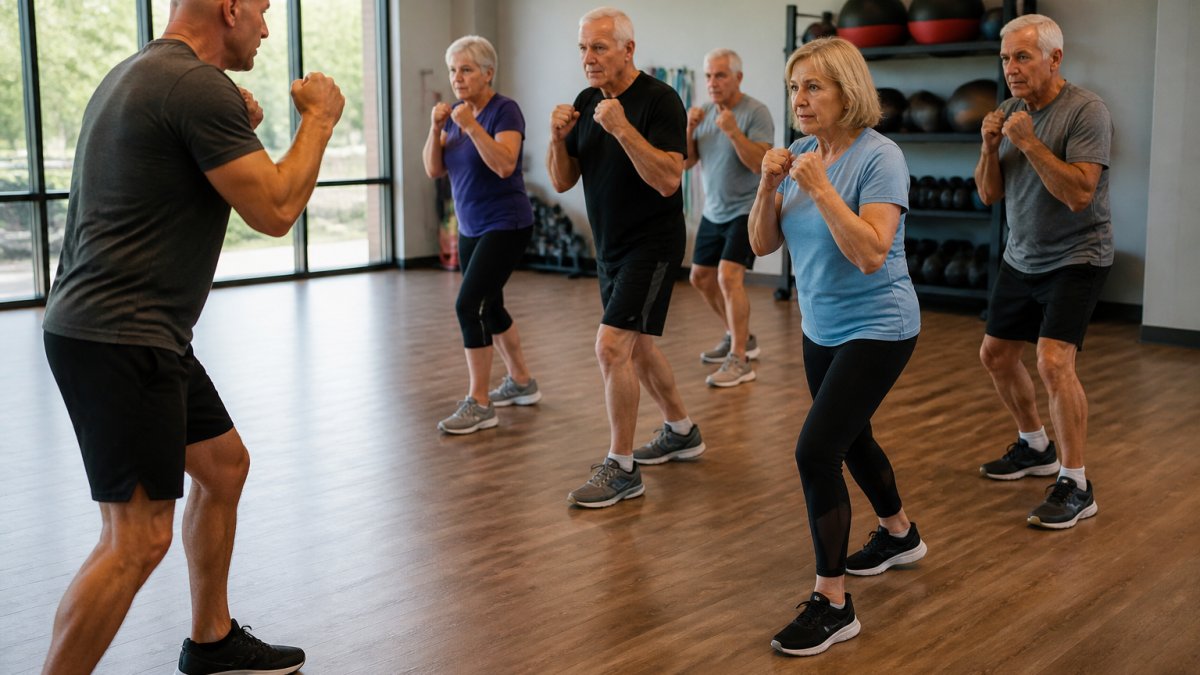
Arrive 10-15 minutes early if possible to meet the instructor, mention injuries or concerns, and get comfortable. Tell the instructor it's your first class; instructors check in throughout and offer modifications as needed.
Wear comfortable athletic clothing and supportive shoes. Bring water and a towel. You don't need special boxing gloves or hand wraps for your first class, studios provide these or tell you what to bring.
Expect to feel uncoordinated at first. Boxing footwork and punch combinations take practice, and learning new movement patterns feels awkward initially. This is normal and improves quickly with repetition.
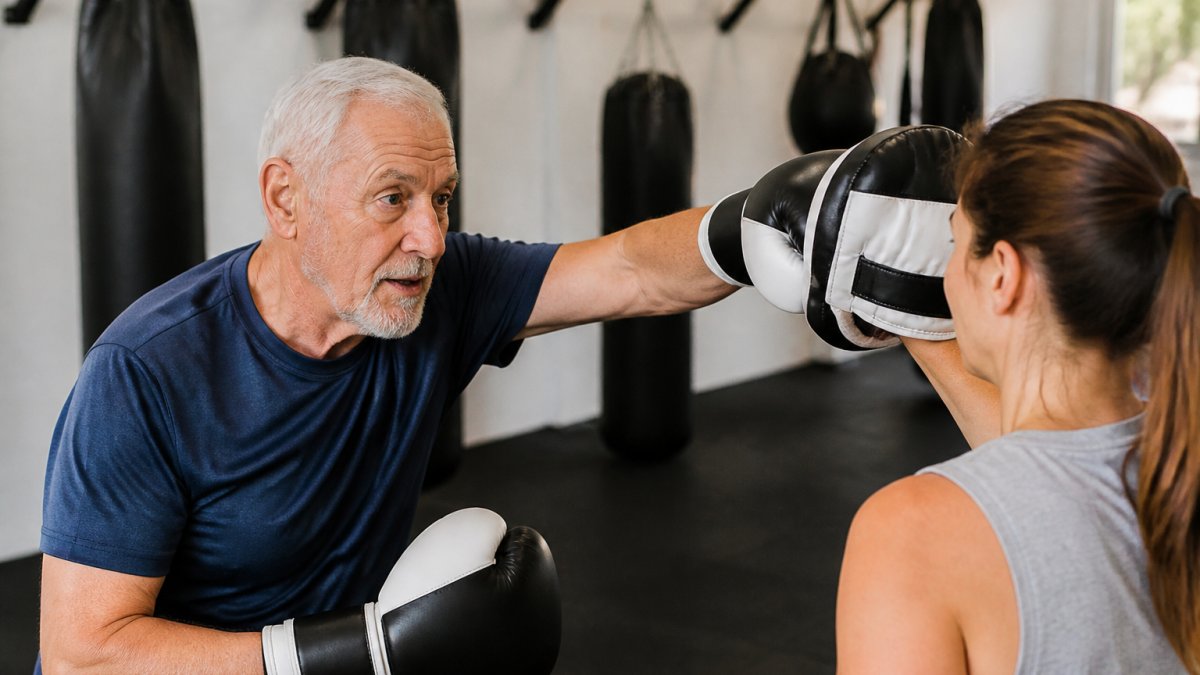
Classes follow a similar structure: warm-up, technique instruction, circuit training or drills, and cool-down. You'll work on a heavy bag, with mitts (pads the instructor holds), on footwork drills, and on combinations.
The instructor will watch your form and make corrections, valuable feedback that helps you learn proper technique and prevents injury. Don't be shy about asking questions or requesting modifications if something doesn't feel right.
After your first class, you'll likely feel energized but tired. This is normal: your muscles worked hard and your brain processed new information. Recovery is part of the process.
Most people find rock steady boxing more enjoyable as they progress: movements feel more natural, drills make more sense, and friendships develop.
Is rock steady boxing effective? The research and real-world experience from thousands of participants suggest the answer is yes. People with Parkinson's who train consistently see improvements in balance, strength, coordination, and quality of life.
Frequently Asked Questions
Does Rock Steady Boxing actually slow Parkinson's disease progression?
Research suggests Rock Steady Boxing can help manage Parkinson's symptoms and improve physical function, but current evidence does not conclusively prove it slows disease progression itself. Studies show improvements in balance, strength, and quality of life for participants. Anyone with Parkinson's should discuss starting Rock Steady Boxing with their neurologist to ensure it fits their individual condition and treatment plan.
How often should someone with Parkinson's attend Rock Steady Boxing classes?
Most programs recommend attending classes 2-3 times per week for meaningful benefits. Consistency matters more than intensity. Regular participation helps maintain improvements in balance, coordination, and motor function. Your instructor can adjust frequency based on your individual ability and how you respond to training.
Is Rock Steady Boxing safe for people with advanced Parkinson's?
Rock Steady Boxing classes are designed to be non-contact and accommodate various ability levels. People with advanced Parkinson's can participate with proper modifications and instructor guidance. However, fall risk and balance issues require careful supervision. Always consult your doctor before starting, and inform your instructor about your specific symptoms so they can modify exercises appropriately.
What benefits can people with Parkinson's realistically expect from Rock Steady Boxing?
Participants often report improved balance and coordination, increased strength and endurance, better posture and gait, enhanced fine motor skills, and greater confidence in daily movement. Many also experience mood improvements and reduced anxiety. These benefits support quality of life and independence, though individual results vary based on disease stage, consistency, and overall health.