 how-to
Martial Arts for Kids Who Quit Sports: A Parent's Guide
Table of Contents
- Why Kids Quit Sports: Understanding the Real Reasons
- What to Do When a Child Wants to Quit a Sport
- Why Martial Arts for Kids Who Quit Sports Works Differently
- Kids Martial Arts Classes for Beginners: What to Look For
- How Long Should a Child Try a New Sport Before Deciding
- How Parents Can Support Persistence Without Forcing It
- Building Confidence and Resilience Through Martial Arts
- Frequently Asked Questions
Last Updated: October 11, 2026
Why Kids Quit Sports: Understanding the Real Reasons
When a child quits a sport, it stings. But quitting rarely happens overnight. Most kids cite consistent reasons: boredom with repetitive drills, frustration when progress stalls, feeling disconnected from teammates, or losing interest as priorities shift.
Quitting doesn't mean failure. It often means the activity didn't match their learning style, personality, or developmental needs. Some children thrive in teams; others need one-on-one attention. Understanding why your child wants to quit is the first step toward finding an activity that sticks.
Kids quit when they stop seeing progress, when the environment feels unsafe, or when the activity doesn't align with how they learn best. A child who quits soccer might flourish in martial arts, the difference often comes down to structure, feedback, and how success is measured.
What to Do When a Child Wants to Quit a Sport
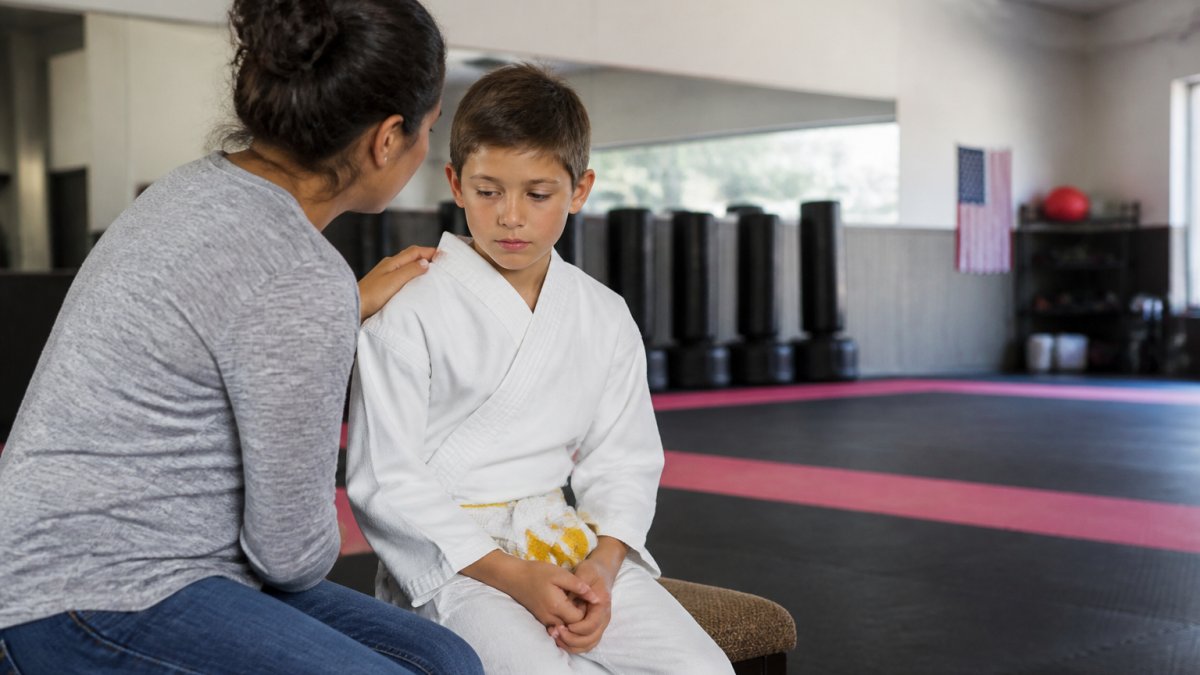
When your child says "I don't want to go anymore," pause and listen. Ask open-ended questions without judgment. What specifically bothers them, the coach, other kids, physical demands, or something else?
Sit down when calm. Ask what they liked at the start and what changed. Listen for patterns: feeling left behind, struggling with the coach's style, or anxiety before practice. Each answer points in a different direction.
Pause, Switch, or Continue: A Decision Framework
Not every "I want to quit" deserves an immediate exit. But not every child should be forced to stay either. Use this framework to decide:
Pause (take 2-4 weeks off):
- Your child is exhausted or overwhelmed by too many commitments
- They're dealing with stress at school or home
- They've been in the sport less than 4 weeks
- The issue is temporary (a bad week, a conflict with a friend)
Switch (try a different activity):
- Your child enjoyed the sport but struggled with the environment
- They need more individual attention than team sports provide
- They're frustrated by lack of visible progress
- The coach's style doesn't match how they learn
- They want to try something new that might suit them better
Continue (with modifications):
- Your child loves the activity but faces one specific obstacle
- The problem is solvable (a schedule conflict, a misunderstanding with a coach)
- They're past the initial learning curve but still building confidence
- They've expressed wanting to continue despite the challenge
This framework helps separate "I'm bored today" from "this activity isn't right for me." Most kids who quit sports within the first month are still in the adjustment phase. Those who quit after 8-12 weeks often signal a genuine mismatch.
Why Martial Arts for Kids Who Quit Sports Works Differently
Martial arts differs fundamentally: progress is visible, personal, and earned at your own pace. Your child competes against their own last performance, not teammates. That shift changes everything.
In team sports, roles are fixed: slower runners stay slower, smaller kids get fewer touches. In martial arts, every child moves through the same belt progression.
Kids who quit team sports thrive in martial arts because the environment removes the comparison trap. There's no bench, no cuts. Your child gets feedback from an instructor trained to build confidence.
Individual Progress Instead of Team Pressure
In team sports, underperformance affects the whole group and creates pressure that breaks some kids. In martial arts, every student works toward personal goals. Belt rank depends only on their own effort and skill.
For kids who've quit before, this matters enormously. Martial arts removes the sting of feeling left behind.
At Battenberg's, every student gets individual attention. Your child isn't one of twenty waiting for a turn. Each student moves at their own speed, building confidence through visible, measurable skill gains.
Self-Paced Learning and Visible Achievement
In team sports, improvement is abstract. In martial arts, progress is concrete. Your child learns a kick, practices it, demonstrates it, and earns recognition. A new belt or stripe is tangible proof of growth.
This visibility matters for kids who've lost confidence. Martial arts proves effort leads somewhere. Every technique mastered is a visible win. Every belt earned is a milestone they can point to.
The self-paced structure removes the fear of falling behind. In martial arts, everyone progresses on their own timeline. A child who learns slowly isn't a problem, they're on their own path.
Kids Martial Arts Classes for Beginners: What to Look For
Not all martial arts programs are the same. Some focus on competition; others prioritize character development and individual growth. For a child who's quit sports, the second approach matters more.
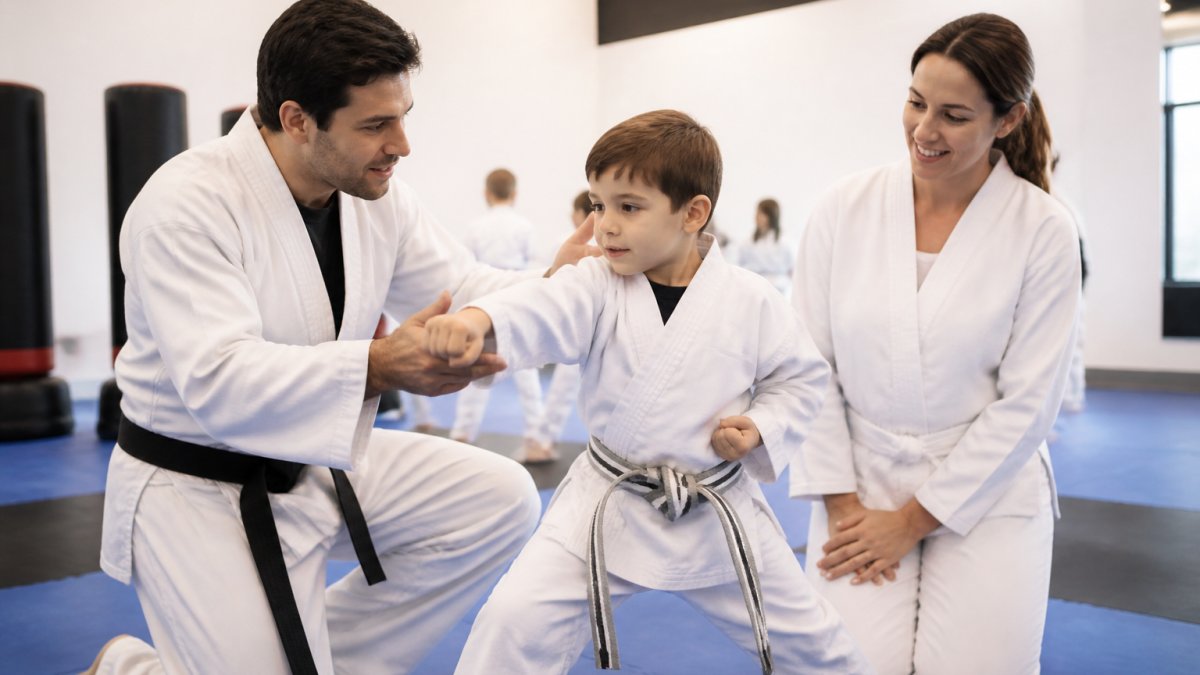
When evaluating a class, ask: How big are classes? Does the instructor work with beginners separately? What's the teaching style? Is discipline enforced through respect or fear? How do they handle struggling kids?
Class Size and Instructor Attention
A class with 30 kids and one instructor is chaos. Look for classes with a maximum of 12-15 students per instructor, or beginner-specific sessions.
Beginner classes matter. Mixing beginners with advanced students means beginners either get bored or confused by complex techniques.
Ask how the instructor handles struggling students. Do they offer one-on-one help, modify movements, and celebrate effort?
Teaching Style and Safety Culture
For a child who's quit sports, an instructor who builds confidence matters more than one who pushes hard.
Watch a class before enrolling. Does the instructor make kids feel safe asking questions and correct mistakes in a way that teaches rather than shames?
Safety culture is non-negotiable. Kids should wear protective gear, instructors should teach control, and contact should be light and consensual. A program that prioritizes safety removes barriers for children who've felt unsafe before.
Neuro-Training and Developmental Focus
Some programs focus purely on techniques and belt progression. Others integrate brain development, focus training, and emotional regulation, especially important for young children.
Get Started Today at NO RISK! →
Neuro-training teaches kids to focus, manage frustration, and build mental resilience. For a child who's quit before, these skills are essential.
Look for programs that explicitly teach focus, breathing, and emotional awareness, and help kids manage frustration when mastering techniques takes time.
How Long Should a Child Try a New Sport Before Deciding
How long should you give a new activity a real chance? Push too hard and you breed resentment. Give up too fast and your child misses something transformative.
The First Four Weeks: Building Comfort
The first month is about comfort and familiarity, not competence. Your child is learning the environment, instructor, other kids, and basic movements.
During weeks one through four, expect some resistance. Kids feel awkward trying something new. This is normal, not a sign that martial arts isn't working.
By week four, your child should know what to expect, follow basic instructions, learn simple techniques, and make eye contact with the instructor. If still completely resistant, ask why, environment, instructor, or anxiety, to decide whether to continue or switch.
Weeks 5-12: Tracking Progress and Engagement
Weeks five through twelve are when you can assess fit. Your child is past initial discomfort. Now look for signs of genuine engagement or persistent resistance.
Track whether your child asks to go to class, practices at home, talks about what they learned, makes progress, and seems happier after class. By week twelve, you should see at least some signs.
Many kids who quit sports show resistance even when an activity is good for them. If you push through with encouragement rather than force, they often break through to genuine enjoyment by week eight or ten.
How Parents Can Support Persistence Without Forcing It
The line between support and force is thin. You want resilience and follow-through, not a crushed spirit.
Show interest, attend classes occasionally, ask specific questions, and celebrate effort. Let your child own the decision to continue.
Talk About Challenges Without Judgment
When your child mentions frustration, listen first. Let them vent. Validate that learning something new is hard.
Then problem-solve together: "What do you think would help?" When kids generate solutions, they're more likely to follow through.
Avoid responses like "You're just being lazy" or "Just push through." These shut down conversation and make your child feel judged.
Celebrate Small Wins and Skill Milestones
Don't wait for belt promotion to celebrate progress. Notice small wins: helping others, trying repeatedly, asking good questions.
These moments build identity. Your child sees themselves as someone who tries hard, helps others, and sticks with challenges.
When your child earns a belt or stripe, celebrate it genuinely. But celebrate the work that got them there too. "You earned this because you showed up, you practiced, and you didn't give up when it was hard."
Model Resilience and Persistence
Kids watch what you do, not just what you say. If you quit things when they get hard, your child learns that quitting is normal.
Talk about your own challenges. "I'm learning to [cook, play guitar, run]. It's frustrating because I'm not good yet. But I'm going to keep going because I want to get better." Let your child see you struggle and persist.
Building Confidence and Resilience Through Martial Arts
Confidence isn't something you're born with. It's built through small wins, consistent practice, and environments where effort is valued over perfection.
Martial arts builds confidence in specific ways. Your child learns a technique that felt impossible. They practice. They get feedback.
When a child has quit sports before, they've experienced the opposite. They've tried and felt left behind.
This confidence bleeds into other areas.
Finding the right activity after your child quits a sport isn't about forcing them into something new.
Frequently Asked Questions
How do I know if my child should quit a sport or try martial arts instead?
Before quitting, identify the real reason: boredom, frustration with team dynamics, feeling overwhelmed, or lack of progress. Martial arts can work better for kids who quit team sports because there's no team pressure and progress is individual. Try a trial class at a beginner-friendly martial arts program and observe whether your child engages with the instructor and the one-on-one feedback. If they respond positively to individual attention and goal-setting, martial arts may be the better fit.
How long should a child try a new martial arts class before deciding to quit?
Give it 8-12 weeks minimum. The first four weeks are about comfort and basic familiarity; real progress and confidence emerge in weeks 5-12. Watch for engagement signals: Does your child talk about class? Are they practicing at home? Do they show up without resistance? If after 12 weeks there's still no interest or progress, and the class environment is appropriate, the issue may be martial arts itself, not the activity. If the environment is unsafe or the instructor's style doesn't match your child, quitting sooner is reasonable.
What makes martial arts different for kids who have quit other sports?
Martial arts removes team-based pressure and competition against peers. Your child progresses at their own pace, earns belts based on personal skill development, and receives one-on-one feedback from an instructor. There's no bench time, no being picked last, and no reliance on teammates. This individual focus helps kids who struggled with team dynamics, performance anxiety, or feeling left behind. Many children who quit team sports thrive in martial arts because success is defined by their own improvement, not comparison to others.
How can I tell if my child's resistance to martial arts is normal or a sign to try something else?
Normal resistance includes nervousness the first few weeks, discomfort with the unfamiliar environment, or frustration when skills don't come immediately. These are signs to encourage persistence. Red flags include consistent avoidance without a specific reason, complaints about safety or the instructor's behavior, or anxiety that doesn't ease after four weeks. If your child is anxious, has sensory sensitivities, or has had a negative experience with a coach or peer, address those directly with the instructor or consider a different class environment. The goal is a safe, supportive setting where challenge builds confidence, not fear.