 how-to
Can Martial Arts Help Adults Lose Weight?
Last Updated: November 2, 2026
Quick Summary
Martial arts can help adults lose weight when they train consistently, because striking, footwork and conditioning drills keep the heart rate up and build stamina over time. Calorie burn depends on training intensity, class length and how often you attend. Pairing regular classes with sensible eating makes martial arts weight loss results more likely.
- Attending regularly matters more than a short burst of intense training you quit after a month.
- Striking classes like kickboxing and Muay Thai usually give the highest calorie output and cardio.
- Start with two classes per week and build to three over the first month.
- Warm up for five to ten minutes before every class, even if the class includes one.
- Track waist size, energy levels and how clothes fit, since scale weight can mislead.
Table of Contents
- How Martial Arts Burns Calories for Adults
- Choosing a Martial Art Based on Your Goals and Fitness Level
- Martial Arts for Beginners Adults: Starting Safely
- Kickboxing for Weight Loss: Why It Works for Many Adults
- How Often to Train Martial Arts for Weight Loss
- Pairing Martial Arts With Nutrition for Weight Loss
- Frequently Asked Questions
- Your Next Step: Booking a Trial Class at Battenberg's
How Martial Arts Burns Calories for Adults
Martial arts can help adults lose weight, and the benefit of martial arts weight loss comes from consistent training, not a single class.
Martial arts training combines cardio, strength and movement. Rounds of striking, footwork and bag work keep your heart rate up. Partner drills and core work add strength.
Results tend to come from showing up. Attending regularly matters more than an intense program you quit after a month.
Realistic Calorie Estimates and Measurement Limits
Calorie burn varies widely from person to person. Body weight, intensity, class length and fitness level all change the numbers. Many adults find that a hard hour of striking burns more energy than a relaxed one, but exact totals are hard to pin down.
Keep these limits in mind:
- Wearable estimates can be off by a meaningful margin
- Scale weight also shifts with water, sleep and salt intake
- Muscle gain can hide fat loss on the scale for a few weeks
- Tracking waist size, energy levels and how clothes fit can tell you more than the scale alone Complementing your martial arts practice with other forms of cardiovascular exercise requires a careful assessment of whether running for weight loss provides the sustainable metabolic boost you need to reach your goals.
Choosing a Martial Art Based on Your Goals and Fitness Level
Many adults pick a style by watching a highlight reel, then find the class does not match their body or schedule. A better approach is to score each option against four filters: your primary goal, your current fitness level, your joint history, and how often you can realistically attend. For a fuller look at matching a style to your goals and anxiety-related motivation, see choosing the right martial art for your goals.
Match the style to your primary goal
- Striking classes such as kickboxing and Muay Thai are the highest-output option for most adults. Rounds of punches, kicks, and footwork keep the heart rate elevated, and bag work adds a strength component. Class formats vary, and the time spent on active work depends on instruction, warm-up and rest.
- Taekwondo and karate blend kicks, forms, and discipline at a moderate, often interval-style intensity. Forms (kata or poomsae) build balance and control but burn less per minute than continuous bag work. These styles suit adults who want structure and progression over pure calorie burn.
- Grappling styles such as Brazilian jiu-jitsu build strength, grip endurance, and positional control. A live rolling round can be very demanding, but a technique-heavy class with long explanations burns less than a striking class of the same length. BJJ suits adults who prefer problem-solving and close-contact work over striking.
- Mixed training (MMA-style classes) blends striking and grappling for variety. The trade-off is that breadth can slow skill progression in any one area, which matters if you want to compete rather than just train.
Match the style to your body and history
- Knees or hips sensitive? Striking classes with heavy kicking volume and deep stances can aggravate them. Ask about low-kick modifications and bag-only rounds.
- Shoulders or wrists sensitive? Grappling and heavy bag work load the upper body. Technique-focused classes with controlled drilling are gentler than live sparring.
- Lower back issues? Avoid classes that emphasize repeated deep stances early; tell the instructor before your first session.
- Returning after years away from exercise? Start with a beginner or fundamentals class in any style. Most schools run these separately from advanced classes.
A simple decision framework
Ask yourself in this order:
- What is my main goal? Calorie burn and cardio → striking or mixed. Strength and control → grappling. Structure and discipline → traditional striking arts.
- How many days per week can I attend? Two days favors a single style with a clear curriculum. Three or more days opens up mixed training without losing progression.
- What is my joint history? Filter out styles that load problem areas before you tour a school.
- Do I want contact? If not, look for bag-and-pad classes, fitness kickboxing, or no-sparring beginner programs.
Best for: adults who want structured classes and a clear progression. Skip if: you need a fully non-contact, low-impact option right now, ask specifically about fitness kickboxing or bag-only formats.
The table below summarises how the main martial arts styles compare for adults with different goals.
| Style | Best for | Key difference |
|---|---|---|
| Striking classes (kickboxing, Muay Thai) | Highest calorie output and cardio | Rounds of punches, kicks and footwork keep heart rate up |
| Taekwondo and karate | Structure and discipline | Forms build balance; moderate, interval-style intensity |
| Brazilian jiu-jitsu | Strength and close-contact problem-solving | Grip endurance and positional control; live rounds are demanding |
| Mixed training (MMA-style) | Variety across striking and grappling | Breadth can slow progress in any single area |
Martial Arts for Beginners Adults: Starting Safely
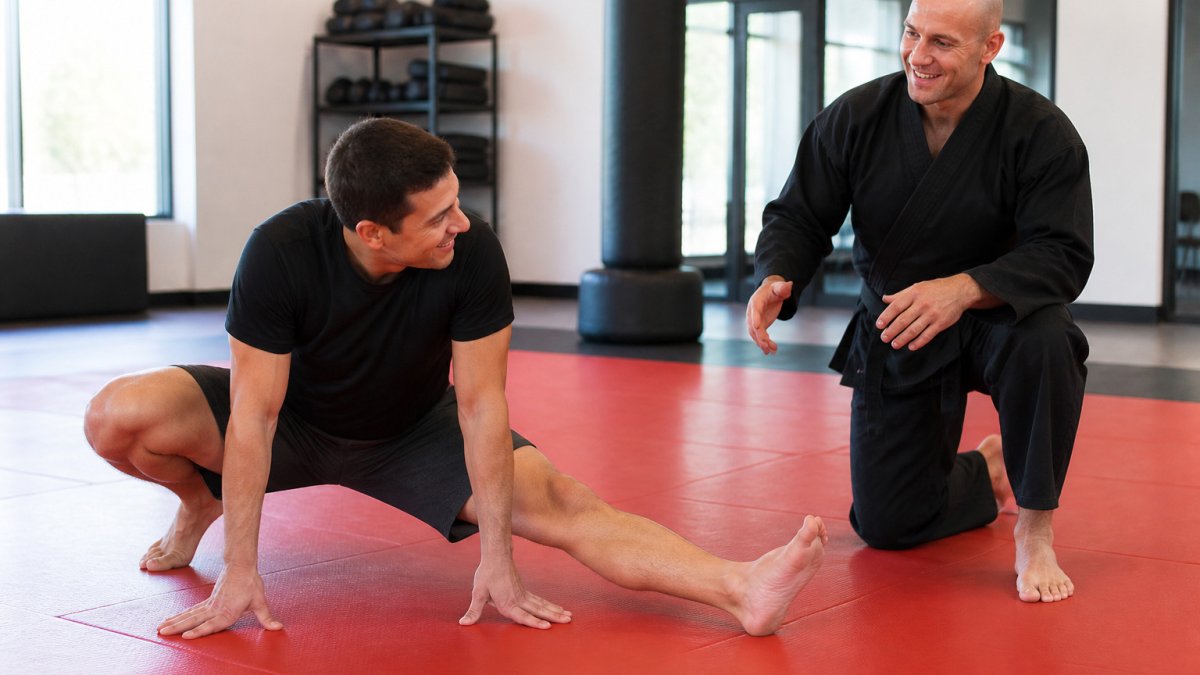
Beginner injuries in martial arts often come from doing too much too soon, not from the sport itself. Adults returning to exercise after a break need a ramp-up plan, a warm-up habit, and a clear way to tell soreness from injury. Our beginner martial arts class how-to guide walks through what to expect in your first sessions. This is the part most articles skip.
Build a four-week ramp-up
- Week 1: Two classes, fundamentals only. Focus on stance, guard, and basic footwork. Skip sparring and heavy bag work if offered.
- Week 2: Two classes plus one 20-minute walk or bike session on an off day. Add light bag work at half power.
- Week 3: Three classes if recovery feels good. Introduce partner drills at controlled speed.
- Week 4: Three classes, with one session including conditioning rounds. Reassess sleep, soreness, and energy before adding more.
Adults who jump straight into several hard classes in the first week can end up sidelined by soreness or a strained joint. A gradual build helps protect the habit.
Warm up before every class
Arrive five to ten minutes early and do your own warm-up even if the class starts with one:
Get Started Today at NO RISK! →
- Five minutes of easy movement (jump rope, brisk walk, or shadow boxing)
- Dynamic leg swings and hip circles
- Arm circles and shoulder rolls
- Bodyweight squats and lunges through a comfortable range
- Wrist and ankle circles, especially for grappling and bag work
Cold muscles and cold joints are where most minor strains happen. A proper warm-up raises tissue temperature and improves range of motion before the first hard round.
Tell the instructor about your history
Before your first class, mention any prior injuries, surgeries, or areas that flare up. Good instructors keep modifications ready: lower kicks, no jumping, bag-only rounds, or technique drilling instead of live sparring. If an instructor dismisses your concerns or pushes you into contact before you are ready, that is a signal to look elsewhere.
Know the difference between soreness and injury
- Normal soreness shows up 24 to 48 hours after class, is spread across muscle groups, and fades with light movement.
- Injury is sharp, localized, or one-sided, and it does not improve with rest. Stop training and get it checked.
- Joint pain during class (knees, shoulders, wrists) is not something to train through. Modify the drill or sit it out.
Recovery basics that matter
- Sleep is the single biggest recovery lever. Most adults need seven to nine hours (the CDC).
- Hydrate before, during, and after class, especially in striking classes with heavy sweating.
- Take at least one full rest day between hard sessions in the first month.
- Light activity on off days (walking, stretching) helps soreness more than complete inactivity.
Questions to ask before you sign up
- Does the instructor offer a beginner-friendly class separate from advanced students?
- Are there modified drills for different fitness levels and joint limitations?
- Is sparring optional, and at what stage is it introduced?
- Is there a clear way to track progress beyond belt rank?
- What is the class size, and how many instructors are on the floor?
Kickboxing for Weight Loss: Why It Works for Many Adults
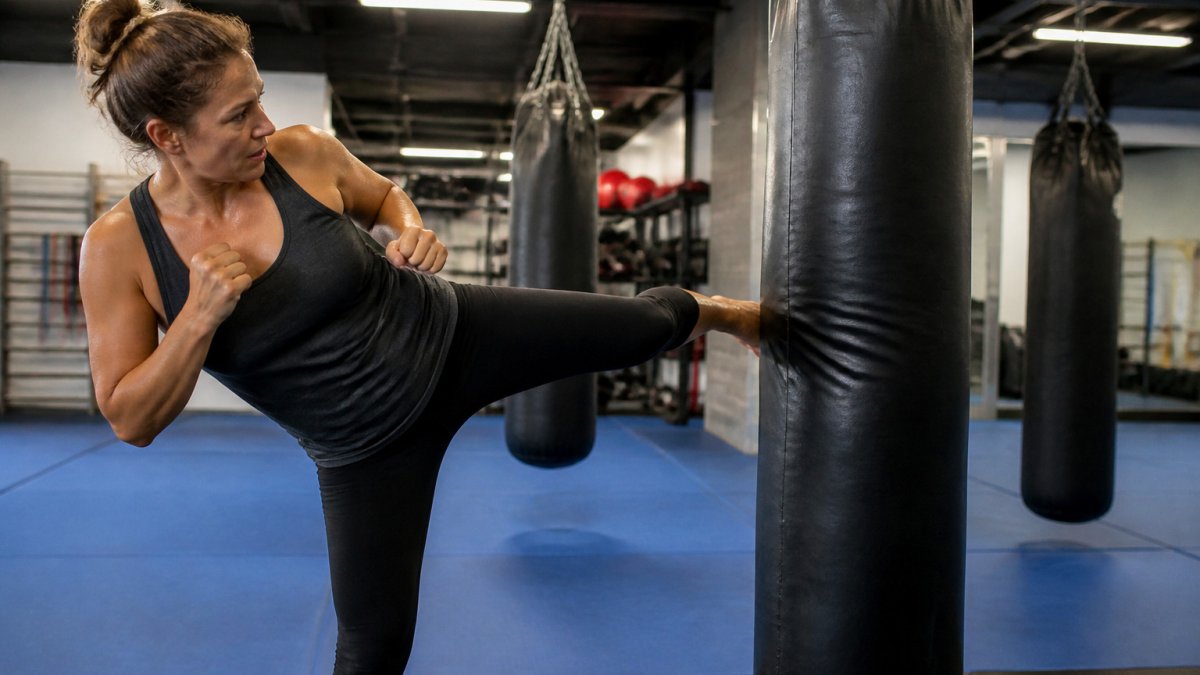
Kickboxing is a popular choice for adults interested in martial arts for weight loss. Its mix of punches, kicks and footwork gets the heart rate up quickly.
The format is simple to follow. Rounds break the workout into manageable chunks, and the rest periods let you recover before the next round. That structure makes it easier to push hard without burning out in the first week.
How Often to Train Martial Arts for Weight Loss
Many adults find that three sessions per week, combined with some activity on other days, works well. Consistency matters more than intensity in the early weeks. Build up gradually and give your body time to adjust.
A simple starting plan:
- Weeks 1-2: Two classes per week, focusing on form
- Weeks 3-4: Three classes per week, adding more rounds
- Week 5 onward: Three to four classes, with at least one rest day
Pairing Martial Arts With Nutrition for Weight Loss
Training alone rarely drives major weight loss. Pairing martial arts with sensible eating makes a bigger difference. Focus on protein, vegetables and whole foods, and watch portion sizes. Staying hydrated also helps your energy during rounds.
Track how you feel over several weeks. Better sleep, steadier energy and improved stamina are signs your plan is working, even when the scale moves slowly.
Frequently Asked Questions
Can adults lose weight by doing martial arts?
Yes, adults can lose weight with martial arts when training is regular and paired with a calorie deficit. Sessions combine cardio, strength, and movement, which raises energy expenditure above sitting or light exercise. Results vary with body size, intensity, attendance, and diet. Most adults see steady progress over several months rather than fast changes on the scale, and tracking waist measurements or how clothes fit can show progress the scale may miss.
Which martial art is best for weight loss?
Kickboxing, Muay Thai, and boxing usually produce the highest calorie burn because they combine striking, footwork, and continuous rounds. Brazilian jiu-jitsu and grappling can also be demanding but involve more rest between positions. Taekwondo and karate are good for adults who prefer structured forms and lower-impact conditioning. The best choice is the one you will attend consistently and enjoy enough to keep doing.
How many times a week should I train martial arts to lose weight?
Most adults start with two to three classes per week and build toward four as fitness improves. Consistency matters more than intensity in the first months. Adding one or two light sessions or walks on other days can increase weekly activity without excessive soreness. Rest days help recovery and reduce injury risk, especially for adults returning to exercise after a long break.
Do I need to change my diet to lose weight with martial arts?
Training alone can create a calorie deficit, but nutrition usually determines how much weight comes off. Eating enough protein, vegetables, and whole foods supports muscle recovery, while controlling portion sizes and sugary drinks helps create the deficit. Training burns calories, but it is easy to eat them back, so tracking intake for a few weeks can show whether your food matches your goals.
Your Next Step: Booking a Trial Class at Battenberg's
If you are ready to start, Battenberg's offers adult martial arts and fitness classes in Kingwood with experienced instructors and a supportive community. Our team can help you choose a class that fits your goals and fitness level. Get started today at no risk and see how structured training can support your weight loss goals.