 how-to
Does Martial Arts Help With Anxiety: A Practical Guide
Table of Contents
- How Martial Arts Addresses Anxiety: The Core Mechanisms
- Martial Arts for Social Anxiety: Breaking Through Isolation
- Best Martial Arts for Anxiety Relief
- How Often to Practice Martial Arts for Anxiety Management
- Choosing the Right Class: An Anxiety-Sensitive Approach
- When to Seek Professional Help Alongside Martial Arts
- What Martial Arts Cannot Do: Realistic Expectations
- Frequently Asked Questions
Last Updated: October 16, 2026
How Martial Arts Addresses Anxiety: The Core Mechanisms
Does martial arts help with anxiety? Yes, and understanding how does martial arts help with anxiety is simpler than you'd think. In class, you're not just learning to punch or kick; you're training your nervous system to calm down under pressure.
Martial arts and anxiety management connect through three pathways: breathing control, mindfulness, and confidence-building, each addressing a different piece of how anxiety shows up.
Breathing Control and the Nervous System
Martial arts training forces you to focus on your breath, every punch, kick, and form requires controlled breathing.
Anxiety makes breathing shallow and rapid, keeping you in fight-or-flight mode. Martial arts teaches deep, steady breathing even when moving hard, rewiring how your body responds to stress.
Most styles emphasize breath work: deep inhales before striking, controlled exhales during movement, rhythmic patterns that calm the nervous system.
Mindfulness and Present-Moment Focus
Anxiety pulls your mind into the future; martial arts drags it back to right now.
Learning a new technique leaves no room for tomorrow's meeting, you're focused on stance, balance, and your opponent's next move.
Over time this carries into daily life: you notice anxiety pulling your thoughts away and return to the present moment, where it has no power.
Building Confidence and Self-Esteem
Anxiety whispers that you can't handle things. Martial arts proves that voice wrong, repeatedly.
Every class, you face something slightly harder than last time, a new combination, a faster sparring partner, and keep going even when uncomfortable.
This confidence transfer is real: students who train regularly report feeling more capable in social situations, job interviews, and everyday challenges.
Martial Arts for Social Anxiety: Breaking Through Isolation
Social anxiety is its own beast, fear of judgment, embarrassment, or rejection rather than general stress. Martial arts addresses it through structured social interaction in a safe environment.
Creating a Supportive Training Environment
The difference between a gym and a martial arts class is community: in a good class you train alongside others, not against them.
A supportive instructor and training partners create psychological safety, so you can struggle with a technique, get tired, or make mistakes without fear of judgment.
What to look for in a class environment:
- Instructors who emphasize progress over perfection
- Students of mixed skill levels training together
- Encouragement from classmates, not competition
In that environment, your nervous system learns being around others is safe, and social anxiety loses its foundation.
Progress Over Perfection
One of the biggest anxiety triggers is perfectionism. You think you have to be flawless, or you'll be judged.
In a good class, everyone is learning: beginners train next to advanced students, and the culture celebrates showing up and trying, not executing perfectly.
That shift is powerful for social anxiety: imperfection is normal, mistakes are part of training, and others respect you for showing up anyway.
Best Martial Arts for Anxiety Relief
There is no single best martial art for anxiety. The better question is which style and class format fit your anxiety pattern, your body, and your tolerance for contact and noise, two people with the same diagnosis can thrive in completely different settings.
Use the comparison below as a starting filter, then visit a class before committing.
Matching the Style to Your Anxiety Pattern
| Style | Typical contact level | Pace and structure | Often a good fit if you... |
|---|---|---|---|
| Boxing (bag and pad work) | Low to moderate; sparring is optional at most schools | High-intensity rounds, repetitive | Want a physical release and prefer hitting equipment over partner drills |
| Taekwondo | Low at beginner levels; sparring comes later and is usually padded | Highly structured, belt progression | Like clear goals, forms, and predictable routines |
| Brazilian jiu-jitsu | Moderate to high; close-contact grappling | Technical, problem-solving | Are comfortable with closeness and want to think your way through stress |
| Judo | Moderate; throws and falls | Structured, partner-based | Want full-body movement and can tolerate being thrown on mats |
| Aikido | Low; cooperative, non-competitive | Slow, circular, breath-focused | Want minimal impact and a calm, non-competitive room |
| Krav Maga | Moderate to high; scenario-based | Fast, self-defense focused | Want practical self-defense and can handle loud, urgent drills |
| Tai chi | Very low | Slow, meditative | Want a gentle entry point or are managing pain or injury |
A few practical notes:
- Contact level is the single biggest variable for anxiety. A no-sparring beginner program in a hard style is often calmer than a sparring-heavy class in a soft style.
- Class size changes everything. A class of 8 to 12 students gives you individual correction and less social exposure; a class of 40 can feel overwhelming even in a gentle style.
- Beginner-only intakes matter. Many schools run a separate introductory course or trial month before you join the general class. Ask specifically for this.
Questions to Ask Before You Sign Up
Call or email the school and ask these directly. A good school answers without pressure:
- Is sparring required, and at what belt or month does it start?
- Can I observe a class before participating?
- Do you offer a beginner-only class or a trial period?
- What is the typical class size?
- What is the refund or cancellation policy if it is not a fit?
- Are there students with anxiety or sensory sensitivities who train here?
A Note on Competition and Anxiety
Tournament- and rank-focused styles raise anxiety for some and lower it for others. If competition pressure is a trigger, look for schools describing themselves as traditional, recreational, or self-defense focused. If structured competition motivates you, a sport-oriented program may work well. Choose deliberately rather than defaulting to the closest school.
Get Started Today at NO RISK! →
What to Do in the First Two Weeks
- Pick one style from the table above that matches your pattern.
- Visit two schools in that style so you have a comparison.
- Observe one class at each before participating.
If the first class spikes your anxiety more than it settles it, that is information, not failure. Try a different style, a smaller class, or a beginner-only intake before deciding martial arts is not for you.
How Often to Practice Martial Arts for Anxiety Management
Consistency matters more than intensity, you don't need seven days a week. Most people see noticeable changes with two to three classes per week, giving the nervous system regular practice at calming down without overwhelm.
Here's what frequency looks like in practice:
- One class per week: noticeable but slower progress
- Two to three classes per week: steady anxiety relief and confidence building
- Four or more classes per week: maximum benefit, but requires commitment
The key is showing up regularly. Missing weeks sets you back. Consistency trains your nervous system more effectively than occasional intense sessions.
Choosing the Right Class: An Anxiety-Sensitive Approach
Not every martial arts class suits someone with anxiety, the environment, instructor, and teaching style matter enormously.
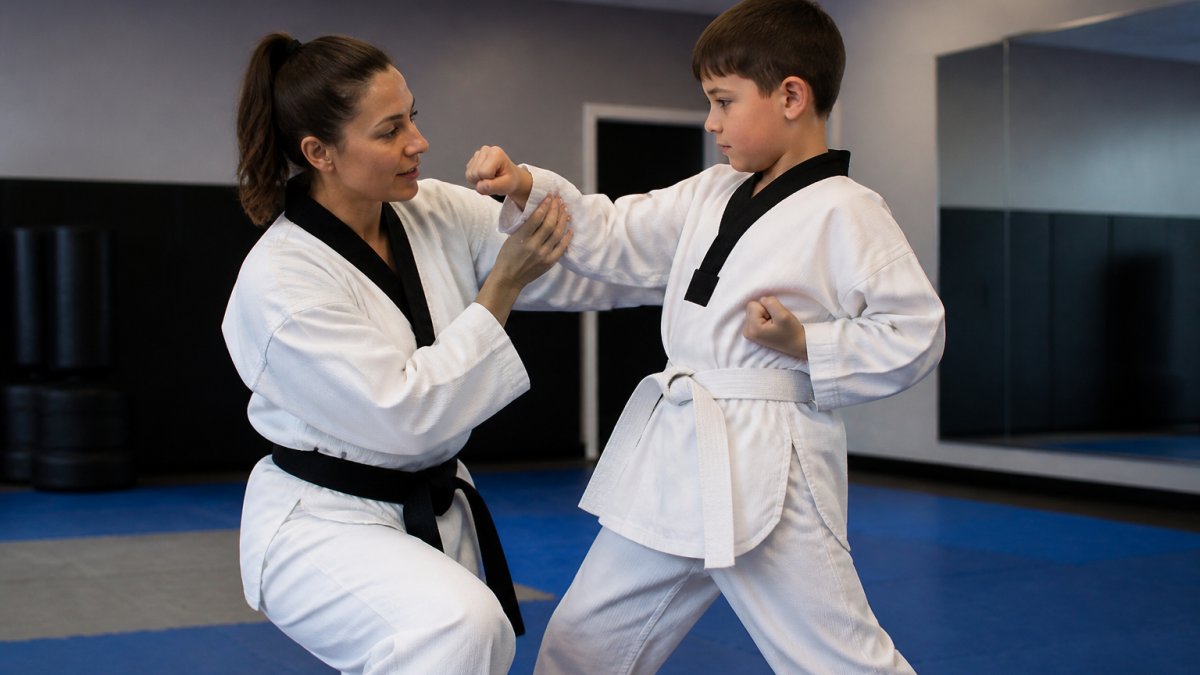
What to Look for in an Instructor
The instructor sets the tone for the entire class. A good instructor for anxiety management:
- Emphasizes technique and progress, not competition
- Gives individual attention and modifications
- Creates a welcoming environment for beginners
Bad signs to avoid:
- Instructors who focus on winning and dominating
- Classes where beginners feel rushed or pressured
- Environments where mistakes are mocked
Masters Jeff and Reneé Battenberg have built their programs around supportive environments where students can thrive, focusing on individual progress and personal development, not competition.
Starting Your First Class Without Fear
Your first class will trigger anxiety. That's normal. How to manage it:
Before class:
- Call the studio and tell them you're new and anxious, good studios expect this.
- Ask about their beginner process
- Arrive early so you're not rushed
During class:
- Tell your instructor you're new
- Stand where you can see the instructor clearly
- It's okay to modify movements or take breaks
After class:
- You'll feel better, your nervous system just practiced calming down under mild stress
- Come back next week. Repetition builds confidence.
When to Seek Professional Help Alongside Martial Arts
Martial arts is a powerful tool for anxiety management, but not a replacement for professional mental health care. Seek help for uncontrollable panic attacks, anxiety that interferes with daily functioning, thoughts of harming yourself, severe social withdrawal, or anxiety that doesn't improve after consistent training. It works best alongside professional support: a therapist addresses underlying patterns while training builds resilience and confidence.
What Martial Arts Cannot Do: Realistic Expectations
Most articles on this topic promise more than the evidence supports. Here's an honest version.
What the Research Actually Shows
It helps to separate two bodies of evidence:
- General physical activity and anxiety. A large body of research shows regular aerobic and resistance exercise is associated with reduced anxiety symptoms in clinical and non-clinical populations (pubmed.ncbi.nlm.nih.gov). Organizations such as the American Psychological Association and the Anxiety and Depression Association of America routinely list exercise as a supportive self-care strategy for anxiety.
- Martial arts specifically. The martial-arts-specific literature is much smaller, with studies that tend to be small, short, and varied in style and population. Findings are generally positive for perceived stress, mood, and self-esteem, but the evidence base is not strong enough to claim martial arts treats an anxiety disorder.
In plain terms: martial arts almost certainly helps because it is exercise, involves structured breathing and attention, and builds confidence and social connection. What isn't established is that it outperforms other exercise for anxiety or substitutes for treatment.
What Martial Arts Cannot Do
- It cannot diagnose or treat an anxiety disorder.
- It cannot replace medication that a prescriber has determined you need.
- It cannot resolve anxiety rooted in trauma without professional therapy.
What It Can Realistically Do
- Reduce day-to-day stress and tension through regular physical activity.
- Give you a repeatable breathing and focus practice you can use outside class.
- Build confidence through incremental, measurable skill progress.
When to Seek Professional Help
Martial arts is a complement to care, not a substitute. Reach out to a licensed mental health professional if any of the following apply:
- You have panic attacks that feel uncontrollable or are increasing in frequency.
- Anxiety interferes with work, school, sleep, relationships, or basic daily tasks.
- You are avoiding more and more of your life because of anxiety.
A licensed therapist, psychologist, or psychiatrist can assess whether what you're experiencing meets criteria for an anxiety disorder and discuss evidence-based options such as cognitive behavioral therapy, exposure-based therapy, or medication. Many people combine professional care with exercise and find the two reinforce each other.
How to Tell If Training Is Helping
Don't measure this by how you feel during a single class. Look at trends over four to eight weeks:
- Attendance. Are you showing up consistently? That alone is a meaningful signal.
- Perceived stress. Do you notice fewer tense days, or that tension passes faster?
- Confidence in class. Are you more willing to try a new technique or ask a question than a month ago?
These are practical indicators, not clinical outcomes. If they're moving in the right direction, training is probably helping. If they're flat or getting worse, talk to a professional rather than training harder.
Frequently Asked Questions
Can martial arts help reduce social anxiety?
Yes. Martial arts creates a structured, non-competitive environment where you practice with training partners and instructors who support your progress. Regular classes build familiarity with the same people, reducing the fear of judgment. Breathing techniques and controlled movement help calm the nervous system during social interaction, while small wins in training boost confidence in social settings. Many people find that the routine and sense of belonging in a martial arts community directly reduce social anxiety over time.
How often should you practice martial arts to help with anxiety?
Most people see anxiety relief with 2-3 classes per week. This frequency builds routine and habit, which are essential for managing anxiety. Consistency matters more than intensity. Even one class weekly can help if you supplement with solo practice at home. Start with what fits your schedule and gradually increase frequency as you become comfortable. Talk with your instructor about a practice plan tailored to your anxiety goals.
Can martial arts replace therapy or medication for anxiety?
No. Martial arts is a valuable supporting tool for anxiety management, not a replacement for professional mental health care. If you have been diagnosed with an anxiety disorder, are taking medication, or are seeing a therapist, continue that care. Martial arts works best alongside professional treatment. Talk to your doctor or therapist about adding martial arts to your anxiety management plan. Some people benefit from both simultaneously; others may reduce medication only under professional guidance.
What makes the best martial arts for anxiety relief?
The best martial art for your anxiety is one with a supportive instructor, a non-competitive atmosphere, and a focus on breathing and mindfulness. Boxing, Taekwondo, and other martial arts can all help, but the environment and teaching style matter most. Look for classes that emphasize personal progress over perfection, where instructors encourage questions and offer modifications. A program that matches your fitness level and anxiety triggers will keep you engaged and consistent, which is what drives real anxiety relief.