 how-to
7 Ways Martial Arts Build Real Confidence
Quick Summary
Martial arts builds real confidence through a repeated cycle of learning a skill, struggling with it, and succeeding. Each small win gives you proof that you can handle difficulty. Consistent training over months, rather than a single class, produces the lasting martial arts confidence.
- Confidence grows from small goals you set, work toward, and achieve repeatedly.
- Confidence in your abilities differs from self-esteem, but training can support both over time.
- Rushing to advanced techniques often causes frustration, so master the basics first.
- Pick a style by weighing contact level, structure, and social intensity against your goals.
- Check a school's sparring policy and how beginners are onboarded before committing.
Table of Contents
- Can Martial Arts Really Build Confidence?
- How Training Develops Self-Confidence Step by Step
- Confidence Versus Self-Esteem: What Martial Arts Changes
- Choosing the Best Martial Arts for Confidence Building
- Confidence Building Techniques Inside the Dojo and Gym
- How Martial Arts Supports Mental Health
- Finding a Safe, Supportive School and Booking Your First Class
- Frequently Asked Questions
7 Ways Martial Arts Build Real Confidence
Last Updated: November 4, 2026
Can Martial Arts Really Build Confidence?
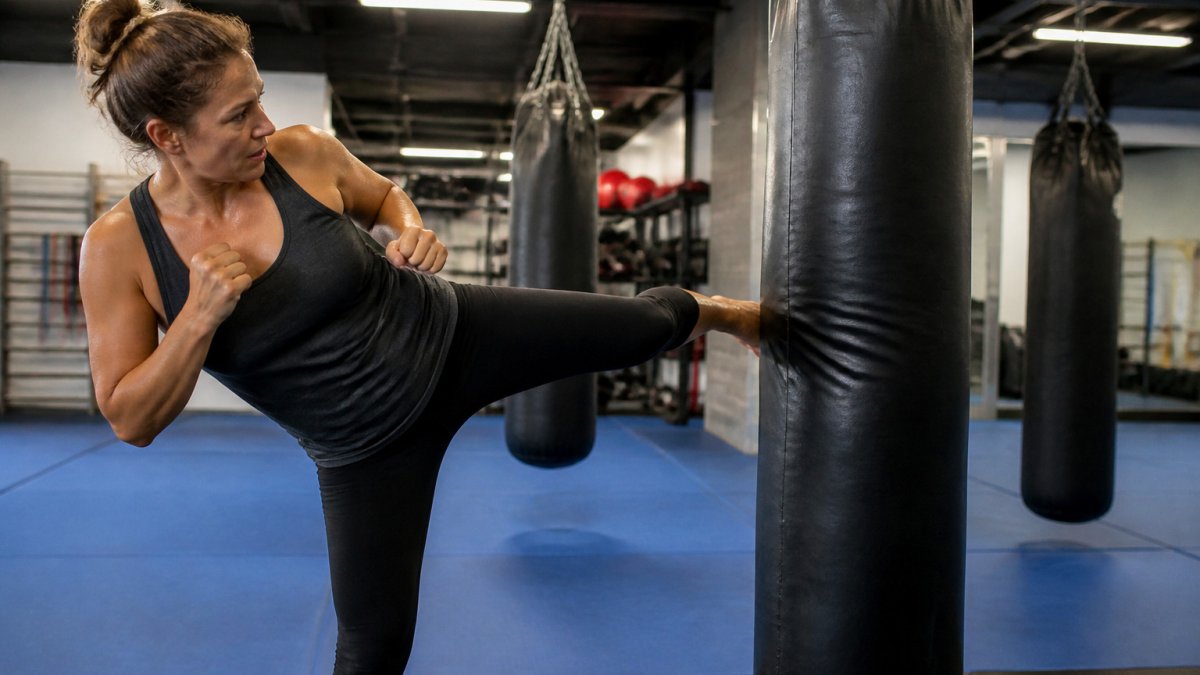
Martial arts can build real confidence, but it doesn't happen by accident. Confidence grows when you set a small goal, work toward it, and succeed again and again. Martial arts confidence develops because every class gives you that loop: you try a technique, struggle with it, and eventually get it right.
Most people walk into their first class unsure of their body. Battenberg's offers structured Taekwondo, boxing, and neuro-fitness classes in Kingwood.
Here is what usually changes first:
- Posture and how you carry yourself
- Willingness to try new physical challenges
- Calm response when you feel nervous
- Belief that you can learn hard things
The honest answer is that martial arts helps most when you stay consistent. One class rarely changes anything. Months of steady training usually do.
How Training Develops Self-Confidence Step by Step
Confidence comes from proof. Each time you learn a skill, your brain gets evidence that you can handle difficulty. In martial arts, that proof shows up in small, repeated wins.
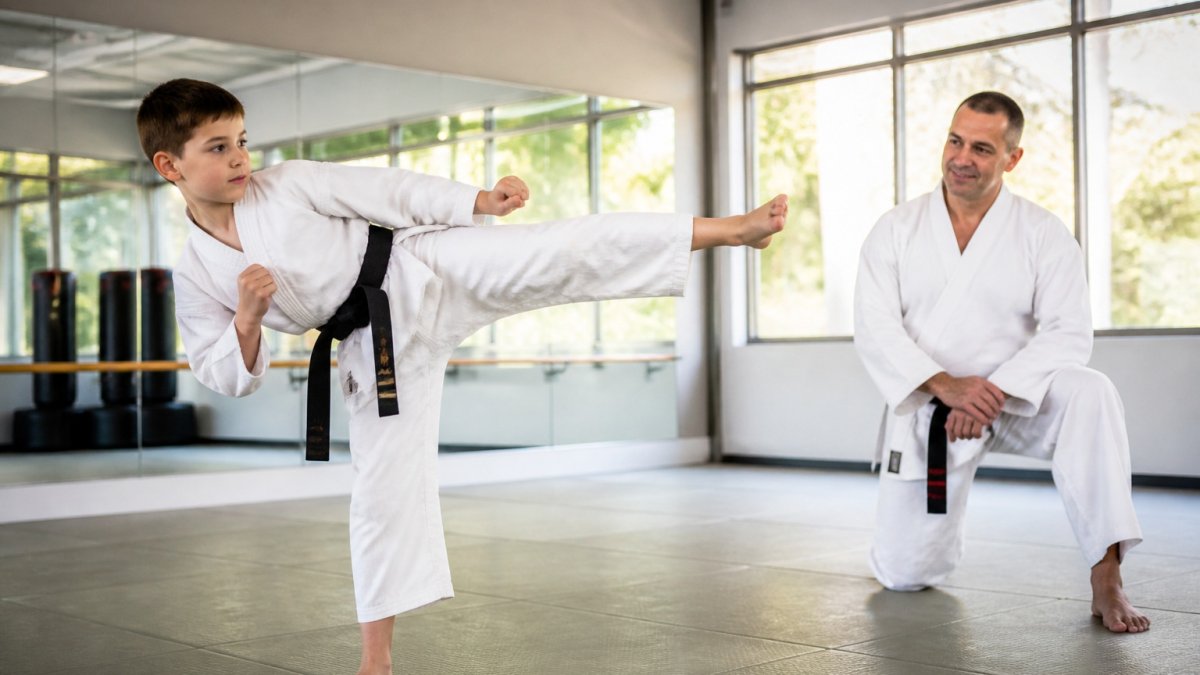
A typical path looks like this:
- Learn one movement. A basic stance or a single punch.
- Practice it slowly. Focus on form, not speed.
- Test it with a partner. This is where nerves usually appear.
- Repeat until it feels normal. Repetition turns effort into ease.
- Add a new challenge. Then the cycle starts again.
A common mistake is rushing to advanced techniques. Skipping steps often leads to frustration, which hurts confidence. Mastering basics first builds a stronger foundation.
Confidence Versus Self-Esteem: What Martial Arts Changes
Confidence and self-esteem are related but different. Confidence is the belief that you can do a specific thing. Self-esteem is your overall sense of your own worth. Martial arts mainly builds confidence in your abilities, and that can support self-esteem over time.
For example, you might feel confident sparring a partner but still struggle with how you see yourself outside the gym. Both matter. Training gives you a reliable way to track your progress, which helps you judge your abilities more fairly.
Choosing the Best Martial Arts for Confidence Building
No single style is best for everyone, and the honest answer is that the school matters more than the style. Still, different arts apply pressure in different ways, and matching that pressure to the kind of confidence you want to build saves months of trial and error.
Start by naming the confidence you are after. Most beginners want one of four things: to feel physically capable, to speak up and hold space in a room, to stay calm when someone crowds them, or to perform under observation. Each maps to a different training emphasis.
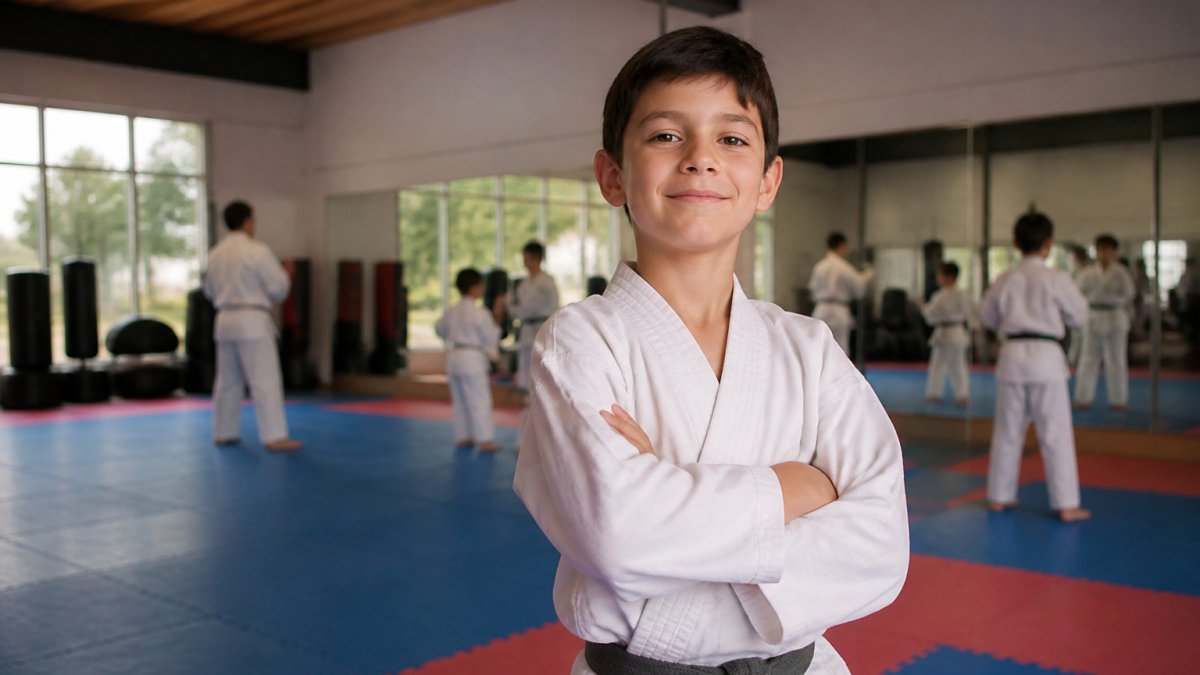
- Taekwondo: Heavy on forms, kicking, and rank structure. The belt system gives frequent, visible milestones, which suits children and adults who want clear proof of progress. Sparring is typically point-based and controlled, so contact ramps up gradually.
- Boxing: Built around footwork, hand speed, and bag work. It is the strongest choice for stress relief and for people who want a hard workout that doubles as skill practice.
- Brazilian jiu-jitsu: Ground grappling that forces close contact and problem-solving under resistance.
- Muay Thai: Standing clinch and striking with more continuous contact than point sparring. Good for people who want to feel composed while tired and under pressure.
- Judo: Throws and takedowns with a strong emphasis on breakfalls and mutual safety. The falling skills alone build a physical confidence that carries into daily life.
- Neuro-fitness and coordination classes: Movement and cognitive drills rather than combat. A useful on-ramp for people returning to exercise or managing anxiety around physical performance.
A practical way to decide is to weigh three factors against each other: contact level, structure, and social intensity. If you are nervous about being hit, start with a style where contact is optional and clearly staged. If you need external structure to stay motivated, a ranked art with regular tests will keep you showing up. If large groups intimidate you, a smaller grappling class may feel safer than a packed striking class, or the reverse.
Your reaction to the room, the instructor, and the other students will tell you more than any style comparison chart. You can compare beginner martial arts classes to line up options before you visit.
The article compares several martial arts by the confidence each one tends to build, so a quick reference helps when choosing a style.
| Martial art | Best for | Key difference |
|---|---|---|
| Taekwondo | Clear, visible progress | Forms, kicking, and belt ranks; point-based sparring |
| Boxing | Stress relief and a hard workout | Footwork, hand speed, and bag work |
| Brazilian jiu-jitsu | Problem-solving under resistance | Ground grappling with close contact |
| Muay Thai | Staying composed while tired | Standing clinch and striking with continuous contact |
| Judo | Physical confidence in falling | Throws and takedowns with breakfall emphasis |
| Neuro-fitness classes | Returning to exercise or managing anxiety | Movement and cognitive drills, not combat |
Confidence Building Techniques Inside the Dojo and Gym
Good instructors use specific methods to build martial arts confidence. Here are the approaches most worth looking for:
Get Started Today at NO RISK! →
- Break skills into small steps so every student can succeed early.
- Use progress markers like belt tests or skill checklists.
- Give controlled challenges such as light sparring with a matched partner.
- Encourage speaking up, from counting reps aloud to calling out a technique.
How Martial Arts Supports Mental Health
Martial arts can help manage stress and anxiety for many people, though it is not a replacement for medical care. You can read a practical guide on whether martial arts helps anxiety for more detail. Physical activity releases tension, and focused practice gives the mind something to concentrate on instead of worries. If you are dealing with anxiety, talk with a doctor or counselor alongside any training plan.
A Beginner Plan for the First 90 Days
Use this simple plan to build momentum:
- Weeks 1-4: Attend two classes per week. Focus on showing up and learning basic stances.
- Weeks 5-8: Add a third class if you feel ready. Start practicing combinations.
- Weeks 9-12: Test your skills in a partner drill or belt evaluation. Note how far you have come.
Write down one thing you can do better each week. Seeing your progress on paper is a strong confidence booster.
Finding a Safe, Supportive School and Booking Your First Class
A supportive school is the single biggest variable in whether martial arts builds your confidence or erodes it. A bad room can convince a beginner that they are the problem when the environment is. Before you commit, evaluate the school on five concrete things.
1. How beginners are onboarded. Ask what happens in a first class. A well-run school pairs new students with a coach or senior student, teaches a small set of basics separately, and does not throw a beginner into live sparring on day one. If the answer is vague, that is a signal. A careful first class makes small, supported steps the basis for building student confidence, a principle that matters just as much when children are learning to trust their abilities at school.
2. Sparring policy. Ask directly: Is sparring required? At what rank does it start? Is it light contact or full contact? Are partners matched by size, weight, and experience? A responsible program makes sparring optional or rank-gated, requires protective gear, and has a coach actively supervising every round.
3. Instructor behavior. Watch how the instructor corrects students. Good coaching names the specific fix, demonstrates it, and gives the student a chance to retry. Poor coaching criticizes the person rather than the technique, or lets advanced students coach beginners without supervision.
4. Class culture. Sit in the lobby for ten minutes before class. Do students greet newcomers? Do senior students help juniors without being asked? Is there joking and encouragement, or cliques and silence? The culture you observe in the lobby is the culture you will train in.
5. Safeguarding and facilities. For programs serving children, ask about background checks for instructors, drop-off and pickup policy, and whether parents can observe class. For all ages, check mat condition, ventilation, and whether first aid supplies are visible.
Red flags worth walking away from: pressure to sign a long contract before you have taken a class, instructors who mock students for mistakes, sparring with no gear or no supervision, and a school that cannot tell you its written safety policy.
Pricing depends on the program you choose. Visit the Battenberg's website for current prices or a quote.
Once you have picked a school, make the first class easy on yourself. Arrive early, introduce yourself to the instructor, and say plainly that it is your first class. Most coaches will adjust the session for you. Bring water and wear clothes you can move in. Your only goal for class one is to finish it and come back.
book a martial arts trial class to take the first step.
Frequently Asked Questions
Which martial art is most effective for building confidence?
No single style works best for everyone. Brazilian jiu-jitsu develops problem-solving under pressure. The most useful test is whether a class feels supportive and whether you keep attending. Many schools offer trial classes, so compare two or three before committing to a long-term program.
Can martial arts help with confidence?
Martial arts can help build confidence because each skill you learn gives you concrete evidence that you can improve. Repeating techniques, earning belts and completing challenging drills create a record of progress that is hard to dismiss. Confidence grows gradually, usually over months rather than weeks, and it depends on consistent attendance and an instructor who gives honest, specific feedback. Martial arts is not a guaranteed fix for anxiety or low self-worth, but it is a reliable structured tool for many people.
Is martial arts good for beginners who feel nervous?
Yes, as long as the class is built for beginners. Look for schools that teach foundational movements before sparring, explain what each class will involve and allow students to participate at their own pace. Beginners who feel nervous should tell the instructor so they can adjust drills, partner them appropriately and set small, achievable goals such as attending three classes a week for a month. Nervousness usually fades as familiarity with the routine grows.
What should I look for in a martial arts class for confidence building?
Prioritize a school with clear progression, qualified instructors and a respectful atmosphere. Ask whether beginners get individual attention, how sparring is supervised and whether the school emphasizes discipline and self-control over aggression. Visit in person, watch a full class and talk to current students. Avoid programs that pressure you into long contracts before you have tried them. A supportive school should make you feel challenged but never humiliated.