 how-to
Boxing for Stress Relief: Benefits and Getting Started
Last Updated: October 23, 2026
Quick Summary
Boxing stress relief works by converting mental anxiety into physical movement, releasing the tension your body holds during stress. High-intensity punching for 20 to 30 minutes interrupts anxiety loops, triggers endorphin release, and shifts your nervous system into a calmer state.
- Train 2 to 3 times per week for consistent mood and stress improvements
- Start with 12-ounce boxing gloves, hand wraps, and a heavy bag or focus pads
- Proper form protects your hands and wrists: keep wrists straight, power comes from your legs and core
- A simple 20-minute routine includes 2-minute warm-up, 15 minutes of combinations, and 3-minute cool-down
- Rest days between sessions prevent injury and burnout while allowing your nervous system to recover
Table of Contents
- How Boxing Reduces Stress and Tension
- Boxing Mental Health Benefits Beyond Stress
- Boxing for Anxiety: A Practical Approach
- Beginner Boxing Workout for Stress Relief
- How Often to Box for Stress Relief
- Safety, Technique, and Injury Prevention
- Boxing as Part of Your Stress Management Strategy
- Frequently Asked Questions
How Boxing Reduces Stress and Tension
Boxing is one of the most effective ways to achieve boxing stress relief by releasing the physical tension that builds up when you're stressed. When you punch a heavy bag or focus pads, your body converts mental anxiety into physical movement. This shift, from sitting with worry to actively working your muscles, interrupts the stress cycle.
The Science Behind Stress Relief
Your body holds stress as tension. Tight shoulders, clenched jaw, shallow breathing. Boxing forces you to breathe deeply and move explosively, which physically breaks that tension pattern. When you throw a combination of punches, your muscles engage fully. Your nervous system gets a signal that you're taking action, not just worrying.
The physical exertion also matters. High-intensity movement tells your body it's safe to relax afterward. This is why you feel calmer after a boxing session, your nervous system has genuinely shifted states. Many people find that 20 to 30 minutes of boxing creates a noticeable drop in that constant background anxiety they carry.
Releasing Frustration Through Physical Activity
Boxing gives frustration a direct outlet. Instead of bottling anger or replaying a stressful conversation in your head, you channel it into controlled punches. This isn't about aggression, it's about honest physical release.
When you hit a bag, you're not hurting anyone. You're using your body to process emotion. Trainers see this shift happen consistently. A client walks in tense and tight-jawed. After 15 minutes of focused pad work, their shoulders drop. Their breathing slows.
This is different from just venting. Venting often amplifies anger. Boxing channels it into something constructive. Your body gets stronger while your stress gets released.
Boxing Mental Health Benefits Beyond Stress
Mood Improvement and Endorphin Release
Boxing triggers endorphin release, the neurochemicals that create a natural mood lift. You don't need to understand the mechanism to feel the effect.
This mood boost is consistent and reliable. It's not a placebo. Your body genuinely produces feel-good chemicals during intense physical work. Boxing creates the conditions for that release better than many other activities because it combines high intensity with focus.
Many people who struggle with low mood find that regular boxing becomes part of their mental health toolkit. Not instead of professional support, alongside it. The physical and emotional benefits stack up over weeks.
Building Focus and Confidence
Boxing demands focus. You can't throw a proper combination while thinking about your email inbox. This forced mental clarity is part of the benefit. For 20 or 30 minutes, your mind is completely occupied by the present moment.
Over time, this builds confidence. You learn you can do hard things. You improve at a skill. Your body gets stronger. These aren't abstract benefits, they're measurable. You hit harder. You move faster. You last longer.
Clients often mention this shift. They come in feeling powerless about their stress. After weeks of training, they feel capable. That's not just the exercise, it's the skill development and visible progress.
Boxing for Anxiety: A Practical Approach
How Boxing Interrupts Anxiety Patterns
Anxiety often lives in loops. Your mind spins the same worry over and over. Boxing breaks that loop by demanding your full attention.
This isn't distraction in the unhealthy sense. You're not avoiding the worry, you're temporarily stopping the mental loop. When you finish training, you often find the anxiety has lost some of its grip.
Regular boxing can rewire how your nervous system responds to stress (Running from Stress: Neurobiological Mechanisms of Exercise-Induced Stress Resilience). Over weeks and months, your body learns that intense activity is safe and even beneficial.
Choosing Your Boxing Format
Different boxing formats work for different people and stress levels:
- Heavy bag work: Best for releasing frustration and tension. Loud, physical, fully intense. Good for people who need to move hard.
- Focus pads: More technical, requires focus and coordination. Better for anxiety that needs mental engagement, not just physical release.
- Shadowboxing: No equipment needed, can do anywhere, lower impact. Good for beginners or people recovering from injury.
- Group boxing classes: Adds community and social connection. The group energy lifts mood. Good for people who feel isolated.
Start with whichever appeals to you most. Consistency matters more than the format. If you hate heavy bag work, you won't stick with it. If you love the energy of a class, that's the right choice for you.
Beginner Boxing Workout for Stress Relief
What You'll Need to Get Started
You don't need much to start boxing for stress relief. Here's the basic setup:
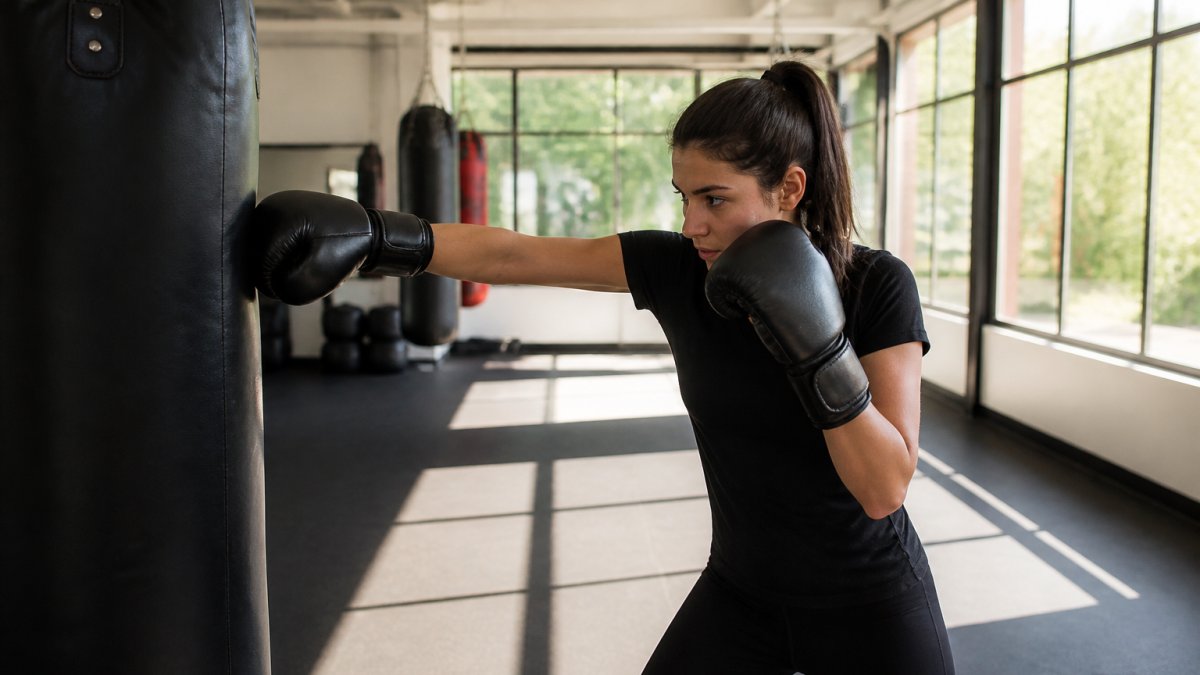
- Boxing gloves: Protects your hands. Start with 12-ounce gloves if you're new.
- Hand wraps: Goes under gloves, supports your wrists. Essential for safety.
- Heavy bag or pads: A bag gives you something to hit. Pads require a partner or trainer.
- Comfortable clothes: Anything you can move in works.
- Water bottle: You'll sweat. Stay hydrated.
If you're starting at home, quality gloves and wraps matter most.
A Simple 20-Minute Routine
This routine works for complete beginners. Do it 2 to 3 times per week with rest days between.
Warm-up (2 minutes):
- 30 seconds light shadowboxing
- 30 seconds arm circles and shoulder rolls
- 30 seconds jumping jacks or light jogging in place
- 30 seconds more shadowboxing
Main work (15 minutes):
- 1 minute: Jab-cross combinations on the bag (punch-punch, rest briefly, repeat)
- 1 minute: Rest and breathe
- 1 minute: Jab-cross-hook combinations
- 1 minute: Rest
- 1 minute: Any combination you want, full effort
- 1 minute: Rest
- Repeat this 3-minute cycle 3 more times
Cool-down (3 minutes):
- 2 minutes: Slow shadowboxing, focus on breathing
- 1 minute: Gentle stretching (shoulders, chest, hips)
What to expect: You'll be breathing hard. Your arms will feel worked. You should feel calmer within minutes of finishing.
Common Beginner Mistakes to Avoid
Many people start boxing with good intentions and hurt themselves or quit because of preventable mistakes.
Mistake 1: Wrapping your hands wrong. Loose wraps don't support your wrists. You'll feel pain or strain.
Mistake 2: Punching with your arm instead of your whole body. Weak punches come from your arm alone.
Get Started Today at NO RISK! →
Mistake 3: Going too hard too fast. You don't need to punch with maximum force every session.
Mistake 4: Skipping warm-up. Cold muscles get injured. Two minutes of easy movement prevents most beginner injuries.
Mistake 5: Not breathing. Holding your breath during punching tightens you up. Breathe out with each punch.
How Often to Box for Stress Relief
Finding Your Optimal Frequency
For boxing stress relief specifically, 2 to 3 sessions per week is the sweet spot for most people. This schedule gives you regular stress release without overtraining.
One session per week helps. Two sessions per week is noticeably better. Three sessions per week is where most people see clear, consistent mood and stress improvements. Four or more sessions per week works for people training for competition or fitness goals, but it's not necessary for stress relief.
The key is consistency. Two sessions every week beats four sessions one week and zero the next. Your nervous system responds to reliable patterns, not intensity spikes.
Balancing Intensity and Recovery
Hard boxing sessions demand recovery. Your muscles need time to rebuild. Your nervous system needs downtime.
A good weekly pattern looks like this:
- Monday: Moderate intensity (technical focus, not all-out effort)
- Tuesday: Rest or light activity
- Wednesday: Higher intensity (harder punching, faster combinations)
- Thursday: Rest or light activity
- Friday: Moderate intensity
- Weekend: Rest or one optional light session
This rhythm prevents burnout and injury. You get enough stress relief without pushing too hard. Many people find they sleep better on training nights and feel more stable the next day.
Listen to your body. If you feel exhausted, take an extra rest day. If you feel strong and energized, you can handle the intensity. This balance is personal.
Safety, Technique, and Injury Prevention
Proper Form Reduces Risk
Most boxing injuries in beginners come from bad form, not from the sport itself. Proper technique protects you.
Hand and wrist position: Your wrist should be straight, not bent.
Stance: Feet shoulder-width apart, knees slightly bent, weight on the balls of your feet. This gives you balance and power.
Punch mechanics: Power comes from your legs and core, not your arm. As you punch, rotate your hips and shoulders.
Head position: Keep your chin down, eyes up. Your hands protect your face. This is basic defense.
These details matter. Sloppy form feels easier at first. It leads to pain later. Good form feels awkward initially.
When to Seek Professional Guidance
Start with a trainer, especially if you're new to boxing. Even a few sessions with a coach prevents months of learning bad habits. Trainers at Battenberg's teach proper form from day one.
See a professional if:
- You feel pain (not muscle soreness, but sharp pain) during or after training
- Your wrists or hands swell or feel unstable
- You have a history of shoulder, elbow, or wrist injury
- You're over 50 and haven't exercised in years
- You have any health condition that might be affected by intense exercise
A doctor or physical therapist can clear you for boxing and identify any modifications you need. This is especially important if you have heart concerns, joint issues, or balance problems.
Boxing as Part of Your Stress Management Strategy
Boxing works best as one tool in a larger stress management approach.
Think of it this way: good sleep, healthy eating, and professional support handle the baseline.
Many people find that after a few weeks of regular boxing, they handle daily stress differently. Small annoyances don't escalate as quickly.
We've seen hundreds of people discover this shift. They come for stress relief.
Boxing offers real stress relief through physical release, mood improvement, and mental focus. The benefits build over weeks and months of consistent training.
We help people of all ages and fitness levels discover how boxing transforms their stress management and builds genuine confidence.
Frequently Asked Questions
Can boxing help relieve stress and anxiety?
Yes. Boxing combines physical exertion with focused attention, which interrupts stress cycles and triggers endorphin release. The act of punching provides a safe, controlled outlet for frustration while cardiovascular activity reduces cortisol levels. Many people report immediate mood improvement and reduced anxiety after boxing sessions.
How often should you box for stress relief?
Most people benefit from 2-3 boxing sessions per week for noticeable stress relief. This frequency allows your body to experience the mental health benefits while avoiding overtraining. Beginners may start with once weekly and gradually increase. Consistency matters more than intensity, regular, moderate sessions are more effective than occasional intense workouts.
Is boxing good for mental health beyond just stress relief?
Boxing improves mental health in multiple ways: it boosts mood through endorphin release, builds confidence through skill development, enhances focus and concentration, and provides emotional balance through physical discipline. The combination of cardiovascular fitness, mental engagement, and the cathartic effect of controlled punching creates comprehensive mental wellness benefits.
Can beginners use boxing as a stress-relief workout?
Absolutely. Beginners can start with shadowboxing, focus mitts with a trainer, or light bag work without prior experience. A simple 20-minute routine focusing on basic combinations and breathing is enough to trigger stress relief. Professional instruction ensures proper technique and prevents injury, making beginner classes ideal for stress management.