 how-to
7 Ways Boxing Training Can Ease Anxiety
Last Updated: October 30, 2026
Quick Summary
Yes, boxing training can help ease anxiety because it gives your body a hard, focused task that pulls your attention away from worry. It also works the body's physical stress signs, like racing heart and shallow breathing. It should complement, not replace, medical care for severe anxiety.
- Boxing uses big muscle groups, including legs, core, back, and shoulders.
- Footwork and combinations keep your attention in the present moment.
- Attending classes at the same time each week creates helpful structure.
- Non-contact bag work, pad work, and shadow boxing avoid sparring.
- Two to three sessions per week is a practical starting point for beginners.
Table of Contents
- Why Boxing Training Can Help With Anxiety
- What the Research Says About Exercise and Anxiety
- Boxing for Stress Relief: What Actually Changes
- Boxing Without Sparring: Getting the Benefits Safely
- Boxing Workout for Beginners: What to Expect in Your First Class
- How Often to Do Boxing Workouts for Anxiety Relief
- Booking Your First Session at Battenberg's
- Frequently Asked Questions
Why Boxing Training Can Help With Anxiety
Boxing training is good for anxiety for a simple reason: it gives your body a hard, focused task and gives your mind a break from worry. A practical guide compares martial arts and their effects on anxiety. Boxing training can give people a hard, focused task that pulls their attention away from worry.
Anxiety often lives in the mind, but it shows up in the body. Racing heart, tight shoulders, shallow breathing. Boxing works on all of that at once. You have to move, breathe, and pay attention to the next punch. There is little room left for the same worried thoughts looping over and over. Mastering this rhythmic control through intentional breathing exercises for anxiety helps anchor the nervous system even when you are away from the heavy bag.
Here are a few reasons boxing can help:
- It uses big muscle groups. Legs, core, back, and shoulders all work together.
- It demands focus. Footwork and combinations keep your attention in the present.
- It creates a routine. Coming in at the same time each week gives structure.
- It builds a sense of control. Learning a skill you can see improve feels good.
Note that boxing training is not a replacement for medical care. If anxiety is severe or affects daily life, talk with a doctor or mental health professional.
What the Research Says About Exercise and Anxiety
Regular physical activity is widely studied as a tool for managing anxiety. The National Institute of Mental Health explains that exercise can reduce symptoms of anxiety and stress for many people, though results vary from person to person National Institute of Mental Health on exercise and mental health.
Researchers generally point to a few mechanisms. Exercise raises heart rate and body temperature, which many people find calming afterward. It also gives people a chance to step away from stressful thoughts. Many clinicians recommend activity as one part of a broader plan.
The Anxiety and Depression Association of America also highlights physical activity as a helpful habit for stress management Anxiety and Depression Association of America guidance on exercise.
Keep your expectations realistic. Exercise helps many people, but it works best alongside other supports like sleep, social connection, and professional care when needed.
Boxing for Stress Relief: What Actually Changes
Boxing for stress relief works differently than a slow walk or a quiet yoga session. The intensity is higher, and that is part of the appeal for many people.
The biggest change is focus. When you practice a jab, cross, and hook, your brain has to track your feet, your hands, and your breathing. Worries about tomorrow fade for a few minutes.
Another change is confidence. Learning to protect yourself and move with purpose can ease the constant feeling of being on edge.
Boxing Without Sparring: Getting the Benefits Safely
You do not need to spar to get the benefits of boxing. Many people who feel anxious about contact prefer non-contact training. Bag work, pad work, shadow boxing, and conditioning drills all build fitness and focus.
Non-contact classes tend to feel less intimidating for many people. Sparring is generally optional at good gyms, and coaches should explain it clearly before you step into a ring.
Get Started Today at NO RISK! →
Start with what feels comfortable.
Boxing Workout for Beginners: What to Expect in Your First Class
Your first boxing workout for beginners usually starts with a warm-up, then basic stance and footwork, then simple punches on a bag or pads. A beginner's guide to boxing fitness classes walks through what to expect locally. Most classes end with a cool-down and a few minutes of stretching.
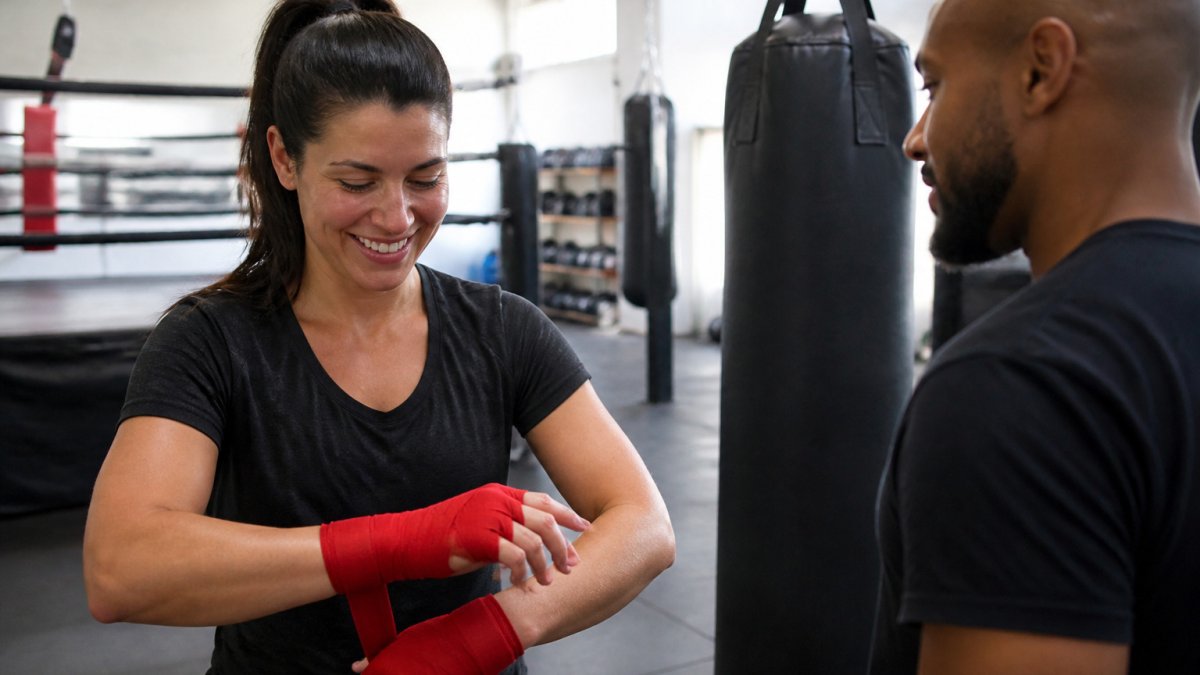
Expect to feel winded. That is normal. Take breaks when you need them. A good coach will teach you proper hand wrapping, stance, and breathing before asking for speed or power.
Bring water, comfortable clothes, and an open mind. Nobody expects you to look like a champion on day one.
Here is what a typical first boxing class looks like, so you know what to expect before you walk in.
| Stage | What happens | Note |
|---|---|---|
| Warm-up | Gets your body ready | Starts the class |
| Stance and footwork | Basic movement drills | Taught before speed or power |
| Simple punches | Work on a bag or pads | Done with a coach |
| Cool-down | Stretching for a few minutes | Ends the class |
How Often to Do Boxing Workouts for Anxiety Relief
For most beginners, two to three sessions per week is a practical starting point. This schedule gives your body time to recover while building a habit. Many people find that consistency matters more than intensity when the goal is stress relief.
Listen to your body. If you feel exhausted or sore for days, cut back a little. You can also mix in lighter days like walking or stretching.
Track how you feel before and after each session for a few weeks. Noticing small changes in mood and sleep can help you decide what schedule works best for you.
Booking Your First Session at Battenberg's
If you are ready to try boxing for stress relief, Battenberg's in Kingwood offers programs for teens and adults that focus on fitness, confidence, and self-defense. Our coaches, Masters Jeff and Reneé Battenberg, lead classes with a welcoming, supportive approach.
Booking a first session is simple. Contact us or visit our website for current rates and options.
Ready to start? Contact Battenberg's to learn more about our programs.
Frequently Asked Questions
Can boxing training help with anxiety?
Boxing can help some people manage anxiety, mainly because it is vigorous physical exercise and gives a structured place to direct stress. Regular aerobic exercise is widely associated with lower anxiety symptoms, and the focused rhythm of pad work and bag rounds can pull attention away from worry while you train. It is not a cure for an anxiety disorder, though. If anxiety is persistent or interferes with daily life, talk with a licensed health professional alongside any training plan.
Can boxing help with anxiety without sparring?
Yes. Most anxiety benefits come from the workout itself: the cardio, the rhythm of pad and bag work, and the concentration required. Non-contact classes built around bag work, focus mitts and conditioning rounds deliver that without any sparring.
How often should you box to help manage stress?
Most beginners start with two to three sessions a week of about 45 to 60 minutes, with a rest day between them so the body can recover. Consistency matters more than intensity: a steady schedule usually shows more stress relief than occasional hard sessions. If you feel unusually sore, fatigued or irritable, scale back for a few days.
Is boxing a substitute for therapy or medication?
No. Boxing can be a useful part of a stress management routine, but it does not replace evaluation or treatment from a licensed mental health professional or your doctor. If anxiety affects your sleep, work, relationships or daily functioning, seek professional support. Many people use training alongside counseling or medical care, and that combination is worth discussing with your provider.