 Comparison
Boxing vs Martial Arts for Fitness Training Programs
Last Updated: November 17, 2026
Quick Summary
Choose boxing for fast-paced conditioning and stress relief, or martial arts for structured progression and self-defense skills. Both fitness training programs build cardio, strength, and confidence, so the right pick depends on your goals rather than which sport sounds tougher.
- Boxing rewards effort immediately, while martial arts rewards patience through belt milestones.
- Beginners should start with assessment, not intensity, and avoid advanced classes too early.
- Three sessions per week is the sweet spot for most new trainees.
- Ask for the all-in twelve-month cost, since cheap monthly rates can hide gear and testing fees.
- Coach-led programs cost more but catch form errors early.
Table of Contents
- Boxing vs Martial Arts: Which Fitness Training Program Fits Your Goals?
- Side-by-Side Comparison: Boxing and Martial Arts Fitness Training Programs
- Fitness Training Programs for Beginners: How to Start Without Feeling Lost
- Fitness Training Programs for Weight Loss: What Actually Burns Calories
- The Boxing Workout for Fitness: Power, Conditioning, and Stress Relief
- Martial Arts for Fitness: Beyond Self-Defense
- How to Choose a Fitness Training Program: Costs, Contracts, and Fit
- Start Your Fitness Training Program at Battenberg's
- Frequently Asked Questions
Boxing vs Martial Arts: Which Fitness Training Program Fits Your Goals?
Choosing between boxing and martial arts comes down to what you want out of a fitness training program. Boxing delivers fast conditioning, footwork, and stress relief. Martial arts adds structured progression, self-defense, and a discipline framework. At Battenberg's, we coach both, and we tell every new member the same thing: the right choice depends on your goals, not on which sport sounds tougher.
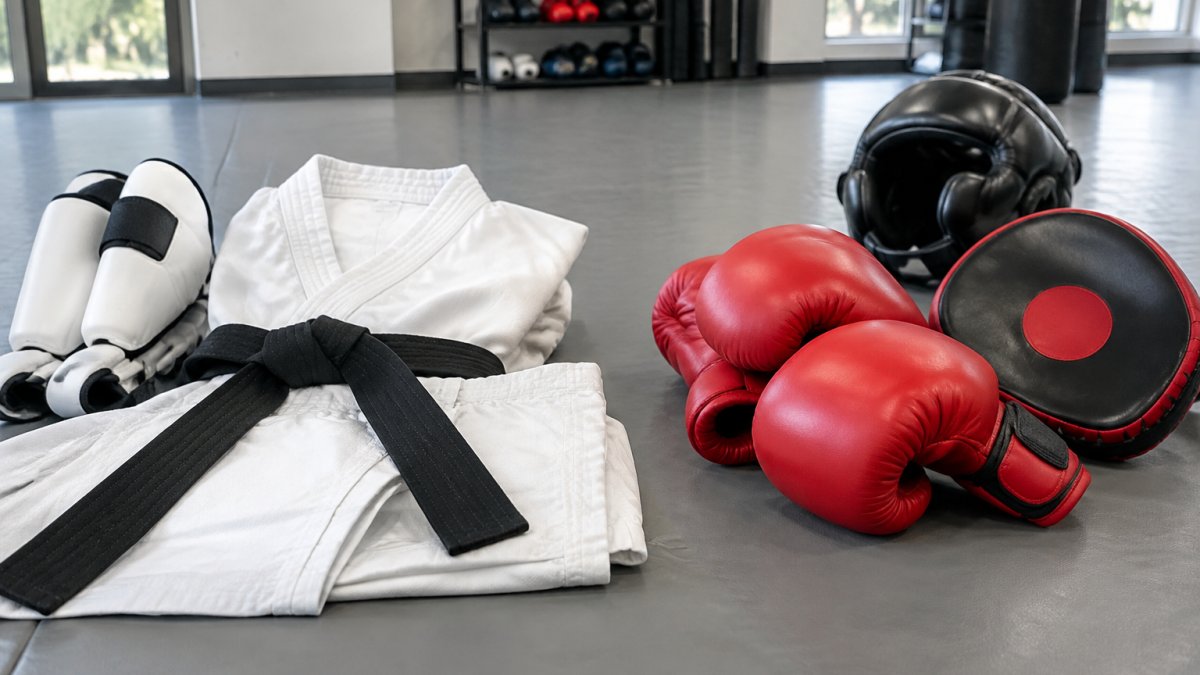
Boxing is a striking-based fitness training program built around punches, footwork, and bag work. Martial arts for fitness is a broader category that includes Taekwondo, karate, and similar disciplines, blending striking technique with forms, sparring, and belt progression. Both build cardio, strength, and confidence. They just get there differently.
Below, we'll break down the comparison the way we'd walk you through it in person, including costs, beginner concerns, and weight-loss realities.
Side-by-Side Comparison: Boxing and Martial Arts Fitness Training Programs
Here is the short answer: pick boxing if you want fast-paced conditioning and stress relief, and pick martial arts if you want structured progression and self-defense skills.
| Criteria | Boxing | Martial Arts (Taekwondo, Karate) |
|---|---|---|
| Primary focus | Conditioning, footwork, striking power | Technique, discipline, self-defense |
| Cardio intensity | High, interval-style | Moderate to high, varies by class |
| Skill progression | Open-ended, coach-paced | Belt system with clear milestones |
| Stress relief | Very high, bag work and drills | High, forms and sparring |
| Beginner friendliness | Strong with coach-led basics | Strong with structured curriculum |
| Best for | Adults wanting fast fitness gains | Kids, teens, adults wanting progression |
The biggest difference is structure. Boxing rewards effort immediately: you hit a bag in your first class and feel it. Martial arts rewards patience, and the belt system gives you visible proof of progress over months and years.
Fitness Training Programs for Beginners: How to Start Without Feeling Lost
The best fitness training programs for beginners start with assessment, not intensity. A good coach watches how you move, asks about injuries and prior activity, and places you in a class where you can succeed on day one.
A common mistake is signing up for the most advanced class available. Beginners who jump into sparring too early get discouraged or injured. Look for a program that separates fundamentals from advanced work and lets you drill basics without pressure. A well-structured beginner block typically follows a predictable arc:
- Weeks 1-2: stance, guard, basic footwork, and one or two punches or kicks performed slowly with a coach watching form.
- Weeks 3-4: adding combinations and light bag or pad work, with short conditioning intervals mixed in.
- Weeks 5-8: longer rounds, introduction to controlled partner drills, and a first self-assessment against your starting point.
Weekly frequency matters more than session length for beginners. Most practitioners find three sessions per week is the sweet spot: enough repetition to build motor patterns, enough rest between sessions to recover. Two sessions per week works if you are returning after a long break or managing a busy schedule; five or more is usually too much for a new trainee and raises injury risk before technique is stable.
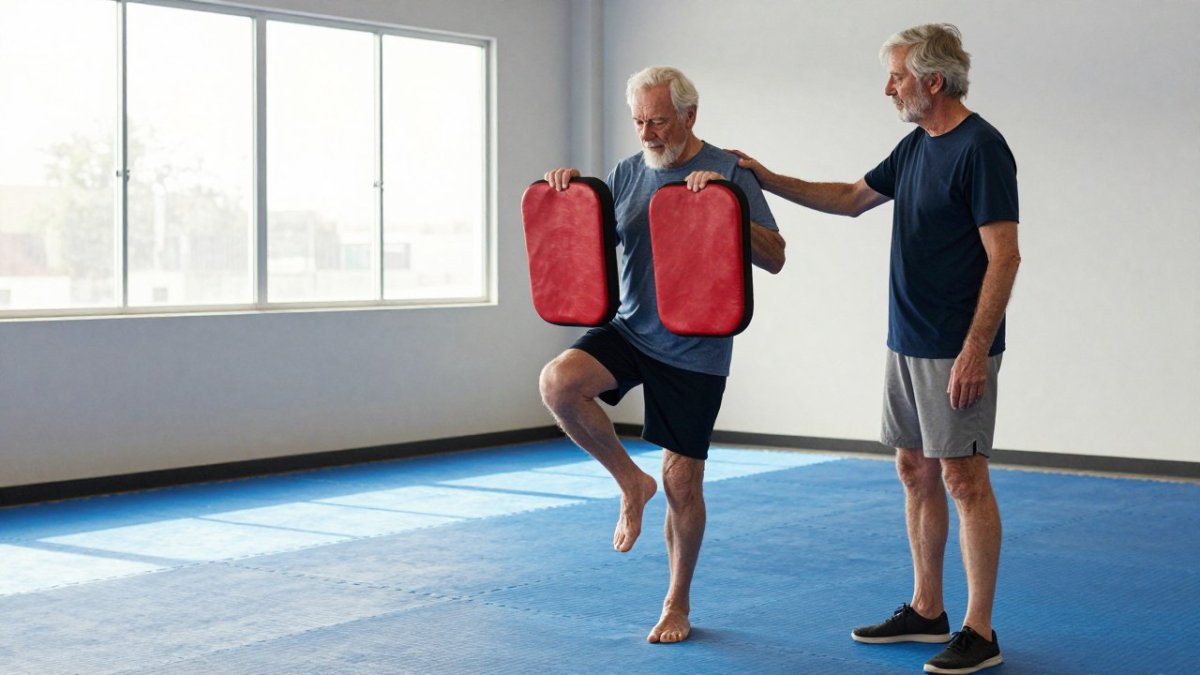
Knee, shoulder, and lower-back issues are common, and a good coach has regressions ready, substituting shadowboxing for bag work, limiting kicks to one side, or keeping sparring optional until fundamentals are solid. Older adults and people returning from injury should look for programs that explicitly offer scaled versions of each drill rather than assuming everyone does the same workout.
Watch out: a program that cannot describe its beginner progression in concrete terms, how many weeks, what you learn each week, when sparring starts, is probably improvising class to class.
For readers ready to take the next step, our guide to boxing fitness classes in Kingwood walks through what a first class actually looks like. If martial arts is more your speed, this beginner martial arts how-to guide covers what to expect in your first month.
Fitness Training Programs for Weight Loss: What Actually Burns Calories
Fitness training programs for weight loss work when they combine consistent weekly frequency with enough intensity to raise your heart rate. Boxing is a striking-based workout that can include bag work, footwork drills, and bodyweight exercises.
Martial arts classes vary more. A technique-heavy session burns less than a sparring or conditioning session. That is why weekly frequency matters more than any single workout. Three sessions per week beats one brutal session every Saturday.
If you want the full picture on whether striking sports deliver results, read our breakdown of whether boxing is good for weight loss and our guide on how martial arts helps adults lose weight. Both cover realistic expectations, not hype.
The Boxing Workout for Fitness: Power, Conditioning, and Stress Relief
What most guides miss is the stress angle. Hitting a bag after a hard day does something a treadmill cannot replicate. Our boxing program at Battenberg's uses a training protocol directly from 2x Heavyweight Champion George Foreman. That stress relief is easier to make part of a routine when durable boxing gear is ready at home, turning a few rounds on the bag into a practical outlet after a demanding day.
Martial Arts for Fitness: Beyond Self-Defense
Martial arts for fitness covers more ground than most people expect. Taekwondo training can build leg strength, balance, and flexibility through kicks and forms, and the belt system gives students visible milestones.
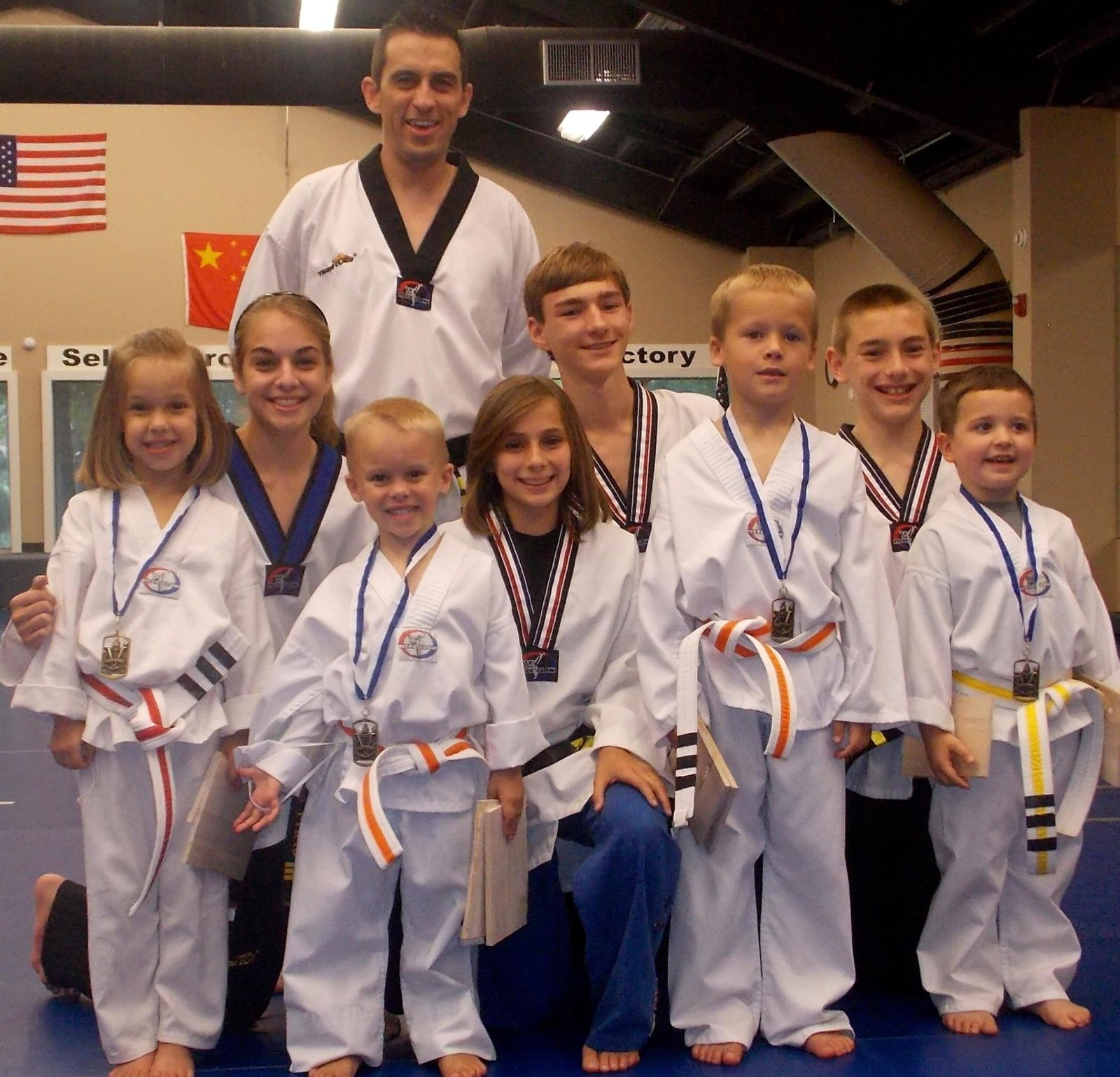
Our Taekwondo programs at Battenberg's run from Pre-Karate Kub for ages 4-6, one of the first in the nation to include Neuro-Training development, through teen and adult classes.
How to Choose a Fitness Training Program: Costs, Contracts, and Fit
Most roundups of fitness training programs stop at "ask about pricing." Comparing programs is easier when you look at the full cost structure of each option. The framework below applies the same criteria to every option so the comparison is honest.
1. Total cost, not headline cost. Add up the monthly fee, any registration or initiation fee, required gear (gloves, wraps, uniform, shoes), testing or belt fees, and any annual maintenance charge. A program advertising a low monthly rate can cost more over twelve months than one with a higher rate and no add-ons. Ask for the all-in twelve-month number in writing.
2. Contract and cancellation terms. Programs generally fall into three structures: month-to-month, fixed-term (often six or twelve months), and pay-per-class. Month-to-month costs more per session but carries the least risk. Fixed-term is cheaper per month but usually includes an early-termination fee. Pay-per-class is the most flexible and the most expensive per visit. Read the cancellation clause before you sign, notice periods of 30 days are common, and some contracts auto-renew.
3. Coaching model. Is the program coach-led in person, app-guided with video, or a static PDF plan? Coach-led programs cost more but catch form errors early. App-guided programs are cheaper and flexible but rely on you to self-correct. Static plans are the cheapest and the easiest to abandon.
4. Progression and tracking. A serious program tells you how progress is measured, strength benchmarks, conditioning tests, belt milestones, or adherence streaks. If the program cannot describe how you will know you are improving, assume you will not.
5. Schedule fit. Count the classes per week your actual calendar allows, not the number you wish it allowed. A program with ten weekly time slots you can only attend twice is effectively a two-session program at a ten-session price.
6. Adaptations and safety. Ask how the program handles injuries, older adults, limited mobility, and returning trainees. Programs with written regressions and rest-day guidance are safer choices than ones that push maximum intensity every session.
A practical comparison looks like this: free app libraries win on cost and flexibility but lose on coaching and accountability; one-time-purchase plans win on predictability but lose on adaptation; coached gym programs win on form correction and progression but cost the most and require schedule commitment. None is universally best, the right pick depends on which criteria you weight most.
Watch out: the cheapest monthly rate often hides testing fees, uniform costs, and gear requirements. Ask for the all-in number before you compare programs.
Our guide to budgeting for martial arts class costs breaks down the line items most people forget.
Start Your Fitness Training Program at Battenberg's
The hardest part of any fitness training program is the first class. Whether you choose boxing for fast conditioning or martial arts for structured progression, the right coach makes the difference between quitting in three weeks and training for years.
At Battenberg's, Masters Jeff and Reneé Battenberg lead programs for every age and level, from Pre-Karate Kub through Rock Steady Boxing for Parkinson's support. You get expert-led coaching, a training protocol from George Foreman, and a community that shows up for each other.
Get started with Battenberg's and find the program that fits your goals.
Frequently Asked Questions
What are the best fitness training programs for someone who wants both strength and stress relief?
Programs that combine resistance work with high-intensity intervals tend to deliver both. Boxing and martial arts fit this well: you build strength through bodyweight and bag work, and the fast-paced rounds provide a cardio challenge that many people find more engaging than a treadmill. The key is consistency, so pick a program you will actually attend three times per week. Look for coached classes that include warm-ups, technique, and cool-downs rather than open gym time alone.
Can martial arts training help with weight loss?
Martial arts can contribute to a weight-loss routine, since the mix of cardio and strength work supports overall activity when paired with a sensible diet. More importantly, martial arts for fitness builds muscle and improves conditioning, which helps you stay active as you age. The exact calorie burn depends on the style and intensity, but consistency matters more than any single session. Aim for three to four classes per week and track your progress over a month.
Is boxing a good workout for stress relief and fitness?
Boxing is one of the most effective stress-relief workouts because it demands full attention, leaving little room to ruminate. The physical demands, from footwork to punching combinations, release tension and build cardiovascular endurance. Boxing workouts for fitness commonly draw on drills such as shadow boxing and bag work. Many people find the focus required in boxing helps clear their mind. Start with two or three sessions per week and increase as your fitness improves.
How does martial arts training compare with a traditional gym workout?
A traditional gym workout often focuses on isolated strength or cardio machines, while martial arts training combines strength, cardio, flexibility, and coordination in one session. Martial arts also adds a skill-learning component that keeps your mind engaged. For people who find gym routines boring, the structured class format and social environment can improve adherence. However, if your goal is pure strength or powerlifting, a gym may be more efficient. Many people combine both for a well-rounded routine.
How many days a week should a beginner work out in a fitness training program?
Beginners should aim for three sessions per week with at least one rest day between them. This gives your body time to recover and adapt. A typical schedule might be Monday, Wednesday, and Friday. Start with 30-minute sessions and gradually increase duration and intensity. Listen to your body: soreness is normal, but sharp pain is not. After four to six weeks, you can add a fourth day if you feel ready. Consistency over months matters more than any single week.