 blog
Best Martial Arts for Adult Fitness and Self-Defense
Quick Summary
The best martial arts for adult fitness are taekwondo for kicking and flexibility, boxing for high-intensity cardio, and grappling arts like jiu-jitsu and judo for strength. Krav Maga and Muay Thai are the most demanding options. Adults should start at a conservative pace and pick a school that scales drills to their fitness level.
- Taekwondo builds leg strength and hip flexibility through repeated kick drills.
- Boxing delivers serious cardio with basic punches that are easy to learn.
- Brazilian jiu-jitsu and judo build grip, core and pulling strength with a partner.
- Krav Maga and Muay Thai are the most demanding options for adult beginners.
- Plan two to three classes per week as a sustainable starting point.
Table of Contents
- Why Martial Arts Work for Adult Fitness
- How We Compared the Styles: Fitness, Self-Defense and Beginner Demands
- Best Martial Arts for Adult Fitness Beginners
- Best Martial Arts for Self-Defense Skills Adults Can Use
- Martial Arts for Weight Loss: Calorie Burn and Realistic Expectations
- Choosing a School, Managing Injury Risk and Setting Realistic Progress Goals
- Booking Your First Adult Class at Battenberg's
- Frequently Asked Questions
Best Martial Arts for Adult Fitness and Self-Defense
Last Updated: November 10, 2026
Why Martial Arts Work for Adult Fitness
Most adults who start martial arts expect a workout. Few expect the workout to hold their attention for months. Martial arts combine cardio, strength, flexibility and technique in one session, which is why many adults stick with them when gym routines fade. Adults often come in to get fit and stay for the discipline and the community.
The appeal is practical. A class moves through drills, partner work and conditioning, so the time passes quickly. You are learning a skill at the same time you are sweating, and that skill gives you a reason to show up. For many adult beginners, that reason matters more than any calorie count.
Martial arts are also flexible in intensity. A beginner can train gently and build up, while a more experienced student can push hard. That range makes the activity useful for people returning after years away from exercise.
- Cardio from continuous drills and footwork
- Strength from bodyweight work and partner resistance
- Flexibility from kicking and stretching routines
- Coordination from combinations and timing
How We Compared the Styles: Fitness, Self-Defense and Beginner Demands
Not every martial art fits every adult. We compared styles on four practical dimensions: cardiovascular demand, strength and muscular endurance demand, mobility and balance demand, and beginner learning curve. A style that scores high on one measure can score low on another, and the same style can feel different from school to school depending on how class time is structured.
The most useful comparison unit is not the style name but the class session. A typical adult class mixes four formats, and each format produces a different fitness outcome:
- Conditioning blocks (jump rope, calisthenics, shuttle runs, bag intervals) drive heart rate and muscular endurance. They are the closest thing to a traditional gym workout and are easy to scale by adjusting work-to-rest ratios.
- Technique drills (shadowboxing, kick lines, uchikomi entries, form repetition) build coordination and skill-specific strength at a lower cardiovascular cost. They are where beginners spend most of their early class time.
- Partner drills and pad work raise intensity through resistance and timing. Pad rounds in boxing and Muay Thai can push heart rate near interval-training levels; grappling partner drills in Brazilian jiu-jitsu and judo load grip, core, and pulling muscles continuously.
- Live sparring or rolling is the highest-demand format and the highest-skill format. It is also the format most schools gate behind experience or safety checks, which is why beginners should ask how soon live work begins and how contact is controlled.
Use these four formats to compare any two schools, even within the same style. A boxing class that is 70% conditioning and 30% technique produces a very different fitness result than one that is 30% conditioning and 70% pad work. Ask each school to describe a typical class breakdown before you visit.
Our comparison uses plain criteria you can apply yourself: how much of class is conditioning, how quickly new students practice live drills, whether impact is controlled, and whether the coach scales drills for different fitness levels. Those answers tell you more than a style's reputation.
This is an editorial comparison, not a lab study. Treat the comparison as a starting point and check how each class feels when you visit.
Best Martial Arts for Adult Fitness Beginners
Beginner-friendly fitness martial arts share three traits: clear structure, scalable intensity and a gentle start. The four options below cover a range of demands, from low-impact flexibility work to very demanding training.
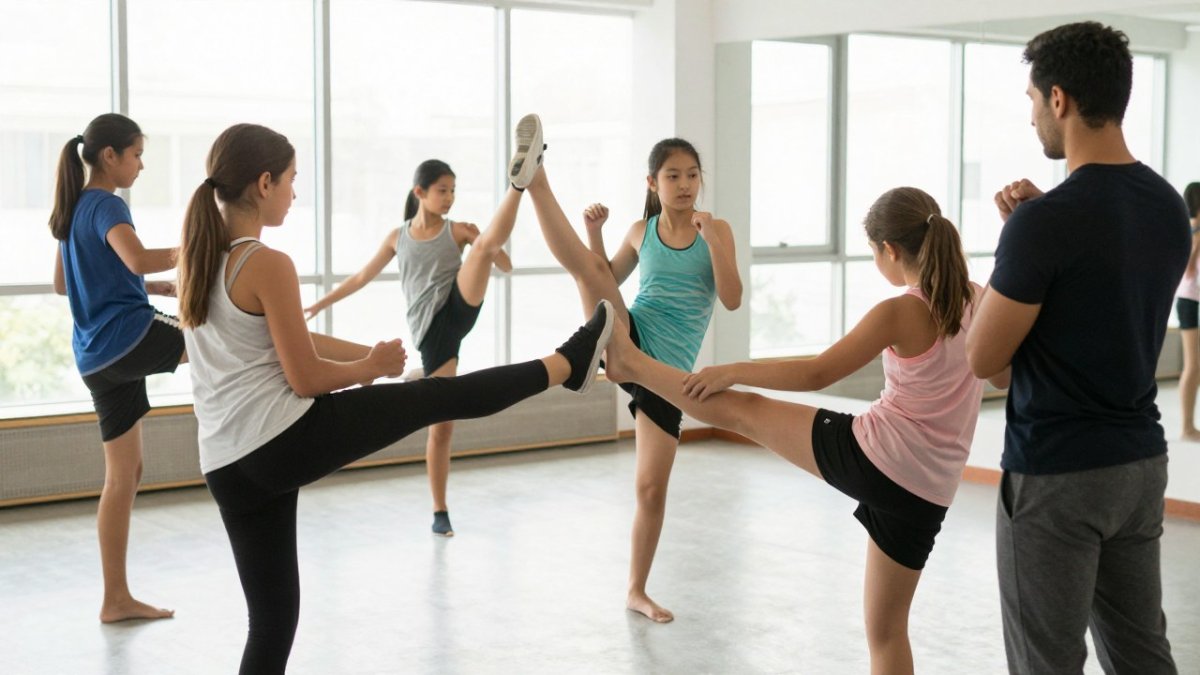
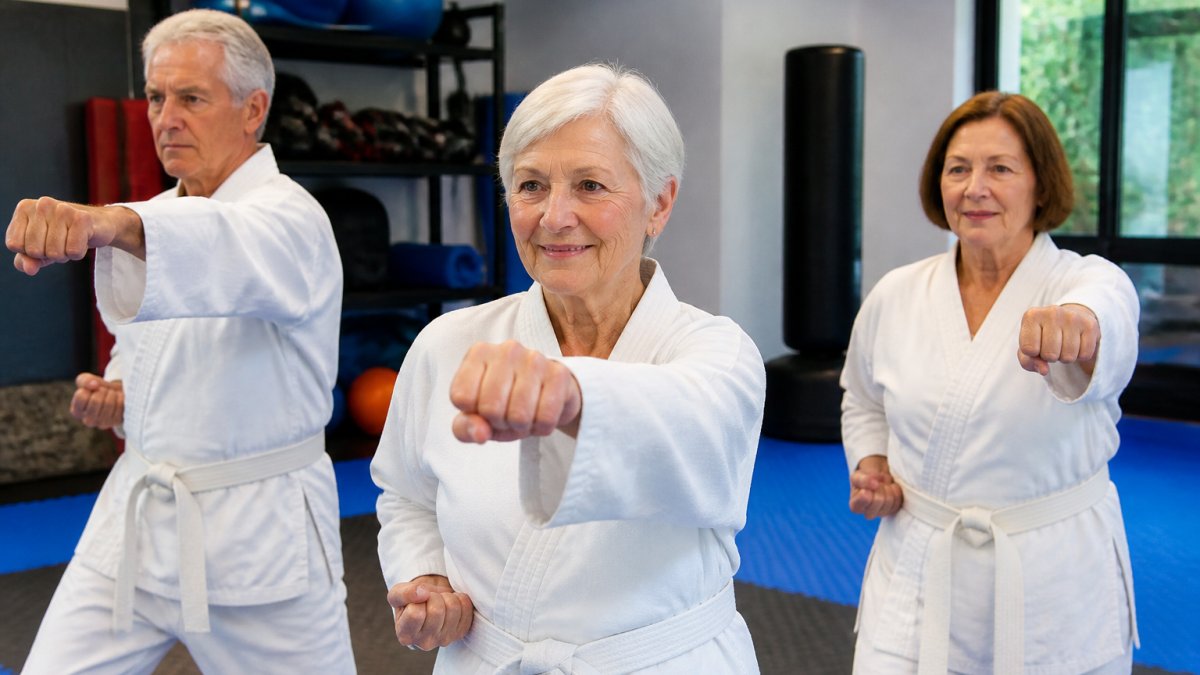
!Adult beginners stretching and practicing kicks in a bright studio class while a coach watches
Taekwondo: Kicking Drills and Flexibility Work
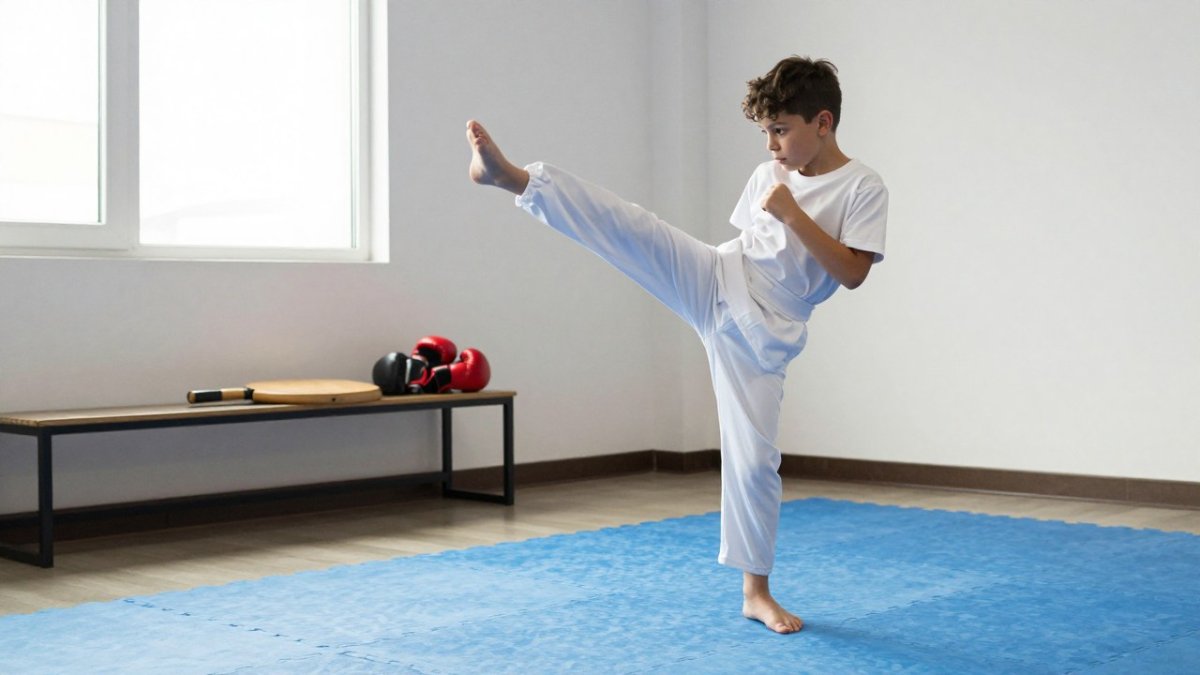
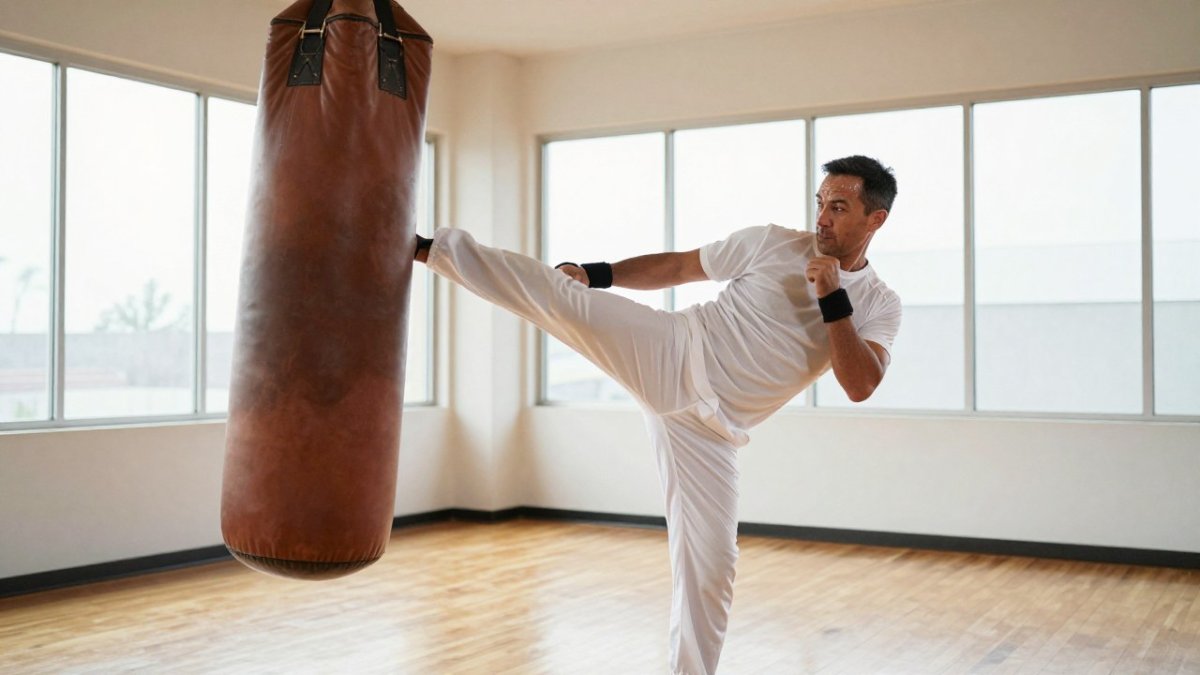
Taekwondo emphasizes kicking, which builds leg strength and hip flexibility. Classes usually open with stretching and move into repeated kick drills.
The learning curve is moderate. Basic kicks are approachable, but higher kicks take time and patience. Taekwondo is a strong pick if flexibility and leg fitness are your main goals.
Boxing: High-Intensity Cardio With a Shallow Learning Curve
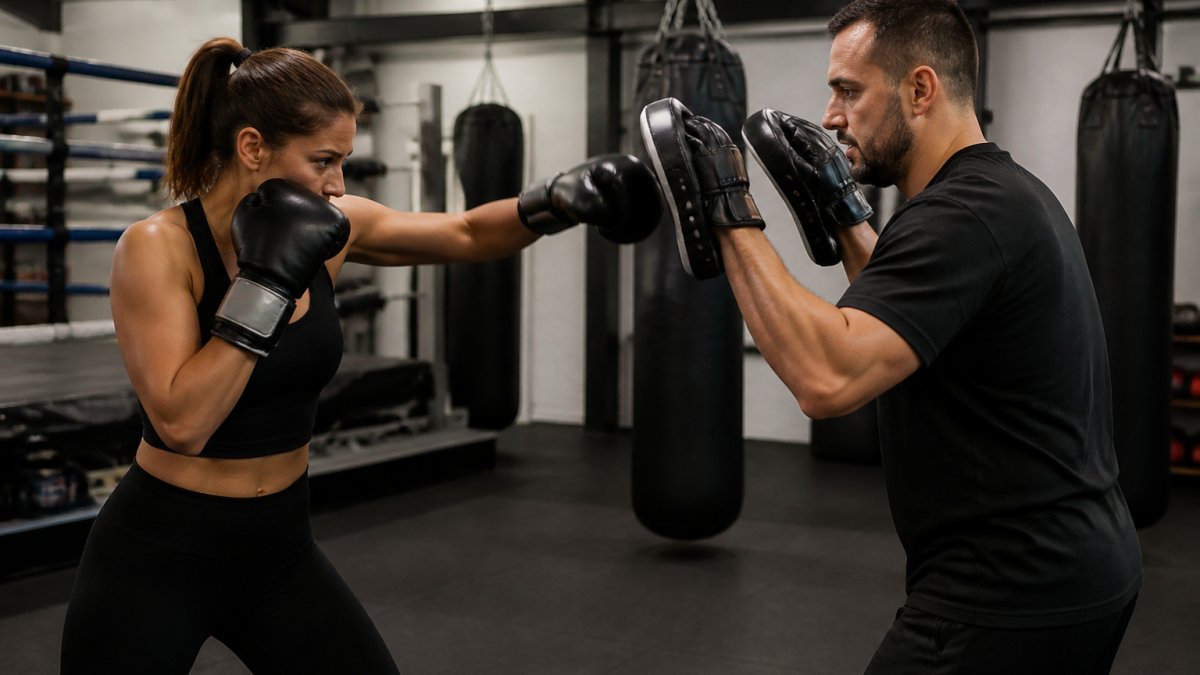
Boxing delivers serious cardio through bag work, footwork and pad rounds. The basic punches are easy to learn, which lets beginners start working hard quickly. Expect your heart rate to climb fast.
The trade-off is that boxing is mostly upper-body and conditioning work. It does less for flexibility than taekwondo. Choose boxing if you want intense cardio and a simple skill set.
Brazilian Jiu-Jitsu and Judo: Strength and Grappling Conditioning
Both arts focus on grappling, which builds grip, core and pulling strength. Working against a partner requires steady effort. Rolling and throws also teach balance.
The learning curve is slower. Positions and techniques take months to absorb, and grappling involves close contact. Pick these if you enjoy problem-solving and want strength work with a partner.
Krav Maga and Muay Thai: The Most Demanding Options
Krav Maga is built around self-defense, with fast, high-effort drills. Muay Thai combines striking with clinch work and is known for intense conditioning. Both push cardio and strength hard.
These are the most demanding choices for adult beginners. Start with a conservative pace and a coach who scales drills to your fitness. If you have a recent injury or a long gap in training, consider an easier style first.
Best Martial Arts for Self-Defense Skills Adults Can Use
Self-defense value depends on training realism. Styles that include partner drills under pressure tend to build skills you can use. Krav Maga is designed around real-world threats, and Muay Thai and boxing build striking under stress. Brazilian jiu-jitsu teaches control and escapes, which matters if a confrontation goes to the ground.
No martial art makes you immune to danger. The most useful self-defense training teaches awareness, escape and de-escalation alongside technique. Look for a school that emphasizes these, not only fighting.
Martial Arts for Weight Loss: Calorie Burn and Realistic Expectations
Martial arts classes keep your heart rate up for sustained periods. For a deeper look at whether martial arts helps with losing weight, see can martial arts help adults lose weight. Sparring rounds, bag work and conditioning all burn energy. Exact calorie burn depends on your body, intensity and session length, so no single number applies to everyone.
Weight loss also depends on diet and consistency. Attend regularly, eat with your goals in mind and track progress over months, not weeks. Martial arts works best as part of a broader routine.
Choosing a School, Managing Injury Risk and Setting Realistic Progress Goals
Choosing a school matters as much as choosing a style. If you are worried about injury or poor fitness, read how to start martial arts when out of shape before you commit.
Evaluate the school on these concrete criteria:
- Beginner onboarding. Ask whether there is a separate introductory class, a structured first-month plan, or a one-on-one orientation. A school that drops new adults straight into advanced sparring is a warning sign.
- Instructor qualifications. Ask what rank or certification the instructor holds, who supervises them, and whether they have experience coaching adults rather than only competitive youth athletes.
- Class size and coach-to-student ratio. In a large class, ask how many assistant coaches are on the floor. Partner drills and sparring need eyes on them.
- Sparring culture. Ask at what level sparring begins, whether it is optional, what protective gear is required, and how contact level is communicated. Good programs separate technical sparring from hard sparring.
- Trial options. Many schools offer a free or low-cost trial class. Use it to judge the warm-up, the coaching tone, and whether you leave feeling challenged rather than overwhelmed.
- Contract terms. Ask about pricing, contract length, cancellation terms, and whether there are belt-testing or equipment fees, and get the answers in writing before you sign.
Manage injury risk with a few practical habits. Warm up properly, learn to fall safely before you take throws, and tell your coach about old injuries before class, not after. Ease into sparring and live rolling over weeks rather than jumping into hard rounds in your first month. Contact level should be a conversation, not an assumption.
Watch out: the most common beginner mistake is doing too much too soon, especially in grappling and kicking arts, because soreness and minor strains in the first few weeks are normal but sharp pain or joint swelling is not.
Set realistic progress expectations. Most adult beginners need a few months before basic techniques feel natural in drills, and a year or more before they feel confident under pressure. Fitness changes tend to show up earlier than skill changes: improved stamina and recovery often appear within the first several weeks of regular attendance, while flexibility and technique take longer.
Ask about pricing, contract length, and cancellation terms in writing before you sign anything, and revisit the school after a month to confirm the class format still matches your goals. To plan ahead, see how to budget for martial arts classes costs.
The article's checklist for evaluating a school is summarised below, with what to ask and why it matters.
| Criterion | What to ask | Why it matters |
|---|---|---|
| Beginner onboarding | Is there an intro class or first-month plan? | Avoids dropping new adults into advanced sparring |
| Instructor qualifications | What rank, and who supervises them? | Checks experience coaching adults |
| Class size | How many assistant coaches on the floor? | Partner drills need supervision |
| Sparring culture | At what level does sparring begin? | Separates technical from hard sparring |
| Trial options | Is a free or low-cost trial offered? | Lets you judge warm-up and coaching tone |
| Contract terms | Pricing, length, cancellation, fees in writing? | Prevents surprise costs before signing |
Booking Your First Adult Class at Battenberg's
If you are ready to try one of these styles, Battenberg's offers training in Kingwood, Texas, including Taekwondo and boxing led by Masters Jeff and Reneé Battenberg, with programs focused on physical strength, self-confidence, and leadership skills.
For a step-by-step look at booking a trial class, see our Book a Martial Arts Trial Class: Step-by-Step Guide. Visit Beginner Martial Arts Classes: A How-To Guide to learn what a first class involves.
Frequently Asked Questions
What is the best martial art to learn as an adult?
For most adult beginners, Taekwondo and boxing offer the most accessible entry points. Taekwondo builds flexibility, kicking power and coordination through structured forms and sparring, while boxing develops cardiovascular conditioning and hand speed with a relatively short learning curve. The right choice depends on your goals: if you want a full-body workout with kicks and stretching, Taekwondo fits well; if you want intense cardio and stress relief, boxing is often the better start. Trial classes at a school near you are the most reliable way to decide.
What martial art is best for fitness?
Muay Thai, Brazilian jiu-jitsu and boxing are among the more physically demanding styles because they combine cardio, strength and sustained intensity. Muay Thai adds full-body conditioning through strikes with shins, elbows and knees. Brazilian jiu-jitsu builds grip strength, core stability and endurance during rolling. Taekwondo and boxing provide strong cardio with less grappling load, which many adults find easier to sustain. Match the intensity to your current fitness level and recovery capacity.
Can martial arts help adults lose weight?
Martial arts classes can raise your heart rate for sustained periods, and calorie burn varies widely by style, intensity and body weight. Calorie burn varies widely by style, intensity and body weight, so exact figures depend on the individual. Combining regular attendance with a balanced diet produces the most consistent results. Expect gradual progress over months rather than rapid changes, and track waist measurements and endurance alongside the scale.
Is Taekwondo a good workout for adults?
Yes. Taekwondo builds flexibility, balance, leg strength and cardiovascular fitness through kicking drills, forms and sparring. Ask whether a school offers adult-specific classes, since beginner pacing and conditioning differ from youth programs. Battenberg's offers Taekwondo instruction in Kingwood, Texas, led by Masters Jeff and Reneé Battenberg.