 listicle
Benefits of Martial Arts for Kids: Focus, Fitness and Confidence
Quick Summary
The benefits of martial arts for kids include better focus, improved fitness and coordination, and greater confidence. Training gives children a repeatable routine and teaches impulse control, respect and self-regulation through structured classes.
- Belt promotions give children clear, visible goals that reflect their own effort.
- Kicks, stances and footwork build strength, flexibility and cardiovascular fitness in one session.
- Students learn respect through bowing, addressing instructors properly and partnering safely with classmates.
- Many schools accept children as young as four, though readiness depends on attention span and temperament.
- Ask schools how partner work is supervised and whether students are taught safe falling and sparring rules.
Table of Contents
- Why Parents Choose Martial Arts for Kids
- Mental Benefits of Martial Arts for Kids
- Physical Benefits: Fitness, Coordination and Balance
- Benefits of Martial Arts for Kids with ADHD
- Best Age to Start Martial Arts for Kids
- Best Martial Arts for Kids: Comparing Common Styles
- Booking a First Class at Battenberg's in Kingwood
- Frequently Asked Questions
Why Parents Choose Martial Arts for Kids
Many American parents enroll their children in martial arts because they want more than a weekend activity. They want discipline, physical health, and a structured place where kids learn to handle pressure. The benefits of martial arts for kids cover focus, fitness, and confidence, and this guide walks through each one in plain terms.
Martial arts training gives children a repeatable routine. That structure appeals to parents who want predictable habits at home and at school. Kids who train regularly also learn to bow, follow instructions, and take turns, which are skills that carry over into the classroom.
The right program matters as much as the decision to enroll. Battenberg's in Kingwood, Texas, offers programs for all ages, from preschool through adult training, so families with several ages can enroll under one roof. Parents comparing options should look for experienced instructors, clear belt progression, and a trial period before committing. Step-by-step instructions for booking a trial class walk through what to do next.
Mental Benefits of Martial Arts for Kids
Martial arts training asks children to think, remember, and react at the same time. That combination makes it one of the more mentally demanding after-school activities. Parents who want to understand the mental benefits of martial arts for kids usually focus on attention, self-control, and self-image, and each of these develops through specific habits in class.
Focus, Concentration and Impulse Control
Martial arts training asks children to remember sequences and move with control, which can support attention and self-regulation over time.
Impulse control is one of the most common reasons parents give for enrolling a child. A student who has to stop mid-kick when the instructor calls "freeze" is practicing the same self-regulation skill needed to pause before reacting to a classmate.
Confidence, Self-Esteem and Respect for Others
Belt promotions give children clear, visible goals. Earning a new belt after weeks of practice gives a child a clear, visible goal that reflects effort. Students also learn respect through bowing, addressing instructors properly, and partnering safely with classmates.
Respect is taught through everyday rules rather than lectures. Kids learn to help a partner stand up, to acknowledge a sparring opponent, and to accept correction without arguing.
Physical Benefits: Fitness, Coordination and Balance
Martial arts builds fitness in a way many children enjoy. Kicks, stances, and footwork combine strength, flexibility, and cardiovascular work in a single session. Because the movements look like a game to kids, they often train harder than they would during a standard exercise routine. That playful mix of movement can make kids martial arts classes a natural next step for building focus and confidence alongside fitness.
Coordination and balance improve steadily. Learning to pivot, kick on one leg, and transition between stances trains body awareness. Children with developing motor skills often benefit from the step-by-step nature of technique drills.
Parents should also expect some bumps and bruises. Contact drills and falling techniques carry a small injury risk, so ask any school how instructors supervise partner work and whether students are taught safe falling and sparring rules.
Benefits of Martial Arts for Kids with ADHD
Many parents of children with ADHD ask whether martial arts can help with attention and energy.
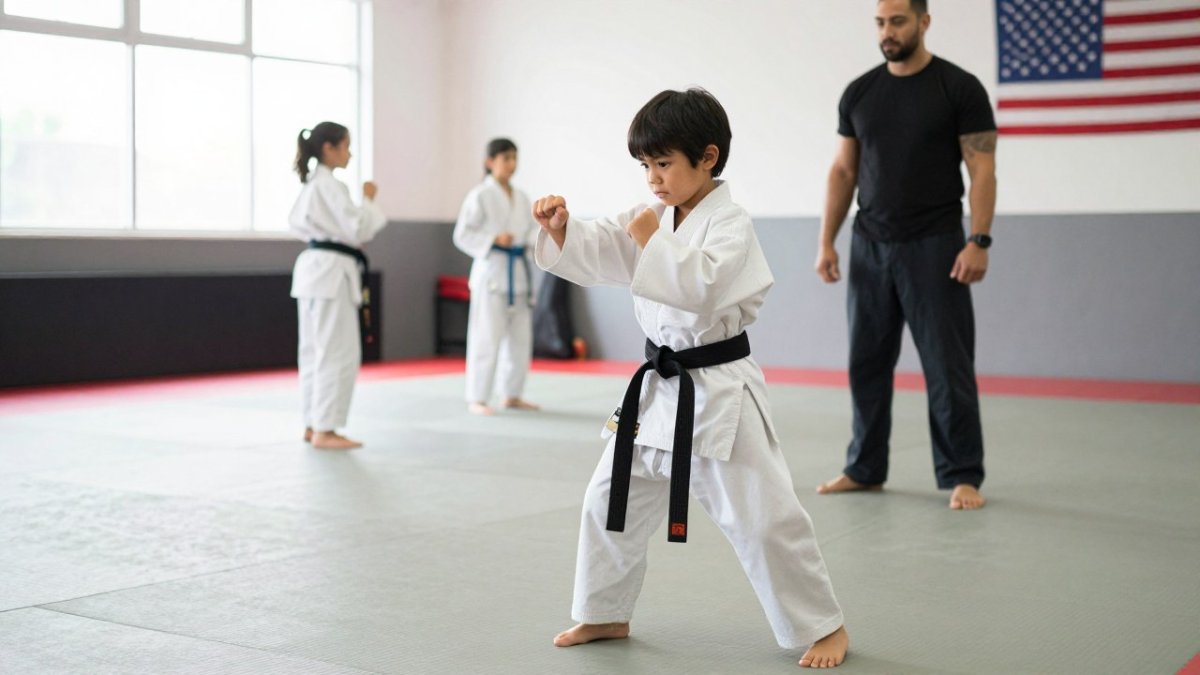
Martial arts does not replace medical or behavioral treatment for ADHD. Families should talk with a pediatrician before making decisions about care.
Best Age to Start Martial Arts for Kids
Many schools accept children as young as four, though the right starting age depends on the child's attention span, physical readiness, and temperament. Rather than a single number, it helps to think in age bands, because what a class should look like changes substantially between preschool and the teen years.
Preschoolers (ages 3 to 5). At this age, the goal is movement, listening, and following a routine, not technique mastery. Good preschool programs use short games, basic stances, and simple strikes, with lots of repetition and praise. Class length is usually 30 to 45 minutes. Readiness markers include the ability to follow a two-step instruction, take turns, and stay with a group for most of a class. Children who are not yet there are not "behind", they may simply do better starting a year later.
Elementary-age children (roughly 6 to 11). This is the most common entry window. Children in this band can handle longer technique sequences, remember forms, and understand belt progression. Classes often run 45 to 60 minutes and begin to include partner drills and, depending on the style, controlled sparring. This is also the age when many schools introduce goal-setting around belt tests.
Teens (12 and up). Teens can train in adult-oriented classes or teen-specific programs. The focus shifts toward technical depth, conditioning, and sometimes competition. Teens often benefit from the social side of training as much as the physical side, and some schools offer leadership or assistant-instructor tracks that give older students responsibility.
A trial class is the simplest way to see whether a child is ready. Watch how the instructor handles the youngest or least experienced student in the room, and ask whether classes are age-grouped or mixed. Mixed-age classes can work well when instructors split drills by ability, but they can also leave a small child standing around.
Parents should ask specific safety questions before enrolling. Ask how instructors are screened and trained, what the student-to-instructor ratio is, whether sparring is optional and at what age it begins, what protective equipment is required, and how injuries are handled. Ask whether the school carries liability insurance and whether instructors hold certifications from a recognized governing body for their style. These questions are not a sign of distrust; reputable schools answer them readily.
Watch out: a program that promises rapid belt promotions or guarantees specific outcomes is worth scrutinizing. Belt progression should reflect demonstrated skill, and no school can promise a particular result for every child.
At Battenberg's, the Pre-Karate Kub program serves children ages 4 to 6 and includes neuro-training designed for early development.
Best Martial Arts for Kids: Comparing Common Styles
Several martial arts styles are popular with families, and each has a different emphasis. The useful comparison for parents is not which style is "best" but which style's contact level, competition culture, and physical demands fit a particular child. The four styles below account for most youth programs in the United States.
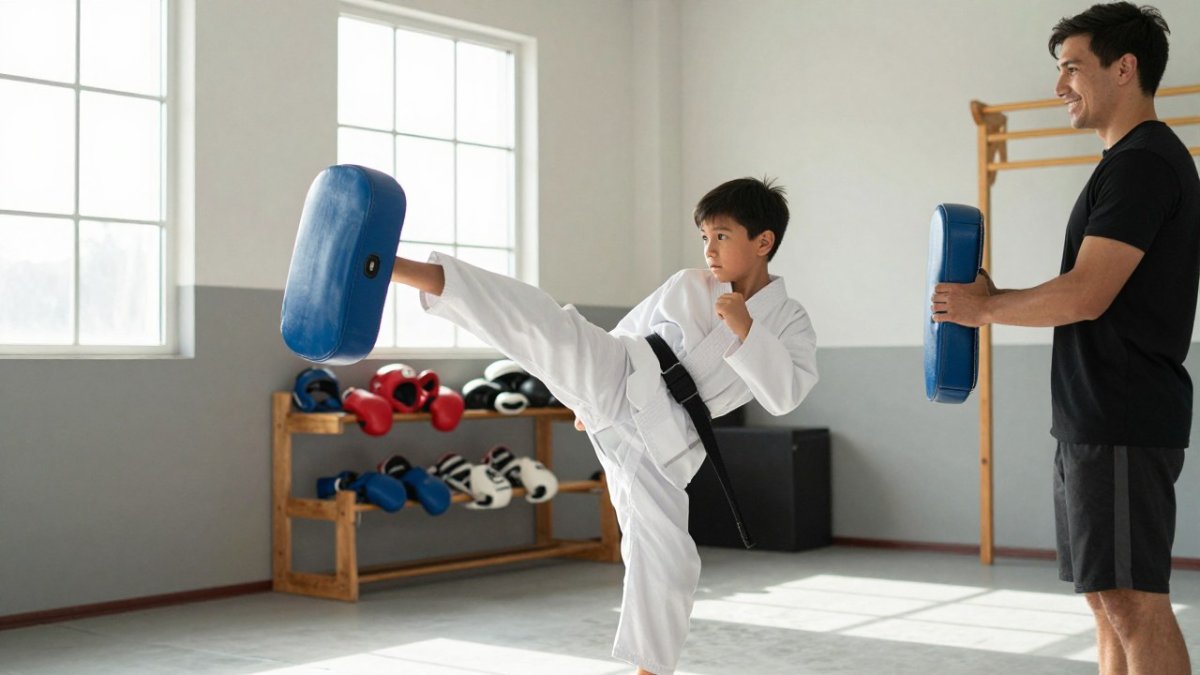
Taekwondo is a Korean striking art built around high kicks, speed, and flexibility. It is an Olympic sport, so many schools offer a competition track alongside recreational classes. Contact in sparring is typically light-to-moderate and governed by rules that limit punches to the body and kicks to legal scoring areas.
Karate is a Japanese striking art emphasizing punches, kicks, blocks, and forms (kata). Competition formats vary widely by school and federation, from point sparring to kata-only events. Contact rules differ by organization, so ask whether sparring is no-contact, light-contact, or full-contact and at what age sparring begins. Karate tends to appeal to children who like precision and repetition.
Judo is a Japanese grappling art centered on throws, pins, and submissions, with a heavy emphasis on safe falling (ukemi). Because throws put bodies on the mat, judo schools typically teach breakfalls before live practice. Contact is full-body but controlled, and competition is a core part of the sport. It suits kids who are comfortable with close contact and enjoy physical problem-solving.
Brazilian jiu-jitsu (BJJ) is a grappling art focused on ground control and submissions. Most youth programs emphasize positional drilling and controlled sparring (rolling) rather than striking. Contact is close and continuous, and classes often pair students by size and experience. BJJ appeals to kids who prefer strategy and leverage over speed.
Two practical differences matter as much as the art itself. First, contact level: striking arts vary from no-contact to full-contact depending on the school, while grappling arts involve constant body contact by design. Second, competition culture: some schools treat tournaments as optional enrichment, while others build their curriculum around them.
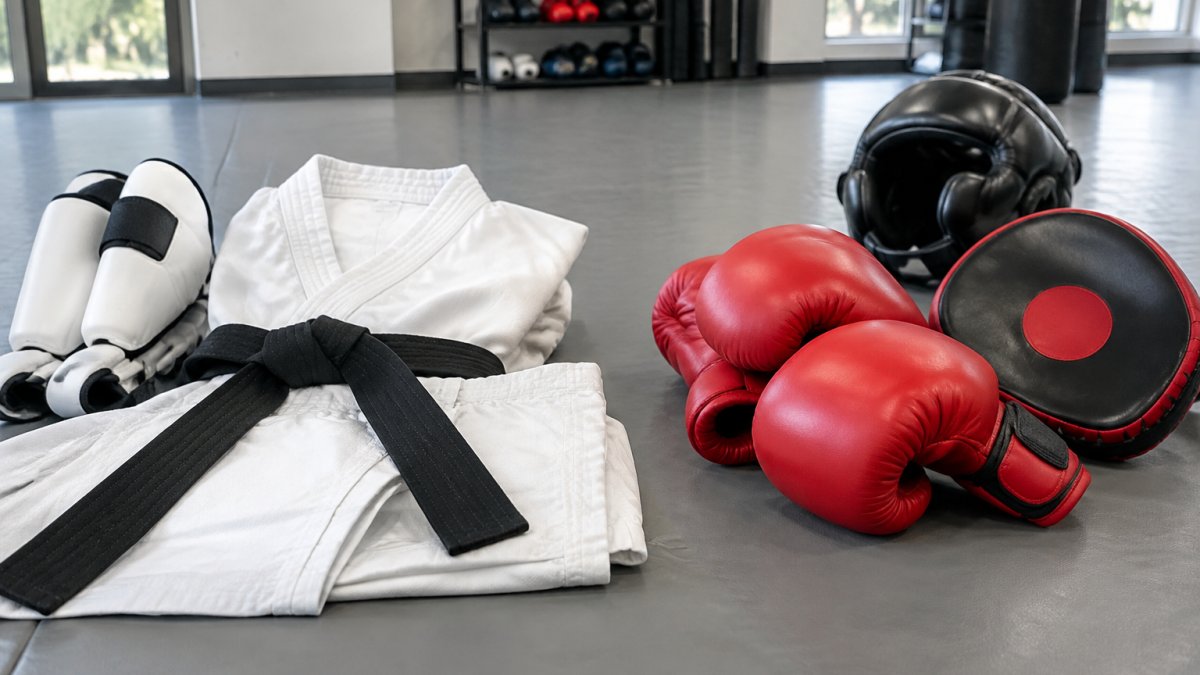
Equipment and cost also differ. Striking arts usually require a uniform (gi) and sparring gear such as gloves, shin guards, and a mouthguard once sparring begins. Judo requires a heavier gi designed for gripping. BJJ uniforms are similar but cut differently, and some schools allow rash guards and shorts.
No single style is best for every child. A kid who loves kicking and jumping may thrive in taekwondo, while a child who prefers problem-solving might enjoy jiu-jitsu's strategic grappling. Parents should watch a class, ask about contact rules and competition expectations, and let the child try a session before choosing a style.
The four styles below differ in contact level, competition culture and gear, so parents can match a style to their child.
| Style | Best for | Key difference |
|---|---|---|
| Taekwondo | Kids who like kicking and jumping | Light-to-moderate contact; Olympic sport with competition track |
| Karate | Kids who like precision and repetition | Contact rules vary by organization |
| Judo | Kids comfortable with close contact | Throws and pins; breakfalls taught first |
| Brazilian jiu-jitsu | Kids who prefer strategy and leverage | Ground control and submissions; continuous close contact |
Booking a First Class at Battenberg's in Kingwood
Families ready to try a class can visit Battenberg's to learn more about programs. Battenberg's in Kingwood offers programs for all ages, from preschool through adult training. Visit the Battenberg's website for current program details.
Ask how belt progression works and what a typical first month looks like, so expectations are clear from the start. Parents who want a broader overview of starting out can read our guide to beginner martial arts classes.
Parents with a child who has tried sports and quit can also ask how the program keeps students engaged. For families interested in a dedicated program for the youngest students, the taekwondo classes for preschoolers guide explains what to expect at that age.
Battenberg's also offers boxing and neuro-fitness training for adults and seniors. Families who want to learn more about the mental side of training can read our article on confidence and respect before deciding.
Ready to see if martial arts fits your child? Schedule a trial class at Battenberg's in Kingwood and watch a class before you commit. Our instructors will walk you through the program so you know what to expect from the first session.
Frequently Asked Questions
Is it beneficial for children to learn martial arts?
Yes, for most children martial arts offers a structured mix of physical activity, rule-following and practice setbacks. Classes build fitness, coordination and body awareness, while regular belt goals give kids measurable progress. Benefits depend on the school, the instructor and how consistently a child attends, so parents should watch a trial class before committing. Research on specific outcomes such as attention is still limited, so set realistic expectations rather than treating martial arts as a cure-all.
What is the best age to start martial arts for kids?
Many schools accept children around ages 4 to 6, when they can follow simple instructions and take turns. Programs designed for that age focus on play-based movement, listening and basic coordination rather than sparring. Older children can start at any point and often progress faster because they grasp technique sooner. Look for age-appropriate class structure, a low student-to-instructor ratio and clear safety rules, whatever the starting age.
Can martial arts help children with ADHD?
Martial arts may help some children with ADHD practice attention, impulse control and following multi-step instructions, because classes are structured and repetitive. Many families also value the physical activity and the routine of a set class time. However, martial arts is not a substitute for medical or educational support, and results vary from child to child. Talk with your child's doctor or school before making decisions about treatment, and ask a dojo whether instructors have experience working with children who learn differently.
How does martial arts help kids build confidence and discipline?
Martial arts builds confidence through small, visible goals such as mastering a new kick or earning the next belt. Discipline grows from bowing in, following class routines and repeating techniques until they become habit. Parents can reinforce the effect by asking their child to explain what they practiced and what they found hard.