 how-to
Can Seniors Do Martial Arts? 7 Things to Know First
Last Updated: October 28, 2026
Quick Summary
Yes, seniors can start martial arts training at any age, as long as they choose a program that teaches at a steady pace. Before signing up, check that the class accepts adult beginners and offers movements adapted for lower impact or limited mobility. Seniors martial arts training works best when consistency matters more than intensity.
- Confirm the class accepts adult beginners before you enroll.
- Ask whether movements can be adapted for lower impact or limited mobility.
- Get your clinician's limits on movements and heart rate in writing.
- Treat pressure to keep pace with younger students as a red flag.
- Ask whether beginners spar and when, before committing.
Table of Contents
- Can Seniors Start Martial Arts Training at Any Age?
- Benefits of Martial Arts Training for Older Adults
- Best Martial Arts for Older Adults
- Senior Martial Arts Safety: Screening and Red Flags
- Martial Arts for Balance and Coordination
- Boxing Exercises for Seniors: Low-Impact Options
- Choosing and Trying Your First Class
- Frequently Asked Questions
Can Seniors Start Martial Arts Training at Any Age?
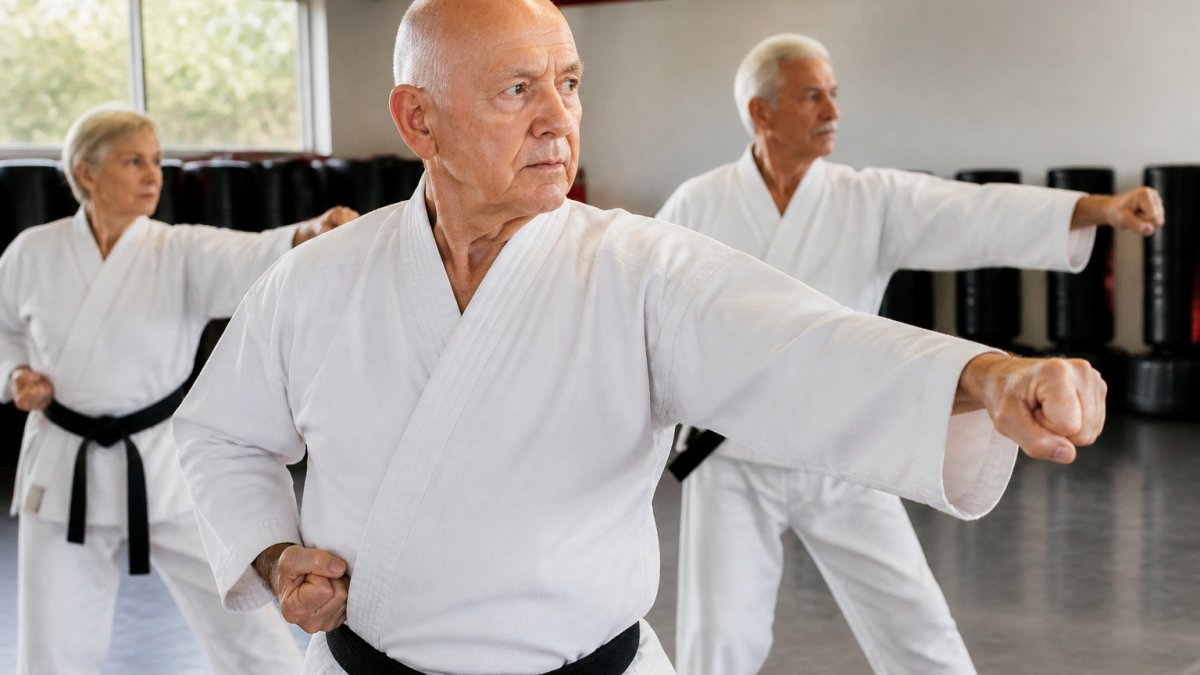
Yes, seniors can start martial arts training. The key is picking a program that teaches at a steady pace.
Most people who worry about starting late fear two things: looking foolish and getting hurt. Both concerns are fair, but both can be managed.
Start by asking three questions before you sign up:
- Does the class accept adult beginners?
- Are movements adapted for lower impact or limited mobility?
- Will the instructor let you train at your own pace?
If the answer to any of these is no, keep looking.
Benefits of Martial Arts Training for Older Adults
Many seniors also report better mood and reduced stress after class. These benefits build over time, so consistency matters more than intensity.
Best Martial Arts for Older Adults
When you visit a school, ask to watch a beginner class before you commit. You will quickly see which pace and atmosphere fit you.
Senior Martial Arts Safety: Screening and Red Flags
Martial arts training is a form of exercise, and for older adults the safety conversation starts before the first class, not during it. The goal is not to scare anyone off, it is to walk in with a clear picture of what your body can handle and what to ask the instructor to modify.
What to bring up with a clinician
A common pattern is for clinicians to clear a patient for moderate exercise with specific caveats, for example, no sparring, no deep stances, or a heart-rate ceiling. Write those caveats down and share them with the instructor. You do not need to disclose your full medical history, but the instructor should know the practical limits. These modifications often serve as a foundation for improving balance and stability, which remains a critical objective for maintaining independence both within the training hall and when navigating the hazards of daily life.
Get Started Today at NO RISK! →
Red flags in a class
- No health or experience questions on the enrollment form
- Pressure to keep pace with younger or more advanced students
- Hard sparring or full-contact drills offered to beginners
- Instructors who dismiss pain, dizziness, or shortness of breath
- No warm-up, or a warm-up that jumps straight into high-impact work
- No clear stop signal or check-in during drills
Your personal stop rules
Good schools treat these rules as normal, not as signs of weakness. If an instructor reacts poorly to a stop rule, that is your signal to find another program.
Warm-up and recovery basics
Physical activity guidance for older adults
Martial Arts for Balance and Coordination
Consistent practice adds up. Proven balance exercises give you a starting set of drills that work for seniors. Even a few minutes a day can support steadier movement over time. Balance exercises show specific drills you can practice at home. Pair these drills with your class training for the best results.
Boxing Exercises for Seniors: Low-Impact Options
Battenberg's offers specialized programs, including Rock Steady Boxing for people with Parkinson's disease, along with neuro-fitness classes built for seniors. Their programs follow a training protocol directly from 2x Heavyweight Champion George Foreman.
Choosing and Trying Your First Class
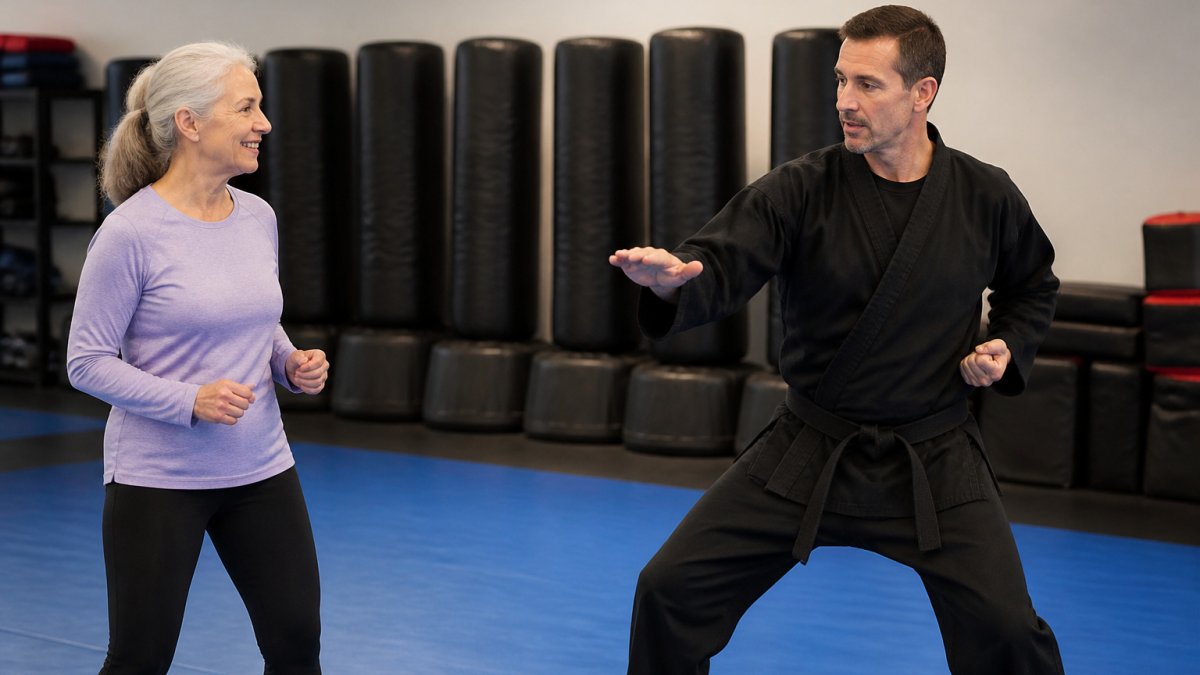
Most articles tell you to "find a class that fits." The harder question is how to tell whether a class actually fits before you pay for a membership. Use this as a working checklist for the visit, the trial, and the decision.
Before you visit: narrow the list
- Define one or two goals. Balance, stress relief, self-defense, and social contact point to different styles and schedules. Write them down so you can compare schools against the same standard.
- Confirm beginner-friendly adult classes. Ask whether the school runs a dedicated adult-beginner or over-50 class, or mixes beginners into general adult classes. A dedicated class usually means slower progression and more modifications.
- Ask about class size and student-to-instructor ratio. A class of 30 with one instructor leaves little room for individual correction. Ask how many students typically attend and whether assistant instructors are present.
- Ask about contact rules. Confirm whether beginners spar, and at what point. Many schools delay contact sparring for months and offer padded, controlled drills instead. Get this in writing if you can.
- Check accessibility. Ask about parking, stairs, changing facilities, seating for rest breaks, and whether the training floor is matted. If you use a cane or walker, ask whether the space accommodates it.
- Ask about instructor credentials. Look for a recognized rank or certification, years teaching adults, and any continuing education in adaptive or senior fitness. Ask directly: "How many students over 60 have you taught, and how do you modify drills for them?"
What to watch during a trial class
- Warm-up quality. A proper warm-up should be gradual and include mobility work, not just jumping jacks.
- Modifications offered without being asked. Good instructors routinely offer a lower-impact version of each drill.
- Corrections and attention. Notice whether the instructor scans the room and adjusts individuals, or only demonstrates at the front.
- Rest breaks. Ask whether you can step out for water or rest without drawing attention.
- Tone and culture. Listen for respect among students and instructors. A welcoming room is easier to return to.
- Contact level. Confirm that any partner drill is light and controlled, and that you can opt out.
Questions to ask the instructor directly
- What modifications do you offer for knee, hip, or balance limitations?
- Do beginners participate in sparring, and when?
- How do you handle a student who needs to sit out a drill?
- What is your policy on injuries and reporting pain?
- Can I observe another class before deciding?
After the trial: decide within a week
Find a qualified instructor or program
Frequently Asked Questions
What's the best martial art for seniors?
The right fit depends on current fitness, joint health, and what the student wants to get out of training.
Do seniors need to be fit before starting martial arts?
Anyone with a chronic condition, recent surgery, or concerns about heart health should check with a doctor before starting.
How often should seniors train in martial arts?
Two to three sessions per week is a common starting point for beginners, with at least one rest day between sessions. This allows joints and muscles to recover while building consistency. Recovery matters more than volume at first, so stop or reduce intensity if you have persistent pain, dizziness, or unusual fatigue. Progress is usually gradual over several months.
Can a 60-year-old learn martial arts?
Yes. Adults in their 60s and beyond regularly start martial arts, especially styles that emphasize technique over strength. Beginners who are patient with themselves and communicate openly with instructors tend to progress well. Look for a class that offers adapted training and smaller group sizes so the instructor can give individual attention.