 how-to
Taekwondo Classes for Preschoolers: A Parent's Guide
Table of Contents
- When Can Kids Learn Taekwondo
- What Happens in a Preschool Taekwondo Class
- How Long Are Preschool Taekwondo Classes
- Benefits of Martial Arts for Kids at This Age
- How to Choose a Martial Arts School for Kids
- Getting Your Preschooler Started: What to Expect
- Commitment, Costs, and Program Options
- Frequently Asked Questions
Last Updated: October 17, 2026
When Can Kids Learn Taekwondo
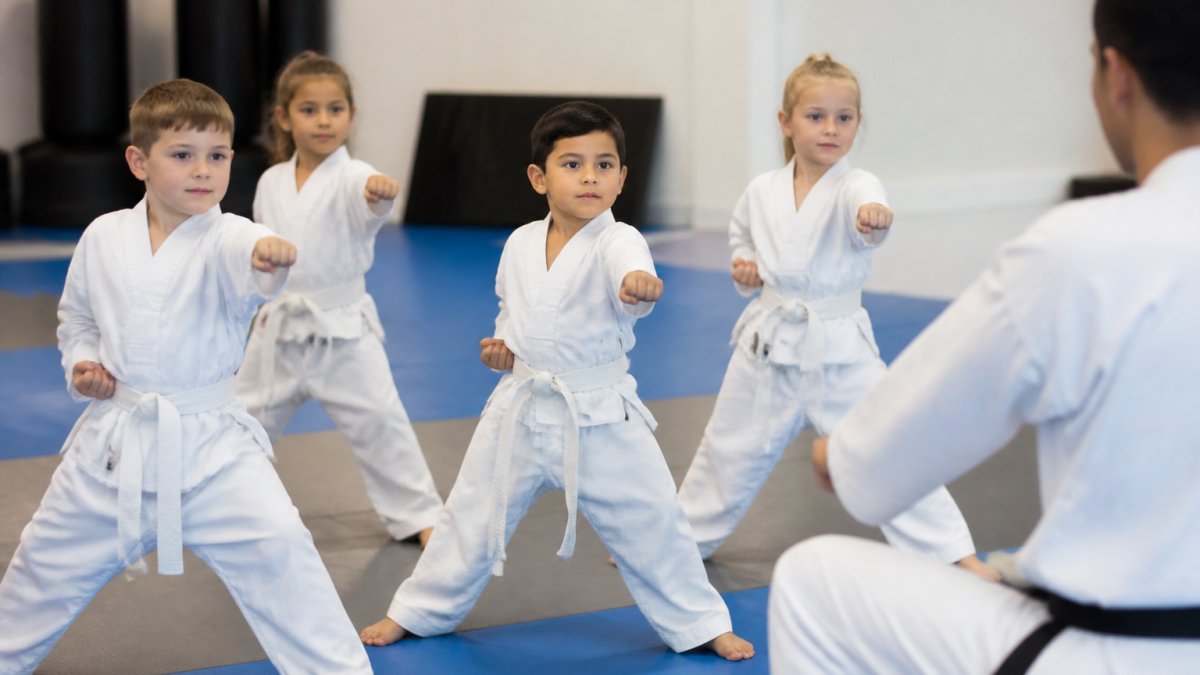
Most parents wonder if their preschooler is ready for taekwondo classes preschoolers offer. Children as young as 4 can begin, though readiness varies.
At Battenberg's, the ideal starting age for taekwondo classes preschoolers is between 4 and 6 years old.
Before age 4, most children lack the attention span and coordination for structured training.
The key is recognizing genuine interest and readiness: the ability to follow two-step directions, interest in physical activity, and willingness to listen to authority figures outside the family.
What Happens in a Preschool Taekwondo Class
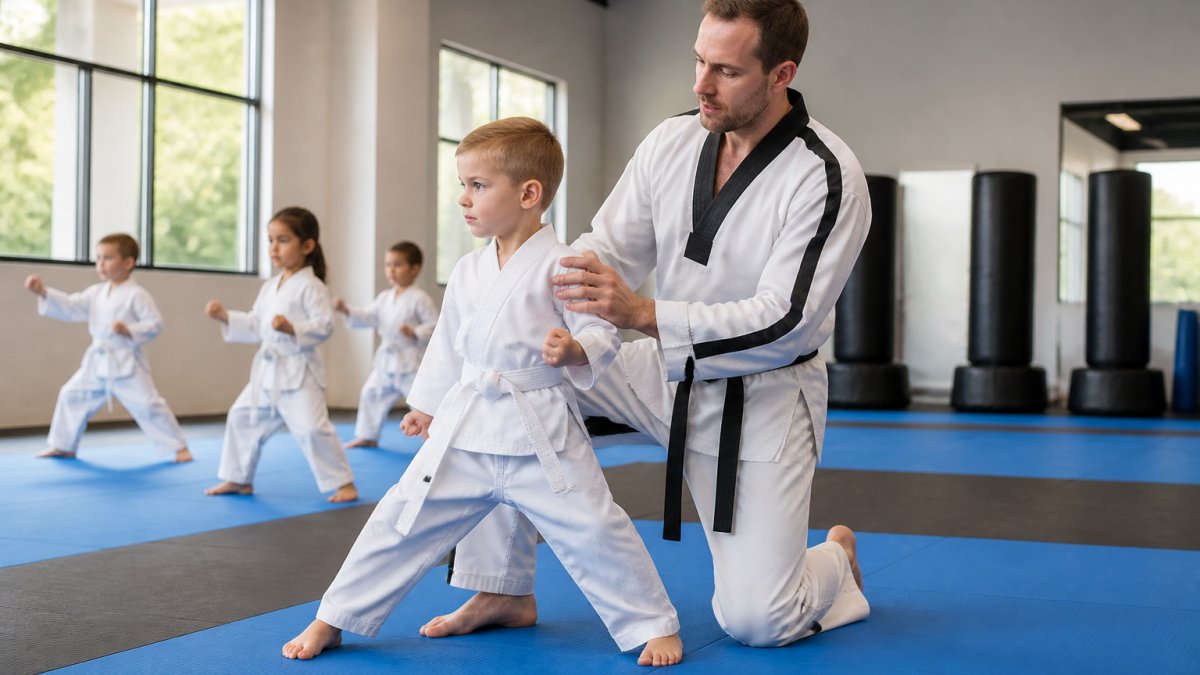
Most school pages list a preschool program and a phone number but never show what a 4-year-old's class actually looks like. Here's a realistic walkthrough of a 40-minute class so you know what to expect.
Minutes 0-8: Welcome, Rules, and Warm-Up Games
Class starts with a short greeting ritual, bowing in, sitting on a line, and roll call. Instructors repeat the same opening weekly because repetition makes 4-year-olds feel safe. The warm-up is disguised as play: animal walks, freeze-and-go games, and jogging in place, raising heart rate while quietly teaching rules, wait your turn, stay on your spot, listen when the instructor claps.
A common pattern is a "signal game" where kids must stop moving when the instructor says a specific word. This builds listening skills without making the child feel corrected.
Minutes 8-20: Basic Techniques in Small Steps
Instructors introduce one or two simplified techniques per class, a push kick, a guard position, a front stance, broken into three or four steps and demonstrated from multiple angles. Preschoolers practice in short bursts (five to eight repetitions), then rotate before attention fades.
Age-appropriate programs use hand targets, foam noodles, and floor markers to make repetition feel like a game. A child might kick a padded target, then run back to a cone and wait for a turn. The focus is coordination and fun, not perfect form.
Minutes 20-30: Partner and Group Activity
This block involves a simple partner drill or group game reinforcing the technique, mirroring a partner's stance, a relay race carrying a foam block, or a "statue" game holding a stance while the instructor checks form. These teach turn-taking, personal space, and following multi-step directions, skills that transfer to preschool and kindergarten.
Instructors watch for fatigue here. A good preschool class has a planned water break around the midpoint, and instructors adjust pace if the group is losing focus.
Minutes 30-38: Cool-Down and Character Lesson
Kids sit in a circle for controlled breathing and a short character lesson on respect, focus, or kindness. Some programs use a sticker or stamp as a reward for effort. The closing ritual, bowing out, high-fives, and a short parent update, signals the end of class.
What to Watch For as a Parent
A well-run preschool class has a high instructor-to-child ratio, clear visual boundaries (lines, cones, mats), and a predictable routine. Long stretches of standing in line, complicated instructions, or children sitting out with nothing to do signal a program not built for this age group. Ask to watch a full class before enrolling, most reputable schools allow it.
How Long Are Preschool Taekwondo Classes
Most preschool taekwondo classes run 30 to 45 minutes, long enough to warm up, practice skills, and cool down, but short enough to maintain focus.
Thirty-minute classes work well for younger preschoolers (ages 4-5) or those new to martial arts. Forty-five-minute classes suit older preschoolers (ages 5-6) or children with prior sports experience.
Some programs offer 20-minute intro classes for absolute beginners, letting children experience the environment without overwhelm before moving into standard-length classes.
Length also depends on frequency: kids attending twice weekly can handle longer sessions than those coming once.
Benefits of Martial Arts for Kids at This Age
Physical Development and Coordination
Taekwondo classes for preschoolers build gross motor skills, running, jumping, kicking, and balancing. These movements strengthen legs, core, and overall body awareness. Preschoolers who train regularly show measurable improvements in coordination and agility within weeks.
Martial arts also improves flexibility through structured stretching, reducing injury risk in later childhood sports and supporting healthy posture.
Structured training gives preschoolers consistent exercise in a fun environment, building healthy habits early and supporting cardiovascular health.
Focus, Discipline, and Listening Skills
This is where martial arts truly shines for preschoolers. Children learn to follow instructions, wait their turn, and focus on a single task. These skills transfer directly to school and home.
In class, kids practice standing still, listening, and executing movements on command.
Discipline in martial arts isn't punishment, it's structure. Kids learn that rules exist for safety and fairness. They understand that respecting the instructor and classmates makes training better for everyone. This foundation supports academic learning and social development.
Confidence and Self-Defense Basics
Preschoolers gain real confidence from learning new physical skills. Every time a child successfully performs a kick or block, they feel a sense of accomplishment. This builds self-esteem and willingness to try new challenges.
While preschool martial arts isn't about fighting, basic self-defense awareness begins here: creating distance, basic blocks, and when to ask for help.
Many children who start young develop a stronger sense of self and boundaries, carrying themselves with quiet confidence and speaking up when something feels wrong.
How to Choose a Martial Arts School for Kids
Safety, Supervision, and Instructor Qualifications
When evaluating a martial arts school, safety comes first.
Get Started Today at NO RISK! →
Ask about instructor qualifications. Look for instructors who have experience teaching young children, not just advanced students. At Battenberg's, our instructors are experienced in teaching young children.
Check the facility: clean and well-maintained, adequate mats and space, bathrooms accessible to young children, and parents allowed to observe. A school that welcomes observation shows confidence in its teaching.
Ask about the school's philosophy: fun and learning, or competition and winning?
Trial Classes and Class Schedules
Most reputable schools offer trial classes. Bring your child, let them experience the environment, and watch how they respond to the instructor, other kids, and activities.
Pay attention to class size. Smaller classes (8-12 kids) allow more individual attention than large groups. For preschoolers, this matters significantly.
Review the schedule: does it fit your family's routine? Consistency is critical for preschoolers, and a schedule that works for your family beats a "perfect" program you can't attend regularly.
Ask about make-up classes for missed sessions, schools that offer flexibility understand family realities.
Getting Your Preschooler Started: What to Expect
What to Wear and Bring
Most preschool martial arts programs use a white uniform called a gi. For beginners, many schools provide a temporary uniform during trial classes. Before committing, ask if uniforms are included in tuition or purchased separately.
Bring water, preschoolers need frequent hydration during physical activity. A small water bottle works well. Some schools provide water; others don't. Ask in advance.
Wear comfortable clothes to observe class. Avoid strong perfumes or colognes, as young children can be sensitive to smells. Keep your phone on silent and avoid distracting the instructor or other families.
First-Day Jitters and Adjustment
It's completely normal for a preschooler to feel nervous on the first day. Some kids jump in immediately; others hang back and watch.
Don't force participation. If your child wants to sit with you and watch the first class, let them.
Expect adjustment to take a few weeks. By class three or four, most preschoolers settle in and start enjoying themselves. Some children take longer, that's okay too.
Talk positively about class before and after. Share what they learned. Ask what they enjoyed. Celebrate effort, not just success.
Commitment, Costs, and Program Options
Most school websites list a phone number but not a price, which makes it hard to compare programs. Here is a practical framework for understanding what to ask before you sign anything.
Typical Cost Categories
Preschool martial arts programs usually charge in four buckets:
- Registration or enrollment fee, a one-time charge to set up your child's account, commonly in the $25-$75 range.
- Monthly tuition, the recurring cost of classes, which for preschool programs commonly falls somewhere between $80 and $150 per month depending on frequency and location.
- Uniform (gi), often $30-$60 if not included in tuition. Ask whether a trial uniform is provided.
- Testing or belt fees, some schools charge for belt promotions, typically $20-$50 per test. Ask how often preschoolers are tested and whether the fee is mandatory.
Some schools bundle uniform and registration into the first month; others itemize. Ask for the total first-month cost, not just the monthly tuition, so you can compare apples to apples.
Contract Terms and Cancellation
Enrollment models vary widely. Common structures include:
- Month-to-month, the most flexible; you can stop with written notice, often 15-30 days.
- Fixed-term contracts, typically 6 or 12 months, sometimes with a discounted monthly rate. Ask what happens if your child wants to quit in month two.
- Pay-as-you-go class packs, less common for preschoolers but useful for families with unpredictable schedules.
Before signing, ask three questions in writing: What is the cancellation notice period? Is there an early-termination fee? Are make-up classes offered for missed sessions, and do they expire? A school that answers these clearly is usually easier to work with long-term.
Class Frequency and Realistic Commitment
For preschoolers, one class per week is enough to build familiarity and confidence. Two classes per week speeds progress but is not necessary for a 4-year-old.
Plan on a three-month trial window before deciding whether the program is a fit. That gives your child time to adjust to the routine and gives you enough classes to judge the instructor and the environment.
Questions to Ask About Program Options
- Is there a free or low-cost trial class, and can parents observe?
- What is the instructor-to-child ratio for the preschool group?
- Are uniforms and belt testing included or billed separately?
- Are sibling or family discounts available?
- What is the policy for missed classes, holidays, and facility closures?
- Is there a written cancellation policy I can take home?
At Battenberg's, we work with families to create programs that fit their needs. Our Pre-Karate Kub program for ages 4-6 is designed specifically for this age group, with Neuro-Training to support brain development. We encourage parents to ask these questions during a trial class so they can compare programs with confidence.
Frequently Asked Questions
When can kids learn taekwondo?
Most children can begin taekwondo between ages 4 and 6, though readiness varies. Preschoolers need basic coordination, the ability to follow simple instructions, and enough focus to stay engaged for 30-45 minutes. Some programs, like Battenberg's Pre-Karate Kub for ages 4-6, are specifically designed for this developmental stage. Starting early builds foundational skills, confidence, and a love of martial arts that can continue for years.
What are the benefits of martial arts for kids this age?
Martial arts for preschoolers develops physical coordination, balance, and gross motor skills while teaching discipline, focus, and respect. Children gain confidence through mastering new techniques, learn basic self-defense awareness, and develop listening skills in a structured environment. Many programs also incorporate character-building lessons on respect, perseverance, and anti-bullying principles that transfer to home and school.
How long are preschool taekwondo classes?
Most preschool taekwondo classes run 30-45 minutes. This duration respects the shorter attention span of 4-6-year-olds while allowing enough time for warm-up, skill practice, and cool-down. Shorter classes keep young students engaged and reduce frustration, making it more likely they'll enjoy the experience and want to continue.
What should I look for when choosing a martial arts school for kids?
Look for instructors with experience teaching preschoolers, a safe and clean facility, and age-appropriate class sizes (smaller is better for young children). Check that instructors emphasize discipline and character over aggression, offer trial classes so your child can experience the environment first, and have flexible enrollment options. Ask about the school's approach to handling shy or anxious students, and verify that safety and supervision are top priorities.
Choosing taekwondo classes for preschoolers is an investment in your child's physical health, confidence, and character. The right program builds skills that last a lifetime, discipline, respect, focus, and self-esteem. At Battenberg's, we're committed to creating a welcoming, safe environment where young children discover their potential through expert-led training. Get started today with a trial class and see how martial arts can transform your preschooler's development.